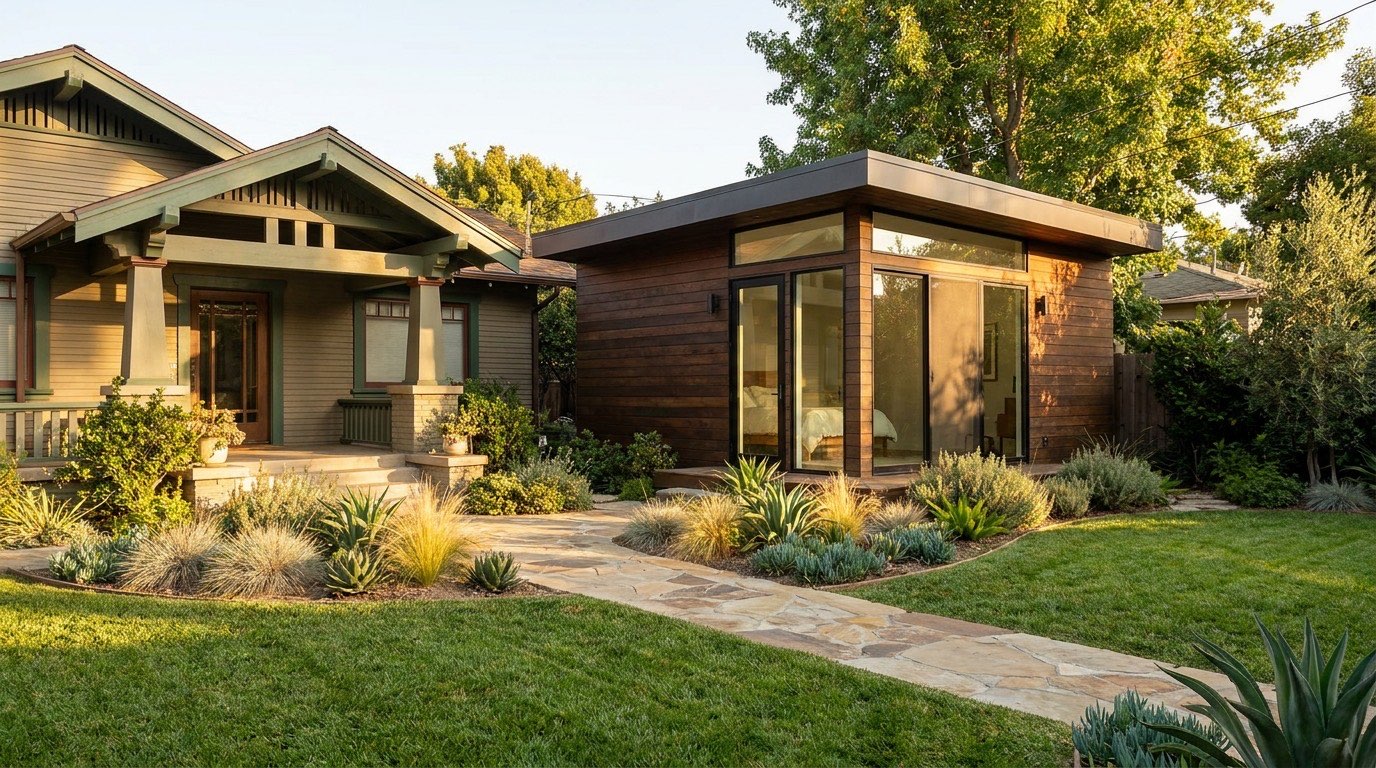
Culver City’s housing stock is a genuine mix, dense condo buildings near downtown, single-family homes on flatter residential streets, and hillside properties in the Culver City hills. That mix means ADU and multi-family potential looks different depending on which part of the city you’re looking at.
Single-Family Lots Are the Clearest Path
If you’re looking at a single-family home on a standard residential lot, California’s statewide ADU laws generally apply, alongside Culver City’s own local zoning and permitting requirements on top of that baseline. Lot size, existing setbacks, and what’s already built on the property all affect what’s actually feasible. This is worth confirming with the city’s planning department early in a purchase decision, not after closing, since ADU potential can meaningfully change what a property is worth to you. For the general mechanics of ADU-friendly buying across LA, see our ADU homes for sale guide.
Hillside Lots Come With Real Added Complexity
The Culver City hills offer some of the city’s more distinctive lots, and views to match, but hillside construction generally carries added engineering requirements that flatter parcels don’t. Soil reports, retaining wall design, and drainage considerations can add real cost and time to an ADU project on a hillside lot. None of this rules out building here, but it’s worth factoring into your budget and timeline realistically rather than assuming a hillside ADU costs the same as one on a flat downtown-adjacent lot.
Condo Ownership Changes the Picture Entirely
Culver City’s dense condo market is one of the more distinctive things about its housing stock compared to some neighboring Westside areas, but that density comes with a tradeoff for ADU potential. A condo owner doesn’t control the underlying land the way a single-family owner does, so individual-unit ADU addition generally isn’t on the table the same way. If ADU potential is part of your investment thesis, that’s a real reason to lean toward single-family or hillside product over a condo purchase.
Multi-Family Buildings Have a Separate, More Complex Path
If you’re looking at an existing multi-family building rather than a single-family lot, adding units generally involves a different regulatory path than standard ADU rules, and ownership structure matters a lot here. This is genuinely worth a conversation with an attorney or the city’s planning department for a specific property rather than assuming standard ADU rules apply directly.
How This Plays Into Turnkey vs. Value-Add Decisions
ADU potential is one of the clearer ways to add value to a Culver City property after purchase, which makes it relevant if you’re weighing a fixer against a move-in-ready option. Our comparison of turnkey and value-add investment properties in Culver City covers how ADU and renovation potential factor into that decision.
Permitting Timelines Are Worth Building Into Any Plan
Even on a straightforward single-family lot, permitting an ADU in Culver City takes real time, plan check, utility connections, inspections, and that timeline should factor into any purchase decision that depends on ADU income showing up quickly. Buyers sometimes underestimate this step and assume construction can start the month after closing, when a realistic permitting timeline often runs longer than expected.
What to Actually Verify Before You Buy
Confirm current statewide and Culver City-specific ADU rules with the city’s planning department, get a real read on soil and engineering requirements if you’re looking at a hillside lot, and don’t assume a condo purchase gives you the same ADU flexibility as a single-family lot. Treat any rental income projection from an ADU as something to verify against current comparable rents for the specific area, not a number to take at face value.
If ADU or multi-family potential is part of why you’re considering a Culver City property, reach out to Efrat. She serves buyers and sellers across Los Angeles, including Culver City, and can help you evaluate what’s realistically buildable on a specific lot before you make an offer.
