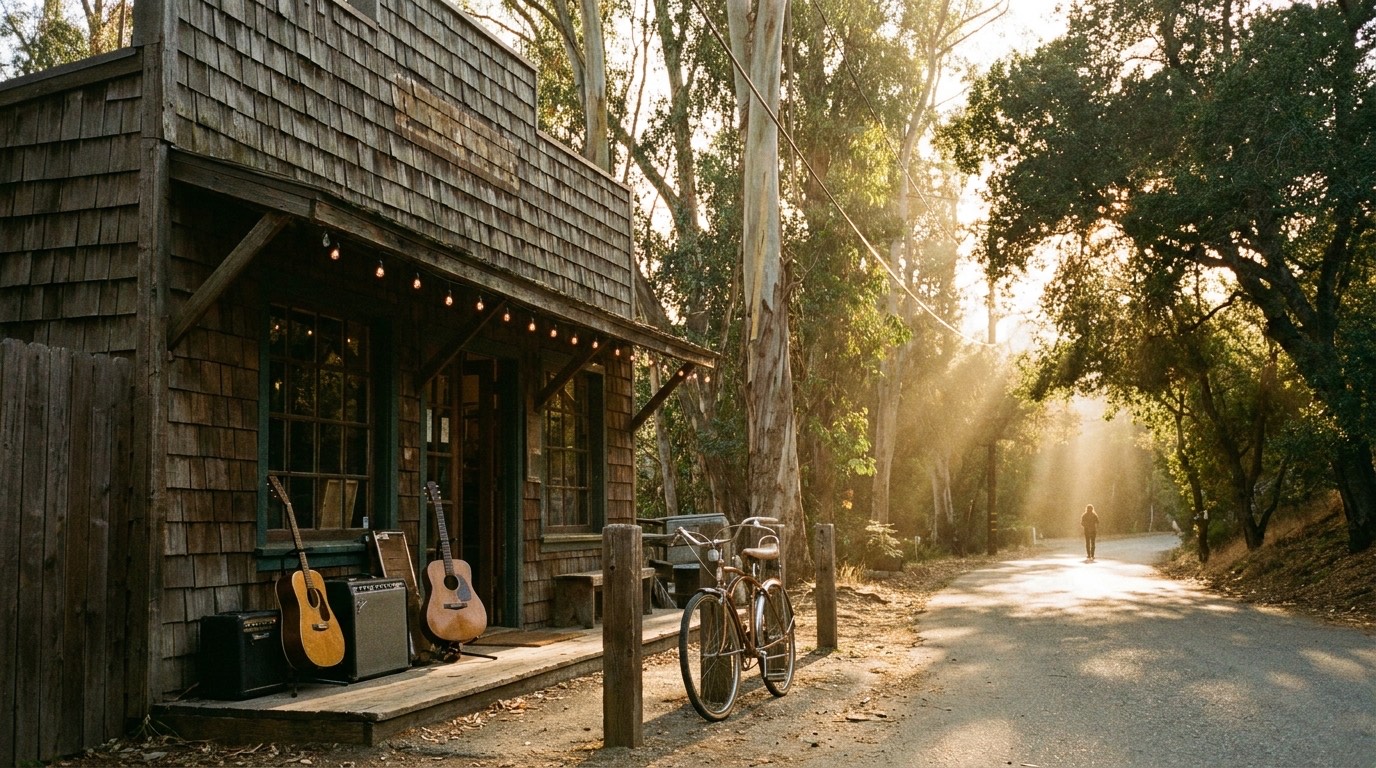
The Hollywood Hills carries a cultural weight that goes beyond its views, tied closely to the entertainment industry’s history and, in Laurel Canyon’s case, a specific and well-documented chapter of American music.
Laurel Canyon’s Music History Runs Deep
In the 1960s and 70s, Laurel Canyon became a genuine hub for musicians drawn to its seclusion and proximity to the Sunset Strip’s clubs, a period that shaped a real chapter of American rock and folk music. That history is still woven into the neighborhood’s identity, referenced in the character of local landmarks like the long-standing country store on Laurel Canyon Boulevard. Living here means living somewhere with a documented cultural legacy, not just a scenic address.
The Hollywood Bowl Sits Right at the Base
The Hollywood Bowl, one of LA’s most recognized outdoor concert venues, sits near Highland Avenue at the edge of the hills, close enough that its summer concert season is a real, practical amenity for nearby residents rather than a distant landmark. Traffic on concert nights is worth planning around if you live close by, but the tradeoff, having a world-class amphitheater essentially in your backyard, is a genuine draw for a lot of buyers here.
The Magic Castle’s Private Mystique
The Magic Castle, a private club for magicians located near Franklin Avenue at the edge of the hills, is one of the more distinctive cultural landmarks associated with the area. It isn’t open to the public without membership or a member’s invitation, but its presence adds to the sense that this part of LA has a layered, slightly theatrical history beyond the obvious Hollywood connection.
Whitley Heights and the Area’s Early Film History
Whitley Heights, on the eastern edge of the hills, is a historic district with roots stretching back to the 1920s, when it became one of the earliest hillside enclaves associated with silent-era film stars. Its Spanish and Mediterranean-style architecture is a visible reminder of just how long this part of LA has been intertwined with the entertainment industry, well before the modern Hollywood Hills submarket took its current shape.
Proximity to the Industry, Not the Backlot Itself
Living in the Hollywood Hills puts you closer, geographically and historically, to the entertainment industry’s roots than most LA neighborhoods, but it’s worth being clear-eyed that this is a residential submarket, not an active studio zone. The cultural connection is real and adds genuine texture to the area, but daily life here is quiet and hillside, not backlot activity.
The Hollywood Sign as a Cultural Landmark, Not Just a View
For Beachwood Canyon residents in particular, proximity to the Hollywood Sign means living next to one of the most recognized cultural symbols in the world, not just a scenic backdrop. It shapes everything from local foot traffic on nearby trails to the general sense of place that draws certain buyers to this specific pocket of the hills.
A Setting With Real Depth
Between Laurel Canyon’s music history, the Hollywood Bowl’s ongoing concert season, and the area’s early ties to the film industry, the Hollywood Hills offers a cultural backdrop that goes well beyond the view from a given listing. For buyers who care about that layered history as much as the setting itself, it’s a genuine part of what you’re buying into.
If the area’s cultural character is part of what’s drawing you to the Hollywood Hills, Efrat serves buyers and sellers across Los Angeles, including the canyon communities here, and can help you find a listing that fits both the lifestyle and the history you’re after. Get in touch to talk it through.
