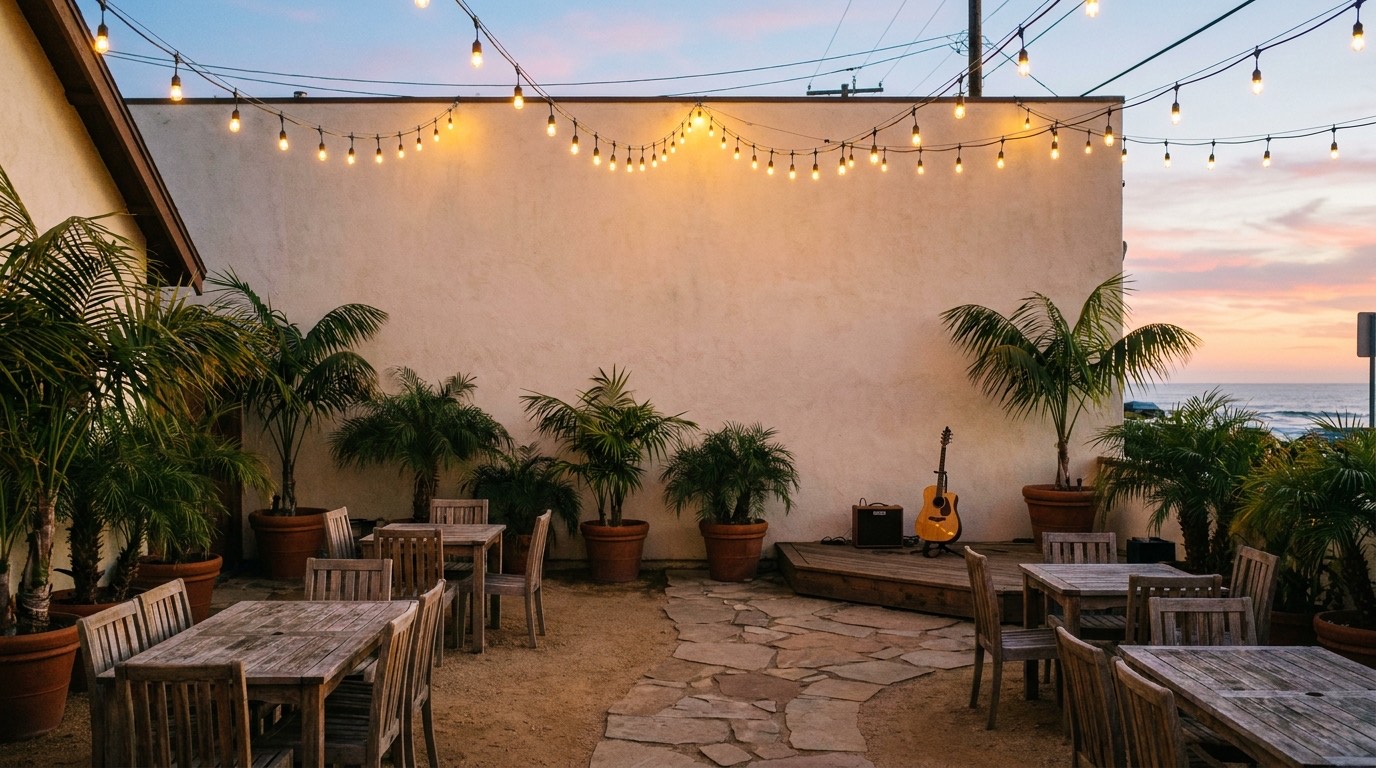
It’s worth being direct about this one: Playa Del Rey is not an arts and culture destination, and pretending otherwise would do buyers a disservice. What it offers instead is a genuinely different kind of identity, built around the coastline and the wetlands rather than galleries or theaters.
A Small-Town Identity, Not a Cultural District
Playa Del Rey’s character comes from its geography, tucked between the ocean, Marina del Rey, and the Ballona Wetlands, more than from any arts or entertainment infrastructure. Residents who choose to live here tend to value that quiet, nature-adjacent identity over a walkable cultural scene, and it’s worth being clear about that tradeoff before assuming this neighborhood offers something it doesn’t.
Venice Covers the Nearby Gallery Scene
Venice’s Abbot Kinney corridor, a short drive north, has a genuine concentration of galleries, boutique art spaces, and creative businesses that Playa Del Rey doesn’t attempt to replicate locally. It’s close enough that residents treat a gallery walk or an art opening there as a normal night out rather than a special trip.
Culver City Adds Museums and a Broader Arts District
Culver City, a bit further inland, has developed a real arts district alongside its studio and office growth, with museums, galleries, and cultural programming that round out what’s available within a reasonable drive of Playa Del Rey. It’s one of the more useful nearby options for residents who want a fuller cultural calendar without a long trip.
Nightlife Is Minimal, and That’s Consistent With the Neighborhood
A casual bar or two along Culver Boulevard covers a low-key evening out locally, but Playa Del Rey doesn’t have live music venues or a real nightlife scene of its own. For that, residents generally head to Venice, Santa Monica, or Culver City, all a manageable drive away, treating a bigger night out as an occasional trip rather than a nightly option.
Community Events Fill Some of the Gap
Playa Del Rey’s own community events tend to be low-key, neighborhood-scale gatherings rather than headline cultural festivals, which fits the overall character here. They’re worth knowing about even if they don’t replace a full arts and entertainment scene.
The Ballona Wetlands Offer a Different Kind of Enrichment
Rather than galleries or theaters, Playa Del Rey’s cultural touchpoint is largely environmental. The Ballona Wetlands Ecological Reserve hosts educational programming and guided walks focused on the reserve’s birdlife and habitat, which is a genuine, if unconventional, form of local enrichment for residents interested in the natural world rather than the performing arts. It’s worth knowing about if this kind of learning appeals to you more than a traditional arts calendar.
Being Honest About the Tradeoff
For buyers who prioritize a rich local arts and entertainment scene as part of daily life, Playa Del Rey is probably not the right fit on its own, and a neighborhood like Venice or Culver City might serve that priority better. For buyers who value the quiet, nature-adjacent lifestyle and are genuinely fine driving a short distance for culture and nightlife, the tradeoff tends to feel like an easy one.
The honest way to think about it is that Playa Del Rey trades a cultural scene for a setting that few other LA neighborhoods can offer, direct access to the coast and a protected wetlands within the same small footprint. Whether that trade makes sense depends entirely on how you actually spend your free time, not on any general ranking of what makes a neighborhood desirable. Some buyers split the difference by choosing Playa Del Rey for its quiet and its setting while treating a weekly trip into Venice or Culver City as a normal part of their routine, which tends to work well for people who don’t need culture and entertainment within immediate walking distance of home.
If you’re weighing Playa Del Rey against a more culturally active neighborhood, reach out to Efrat and she can help you think through what actually matters most for how you want to live.
