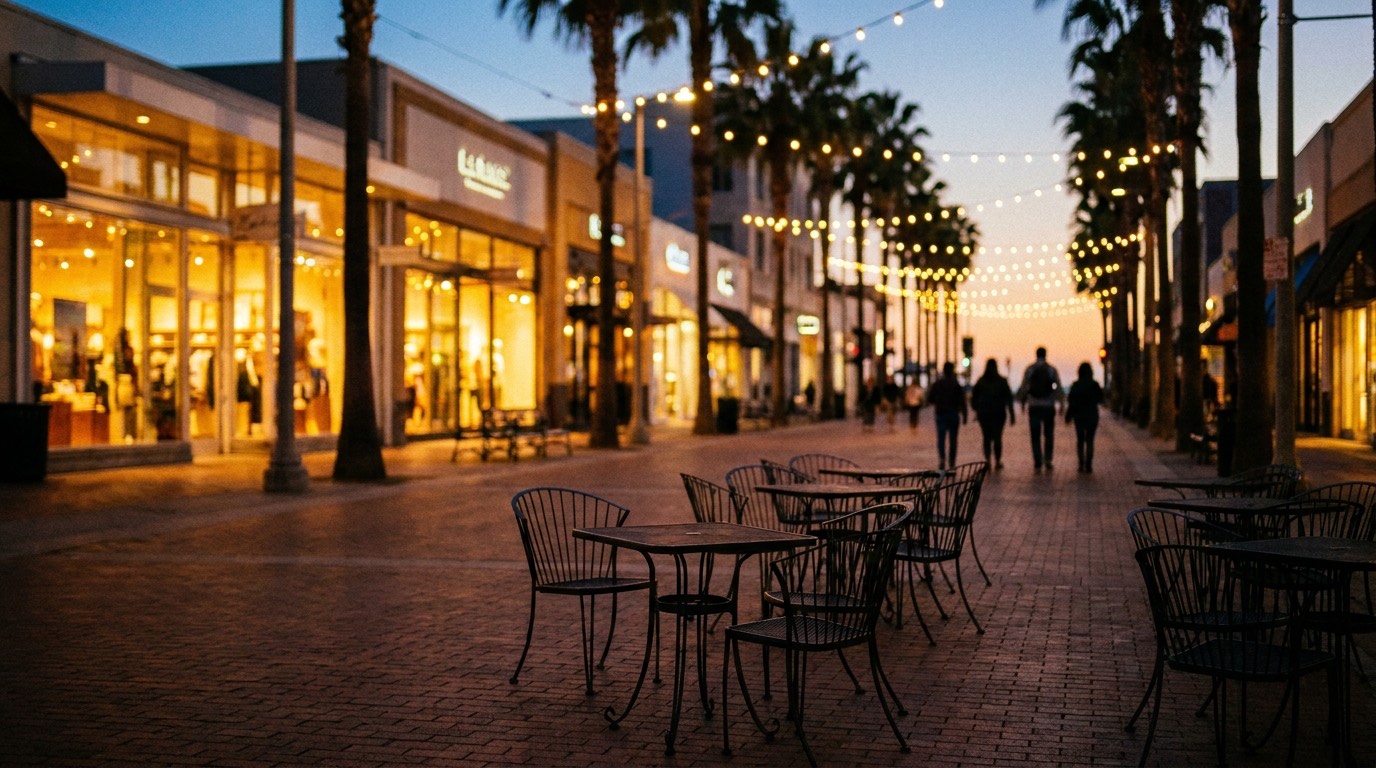
Santa Monica’s arts and culture scene is broader than the pier’s street performers, though that’s often the first image that comes to mind. It’s worth understanding the fuller picture, especially if creative access is part of what draws you to the neighborhood.
Bergamot Station’s Gallery Cluster
Bergamot Station, a former industrial rail yard converted into a cluster of contemporary art galleries, is one of the more established gallery destinations on the Westside. It draws serious collectors alongside casual visitors who wander through on a weekend, and it’s given Santa Monica a genuine foothold in LA’s contemporary art scene that goes beyond what most coastal neighborhoods offer.
The Broad Stage and Live Performance
On the Santa Monica College campus, the Broad Stage hosts a regular calendar of theater, music, and dance performances, giving the city a legitimate performing arts venue rather than relying entirely on nearby Los Angeles or Culver City for that kind of programming. For residents interested in live performance, having something this established within the city itself is a real amenity.
The Pier and Promenade’s Street Performance Tradition
Both the pier and the Third Street Promenade have a long-running tradition of street performance, musicians, artists, and entertainers who’ve become part of the everyday texture of the city rather than a novelty reserved for tourists. It’s one of the more visible, accessible parts of Santa Monica’s creative culture, free to experience and woven into a regular walk through downtown.
Local History and Heritage Museums
Beyond the galleries and performance venues, Santa Monica has smaller museums focused on local history and heritage. They’re a quieter, lower-key part of the culture scene, worth knowing about for residents who want a deeper sense of the city’s past beyond its current reputation as a beach town.
Public Art and Murals Around the City
Beyond the formal galleries and stages, Santa Monica has a real amount of public art woven into its streets, murals, sculptures, and installations scattered through downtown and along some of the commercial corridors. It’s the kind of low-key cultural texture that doesn’t get top billing in most guides but genuinely shapes what a regular walk through the city feels like, especially compared to a neighborhood with little public art at all.
Film and Media Connections
Santa Monica’s beach, pier, and downtown streets have shown up in film and television for decades, and that history is part of the city’s cultural identity even if it’s less formal than a museum or gallery. For residents, it’s less about seeking out specific filming locations and more about a general sense that the neighborhood has a recognizable, photographed presence beyond Los Angeles itself.
How This Fits Into Daily Life
What sets Santa Monica apart from a lot of LA neighborhoods isn’t any single institution, it’s how much of this is woven into everyday walking distance. A gallery visit at Bergamot Station, a show at the Broad Stage, and a walk past the pier’s performers can all happen within the same week without much planning, which is genuinely uncommon for a city this size.
Why This Might Matter to Your Search
If arts and culture access is part of what’s drawing you to Santa Monica specifically, it’s worth being clear about how much of that you actually want in walking distance versus how much you’re fine driving to occasionally. Some buyers want to be steps from the Promenade’s energy, others prefer a quieter residential block with an occasional drive to Bergamot Station or the Broad Stage.
If a strong arts and culture scene is part of what you’re prioritizing, reach out to Efrat and she can help you think through which part of Santa Monica puts you closest to what actually matters to you.
