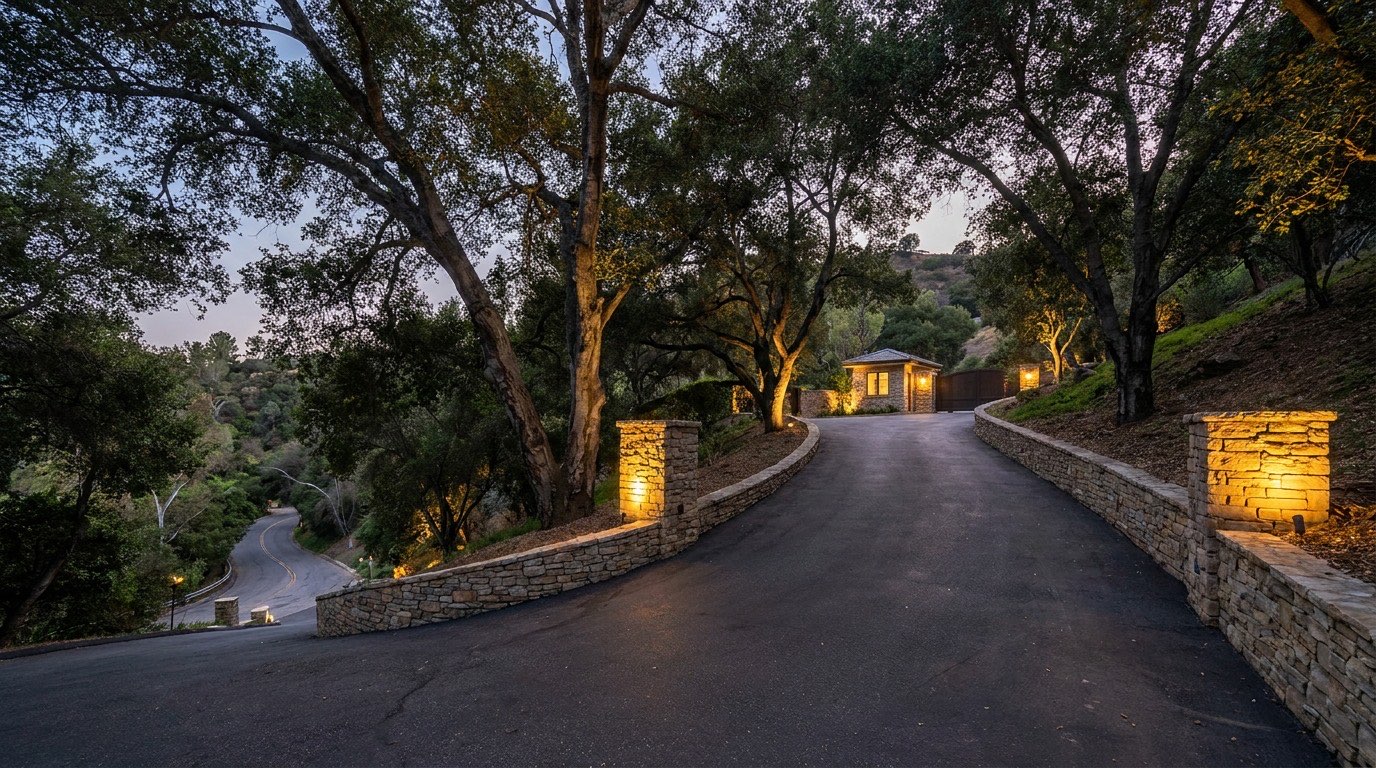
Bel Air sits up in the hills above Sunset Boulevard, which means every commute starts the same way: wind down out of the canyon streets before you hit a real road. Here’s how that plays out toward the places Bel Air residents actually drive to.
Getting to Century City and Beverly Hills
This is the easiest major commute from Bel Air. Century City and Beverly Hills are reachable via Beverly Glen Boulevard, Sunset Boulevard, or a short hop onto the 405, and for a lot of residents it’s a genuinely quick trip outside of rush hour. Morning and evening peak hours add real time to any of these routes, but compared to the drives further out, this one stays fairly manageable.
The Westwood and UCLA Corridor
Bel Air borders UCLA and Westwood directly, and that proximity is one of the neighborhood’s quieter advantages. Faculty, staff, and anyone with business at the university can often get there in minutes rather than a real commute, and Westwood Village itself is close enough for an easy errand run. It’s one of the few “commutes” from Bel Air that barely feels like one.
Reaching Santa Monica and the Westside
Santa Monica and the broader Westside job corridor are a straightforward drive from Bel Air via Sunset Boulevard or the 405 south, then west on the 10. It’s not a short trip, but it’s a familiar one for a lot of residents, and it avoids the worst of the canyon traffic that some other hillside neighborhoods deal with.
Downtown LA and the Valley: The Longer Hauls
Downtown is the longest of the major commutes from Bel Air, generally handled via the 405 to the 10, and it’s worth being honest about that distance before assuming it’s an easy add to daily life. The Valley is closer in miles but comes with its own version of the same problem: getting through or around the Sepulveda Pass, which is the corridor connecting Bel Air to the 101 and the rest of the Valley.
The Sepulveda Pass Is the Road That Matters Most
If there’s one stretch of road that shapes daily life in Bel Air, it’s the 405 through the Sepulveda Pass. It’s the connector between the Westside and the Valley, and it backs up hard during rush hour in both directions, plus on weekends when beach traffic piles up from the Valley side. Anyone commuting north or south from Bel Air on a regular basis should plan around this corridor rather than hope it clears up.
LAX Is Closer Than People Expect
Bel Air’s position above the Sepulveda Pass puts it within a reasonable drive of LAX, a real perk for residents who travel often. The tradeoff is the same 405 traffic that affects every other commute out of the neighborhood, so a flight departure means padding the drive time rather than cutting it close.
Weekend Traffic Runs on a Different Pattern
Weekday rush hour isn’t the only pattern worth knowing. Weekends bring their own traffic, often heavier through the Sepulveda Pass as Valley residents head to the beach, and heavier around Sunset Boulevard near events at the Hotel Bel-Air or the Bel-Air Country Club. It’s worth factoring in if you’re planning weekend errands or expecting guests, since the timing that works midweek doesn’t always hold on a Saturday afternoon.
Weighing the Commute Against Bel Air’s Privacy
The honest tradeoff with Bel Air is that you’re buying into privacy, hillside scale, and a genuinely quiet, low-key lifestyle, not necessarily the shortest commute to every job center in the city. For residents working in Century City, Beverly Hills, or at UCLA, the drive barely registers. For anyone commuting regularly to Downtown or deep into the Valley, it’s worth mapping out honestly before making an offer. Efrat serves buyers and sellers across Los Angeles, including Bel Air, and can talk through how a specific commute is likely to play out day to day. Reach out to Efrat if you want to think it through before you start touring.
