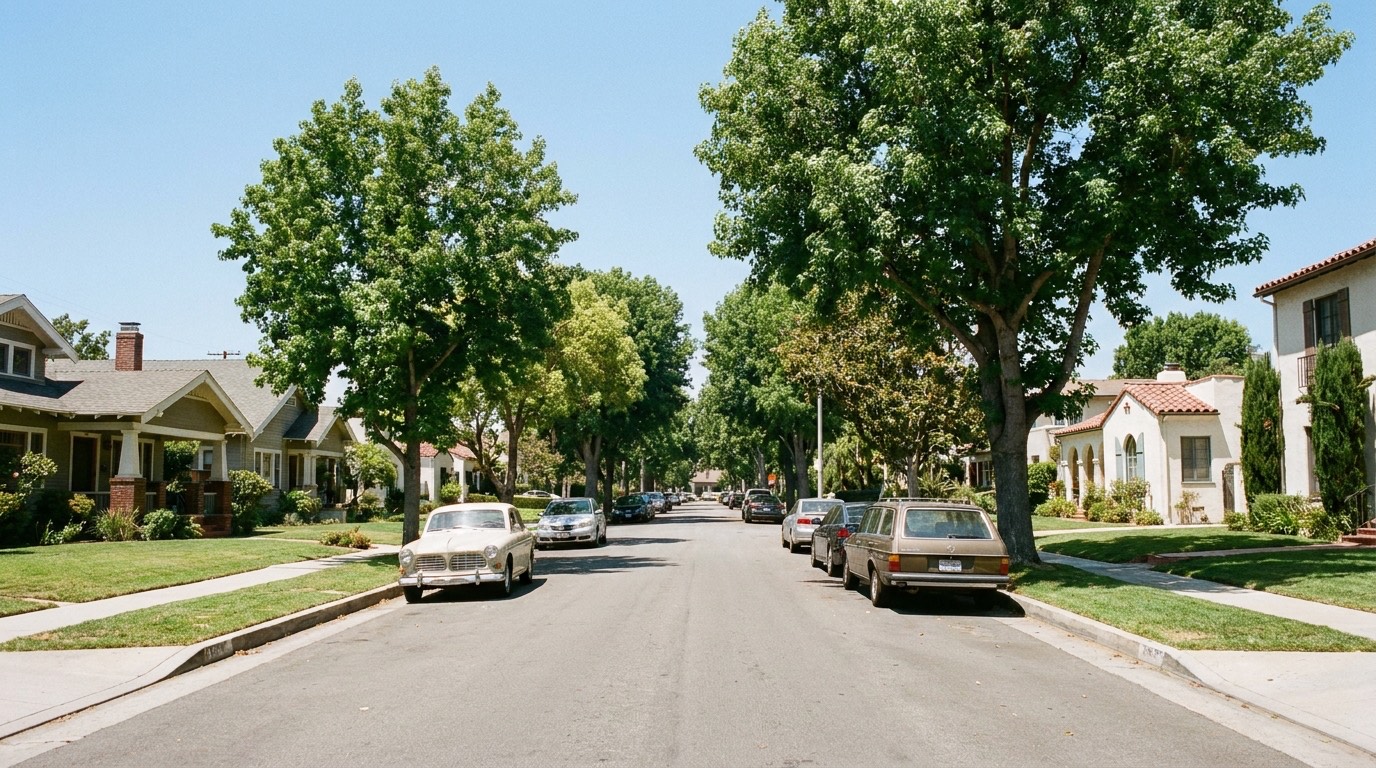
Beverlywood is known for its consistent, tree-lined street grid more than for any one standout block, but that doesn’t mean every street here feels identical. Here’s a general overview to help frame the search, based on the neighborhood’s well-known layout and reputation rather than block-by-block specifics.
The Grid Itself Is the Neighborhood’s Defining Feature
Beverlywood was developed as a planned residential community, and its street grid reflects that: consistent lot setbacks, mature trees, and a uniform architectural rhythm that’s more the point than any single famous block. Buyers coming from a neighborhood with more of a patchwork feel often notice this consistency first. It’s part of why Beverlywood has a reputation as a stable, low-drama place to own a home.
Interior Streets Generally Feel Quieter Than Boundary Streets
As with most planned residential grids, Beverlywood’s interior blocks tend to see less through-traffic than the streets that border busier boundary roads like Pico Boulevard and Robertson Boulevard. If quiet is your top priority, an interior street is generally the safer bet, though it’s worth actually visiting at different times of day rather than assuming based on a map, since traffic patterns can shift with nearby construction or road changes.
Lot Size Varies Somewhat, But Not Dramatically
Beverlywood is known more for consistency than for dramatic variation, but some streets and pockets do carry a reputation for slightly wider or deeper lots than others. If lot size matters to your plans, whether for a pool, an ADU, or just more yard, confirm the actual dimensions for a specific address with a title report or survey rather than relying on a street’s general reputation.
Proximity to Pico-Robertson Shapes Walkability
Streets on the side of the neighborhood closer to the Pico-Robertson corridor offer easier walking access to the shops, restaurants, and community institutions concentrated there, which matters more to some buyers than others depending on daily habits and how much walkability factors into your lifestyle. Streets further from that edge trade some walkability for additional quiet.
School Proximity Is Worth Checking Directly
Some buyers weigh a Beverlywood street partly on distance to a specific school, and that’s a reasonable factor to include in your search. School attendance boundaries can shift, though, so confirm current zoning directly with LAUSD or the specific school rather than assuming a street’s general reputation still reflects current boundaries.
How This Compares to Choosing a Street in a Less Uniform Neighborhood
Because Beverlywood’s grid is so consistent, the stakes of picking “the right street” are generally lower here than in a neighborhood with more dramatic block-to-block variation in character or home value. That consistency is arguably one of Beverlywood’s biggest practical advantages for buyers who don’t want to spend months agonizing over micro-location within the neighborhood itself.
What Actually Matters More Than the Street Name
For most buyers, the specific street matters less than the individual property: its lot size, its condition, its distance from the boundary roads, and whether it fits your daily routine. Beverlywood’s overall consistency means you’re less likely to make a costly mistake picking a “bad” street here than in a more varied neighborhood, but it’s still worth walking or driving any specific block at different times before committing.
Comparing the Grid to Neighboring Communities
Beverlywood’s street-level consistency stands out even more when you cross-shop it against a neighborhood like Culver City or Mid Wilshire, both of which carry more block-to-block variation in housing stock and character. That’s not a knock on either neighborhood, just a reminder that “pick the right street” is a bigger, higher-stakes exercise elsewhere than it tends to be inside Beverlywood’s grid.
If you’re comparing streets or pockets within Beverlywood for a purchase, reach out to Efrat. She serves buyers and sellers across Los Angeles, including Beverlywood, and can help you think through which part of the neighborhood actually fits what you’re looking for.
