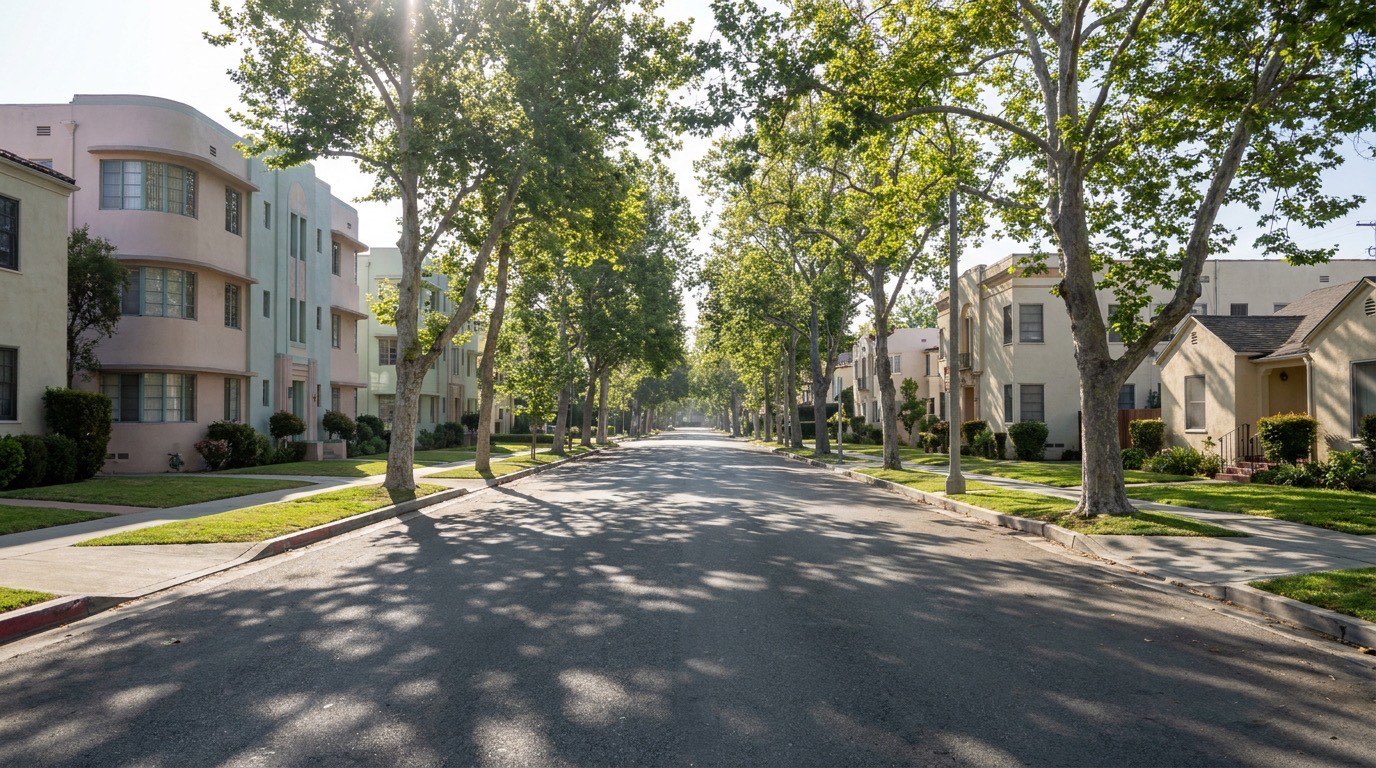
Mid Wilshire doesn’t have the kind of individually ranked, single-family street reputation you’d find in a neighborhood like Beverly Hills or Bel Air, and pretending otherwise would mean inventing distinctions that don’t really exist here. What it does have is a set of genuinely different pockets, and understanding those matters more than chasing a specific street name.
Think in Pockets, Not Individual Streets
Because Mid Wilshire developed largely as a corridor of prewar and mid-century apartment and condo buildings rather than a grid of distinctive single-family blocks, the more useful framework for a buyer is pocket-based: the Museum Row-adjacent stretch, the blocks closer to Larchmont Village and Hancock Park, and the Wilshire Boulevard corridor itself. Each has a genuinely different daily feel, even though none of them carries the kind of individually documented street-by-street prestige you’d find in a neighborhood built around single-family estates.
The Museum Row-Adjacent Pocket
The blocks surrounding LACMA, the Petersen Automotive Museum, the Academy Museum of Motion Pictures, and the La Brea Tar Pits are commonly known as Museum Row, and living within easy walking distance of that stretch is one of the clearest, most tangible location advantages in Mid Wilshire. Buyers who prioritize cultural access above all else tend to focus their search here first.
The Wilshire Boulevard Corridor Itself
Buildings sitting directly on Wilshire Boulevard offer the shortest possible walk to both Museum Row and the newer Metro D Line stations along this stretch, which matters to a buyer who wants a genuinely walkable, transit-connected daily routine. The tradeoff is real too: boulevard-facing units carry more traffic noise than anything set back even one block, so it’s worth touring a specific unit at different times of day before assuming the location advantage outweighs the noise for your own daily life.
Blocks Bordering Larchmont Village and Hancock Park
Moving toward the northern edge of Mid Wilshire, the blocks closest to Larchmont Village and the Hancock Park border add a boutique, small-scale commercial layer, shops, cafes, a walkable village strip, that isn’t part of the Museum Row or straight-corridor experience. This pocket tends to draw buyers who want both cultural access and a quieter, more residential feel within easy reach of a walkable retail street.
Side Streets Off the Boulevard Generally Trade Noise for Quiet
Across all of Mid Wilshire’s pockets, the general pattern holds: a building or home one or two streets back from Wilshire Boulevard tends to trade a slightly longer walk to the corridor’s main attractions for a quieter, calmer daily environment. Neither choice is objectively better. It depends on how much weight you put on walkability versus quiet, and that’s worth testing in person rather than assuming from a listing photo.
Zoning and Building Type Vary More Than Prestige Does
Rather than one street outranking another the way it might in an estate neighborhood, what actually varies most across Mid Wilshire’s pockets is building type and zoning, prewar rental apartments in one stretch, newer condo towers in another, and lower-density blocks as you approach the Hancock Park border. Our ADU and multi-family potential breakdown goes deeper into how that zoning variation plays out for buyers with an investment angle.
How to Actually Choose Your Pocket
Start with what you actually want daily access to: Museum Row’s institutions, Larchmont Village’s boutique strip, or the shortest possible walk to a Metro station, since Mid Wilshire doesn’t offer all three in equal measure on every block. Tour a specific building or home at more than one time of day, since boulevard noise and foot traffic shift meaningfully between a weekday morning and a weekend evening.
If you’re trying to figure out which pocket of Mid Wilshire actually fits how you want to live, reach out to Efrat. She serves buyers and sellers across Los Angeles, including Mid Wilshire, and can walk you through the real tradeoffs between its pockets rather than a ranked list of streets that doesn’t reflect how this corridor actually developed.
