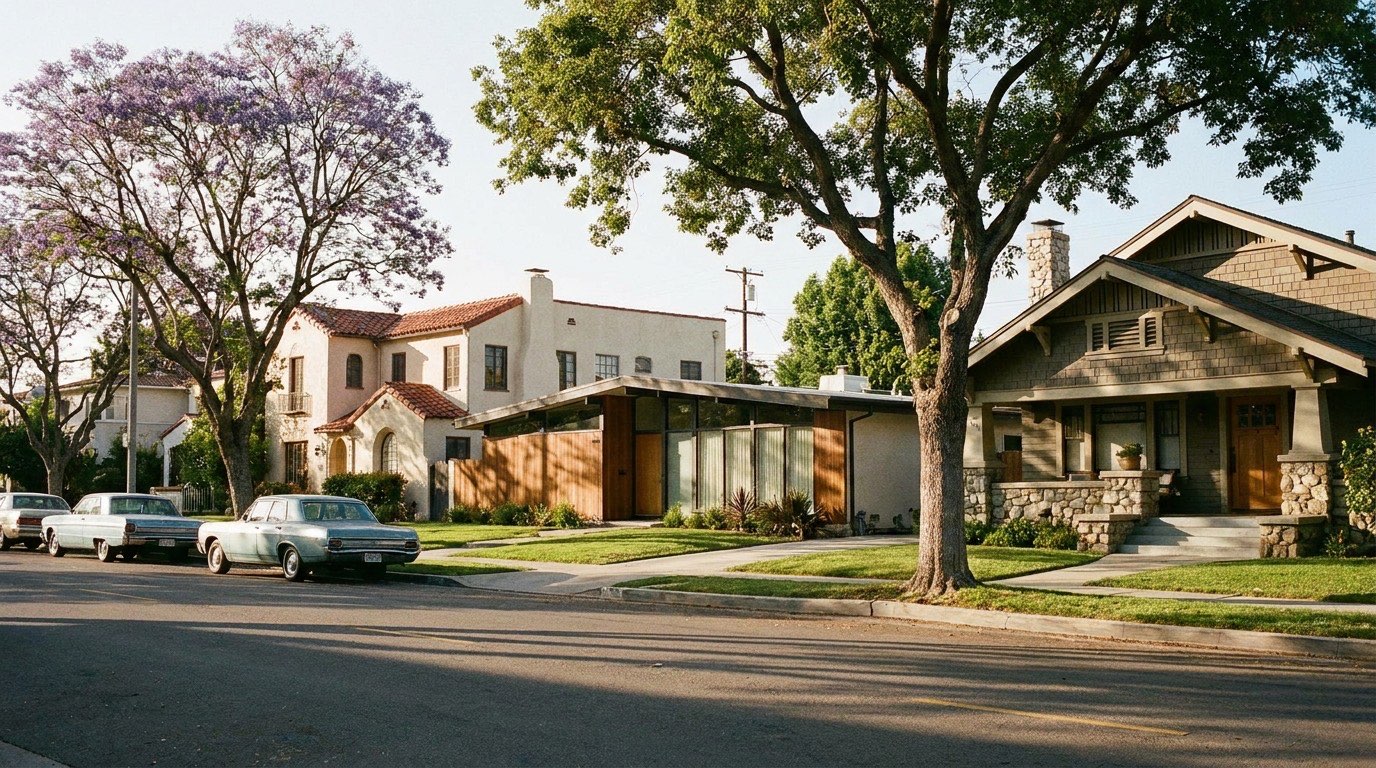
Culver City’s housing stock reflects its layered history: an older entertainment-industry town, a more recent tech and creative-industry influx, and a downtown core that’s been actively redeveloped. That mix shows up clearly in the architecture, once you know what to look for.
Mid-Century and Traditional Homes in the Flats
Away from downtown, a lot of Culver City’s residential streets are lined with mid-century ranch homes and more traditional single-story houses, many dating to the postwar building boom that shaped much of the surrounding Westside. These homes vary widely in condition, some carefully maintained or updated, others original and ready for work, so it’s worth evaluating each property on its own rather than assuming a consistent standard block to block.
Spanish and Craftsman Influences Scattered Throughout
Older pockets of Culver City also include Spanish-style and Craftsman-influenced homes, generally on the smaller side and concentrated on some of the city’s older residential streets. These tend to draw buyers specifically looking for character and detail over a blank-slate remodel opportunity.
Newer Condo and Townhome Construction Near Downtown
Downtown Culver City and the areas surrounding the Hayden Tract have seen real redevelopment activity over the past decade or so, and that shows up as newer condo and townhome buildings with more contemporary design, larger windows, open floor plans, and shared amenities. If walkability and lower-maintenance living matter more to you than an older single-family home, this newer stock is worth focusing your search on. Our condos vs. single-family homes in Culver City guide covers that tradeoff.
The Hayden Tract’s Architectural Influence
While the Hayden Tract itself is mostly commercial and creative-office space rather than housing, its striking, design-forward architecture, several buildings there are genuinely notable, has influenced the surrounding area’s aesthetic and helped draw a design-conscious buyer pool to nearby residential streets.
Hillside Homes Have Their Own Character
In the Culver City hills, architecture skews toward a mix of older, smaller-footprint homes and larger, more contemporary rebuilds oriented around view lots. Because slope and soil conditions matter more here than in the flats, style is often secondary to structural considerations, our hillside homes in Culver City guide covers what to check before buying.
Renovation and Remodel Activity Is Common
Given the age of a lot of Culver City’s original housing stock, remodel and addition activity is common, particularly in the flats where a mid-century footprint often gets expanded or reconfigured for modern living. If you’re considering a fixer or a partially updated home, it’s worth getting a clear read on what’s been permitted versus done without permits, since that affects both resale value and your own renovation plans down the line.
Lot Size and Layout Vary More Than Style Alone
Beyond the architectural style itself, lot size and layout vary a lot across Culver City’s residential streets, some mid-century homes sit on genuinely generous lots, while others, especially closer to downtown, are on tighter footprints that prioritize location over space. If a specific lot size or yard is a priority, that’s worth checking directly rather than assuming a given style or era guarantees a certain amount of land.
What This Means for Your Search
Because Culver City’s housing stock spans mid-century originals, Spanish and Craftsman character homes, newer contemporary condos, and hillside rebuilds, it’s worth being specific about which style and era actually fits what you want, rather than assuming any one look dominates the city. Efrat serves buyers and sellers across Los Angeles, including Culver City, and can help you find inventory that matches your actual taste and priorities. Reach out to Efrat to talk through what you’re picturing.
