Culver City doesn’t fit neatly into one category, and that’s honestly part of its appeal. It’s a company town for the entertainment industry, a growing tech hub, and a genuine small-city downtown, all inside a few square miles. If you’re considering it, here’s a straight look at what daily life there actually involves.
The Studios Still Shape the Identity
Sony Pictures Studios has anchored Culver City for close to a century, and Amazon’s studio and office footprint has added a newer, tech-adjacent layer on top of that entertainment history. You’ll notice it in small ways: production traffic on certain streets, a workforce that skews toward media and tech, and a local economy that’s tied to both industries more than most LA neighborhoods its size. It’s not a company town in the old-fashioned sense, but the studios’ presence is still felt.
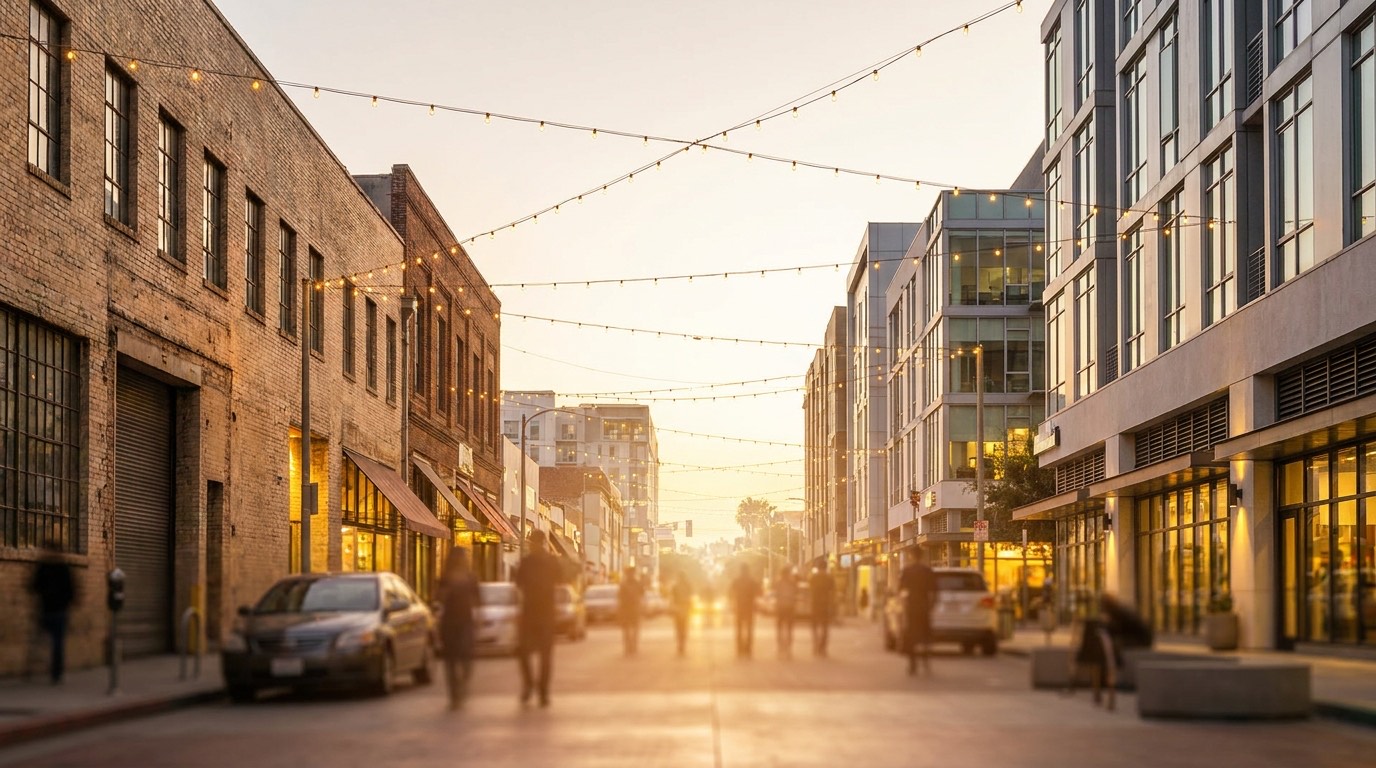
Downtown Culver City Has Real Density
The stretch around Washington and Culver Boulevards functions as an actual downtown, restaurants, a movie theater, offices, and steady foot traffic on weekends. It’s one of the more walkable commercial cores on the Westside, and living within a few blocks of it gives you a genuinely different daily rhythm than the quieter residential streets a short drive away. If a walkable center matters to your search, this is the part of Culver City to focus on.
Hayden Tract Brought a New Kind of Resident
The Hayden Tract, a former industrial and warehouse district, has been reworked over the past couple of decades into design studios, tech offices, and creative firms, with some striking architecture mixed in. That transformation pulled a newer tech-adjacent workforce into the area, and it’s changed who’s shopping for housing nearby. It’s worth knowing this shift is relatively recent, not decades-old, when you’re weighing how established a specific pocket feels.
Housing Here Skews Toward Condos and Denser Product
Culver City has a genuinely dense condo market compared to a lot of neighboring areas, alongside pockets of single-family homes, some of them in the hillside areas known locally as the Culver City hills. That mix means your housing search here can look pretty different depending on whether you’re set on a single-family lot or open to condo living closer to downtown. See our condos vs. single-family homes in Culver City guide for a fuller comparison.
Getting Around Once You Live There
Culver City sits in a genuinely useful spot on the Westside, close to the 405 and 10 freeways and served by Metro’s E Line rail, which makes trips toward Downtown LA or the beach more workable than in some surrounding neighborhoods. That said, downtown parking can get tight on weekends, and like most of LA, your actual commute depends heavily on the specific route and time of day. Worth mapping your real commute before assuming proximity alone solves it.
Short-Term Rentals Have Their Own Rules Here
If part of your interest in Culver City involves renting the property out short-term at some point, confirm the current city ordinance directly rather than assuming LA County or neighboring-city rules apply. Culver City sets its own local rules on this, and they can shift over time.
Who Culver City Actually Fits
Culver City tends to fit buyers who want a genuine walkable downtown, don’t mind a workforce and social scene shaped by entertainment and tech, and are comfortable with a denser condo market alongside pockets of single-family and hillside homes. It’s less of a fit for buyers set on a quiet, uniform suburban street with no downtown nearby. Efrat serves buyers and sellers across Los Angeles, including Culver City, and can help you figure out which pocket actually matches what you’re looking for. Reach out to Efrat to talk through your search.
