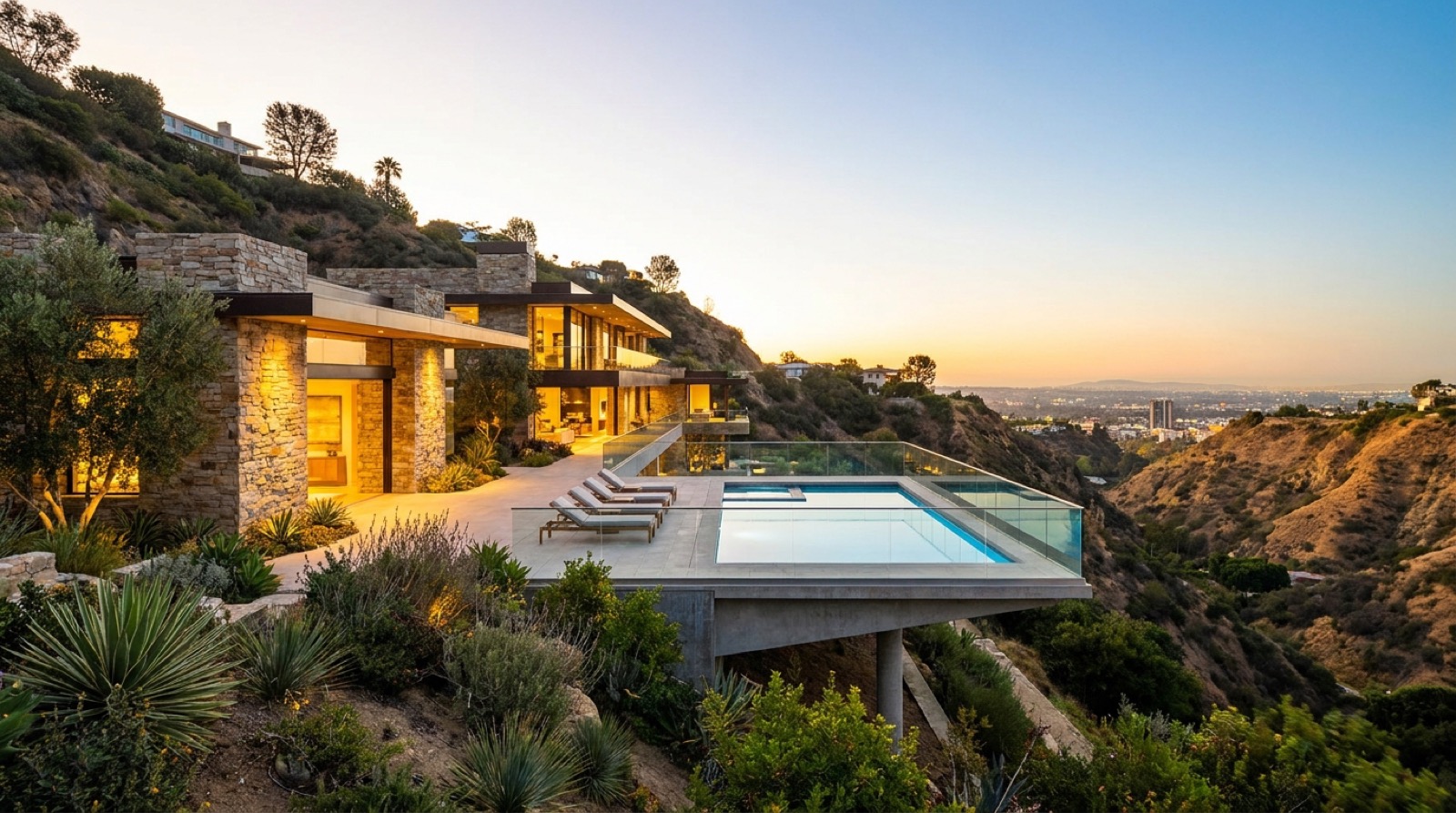
Hillside estates come with a different set of considerations than a flatland home, and buyers who skip that homework end up surprised after closing.
The View Is the Asset, and It Needs Protecting
A hillside estate’s value is tied directly to its view corridor, which means buyers should ask about neighboring lot development potential, height restriction ordinances, and any view easements before falling in love with the vista. A view that looks permanent can change if a neighboring property redevelops.
Geology and Soil Reports Matter More Here
Hillside lots in Los Angeles sit on varied terrain, some of it stable, some of it requiring retaining walls, caisson foundations, or ongoing slope maintenance. I always recommend a geological and soils report as part of due diligence on a hillside property, since the cost of remediation can be significant if the lot has drainage or slide history.
Access and Driveway Design Affect Daily Life
Steep or narrow private roads, shared driveways, and limited guest parking are common on hillside lots. These aren’t dealbreakers, but they do affect daily livability and should factor into the decision the same way school district or commute time would for a flatland buyer.
Construction and Renovation Costs Run Higher
Building or expanding on a hillside lot typically costs more than comparable flatland work, due to grading, retaining structures, and more involved permitting. Buyers planning a renovation should budget accordingly and pull permit history on any past hillside work at the property.
Insurance Requires a Closer Look
Hillside homes, particularly those near brush areas, can face different fire insurance requirements and sometimes higher premiums or more limited carrier options. I encourage clients to get an insurance quote during their contingency period rather than waiting until after close. Our guide to the FAIR Plan and wildfire insurance covers what to do if a standard carrier declines to write a policy on the property.
If a hillside estate is on your radar, get in touch and we can talk through what to check before you write an offer.
