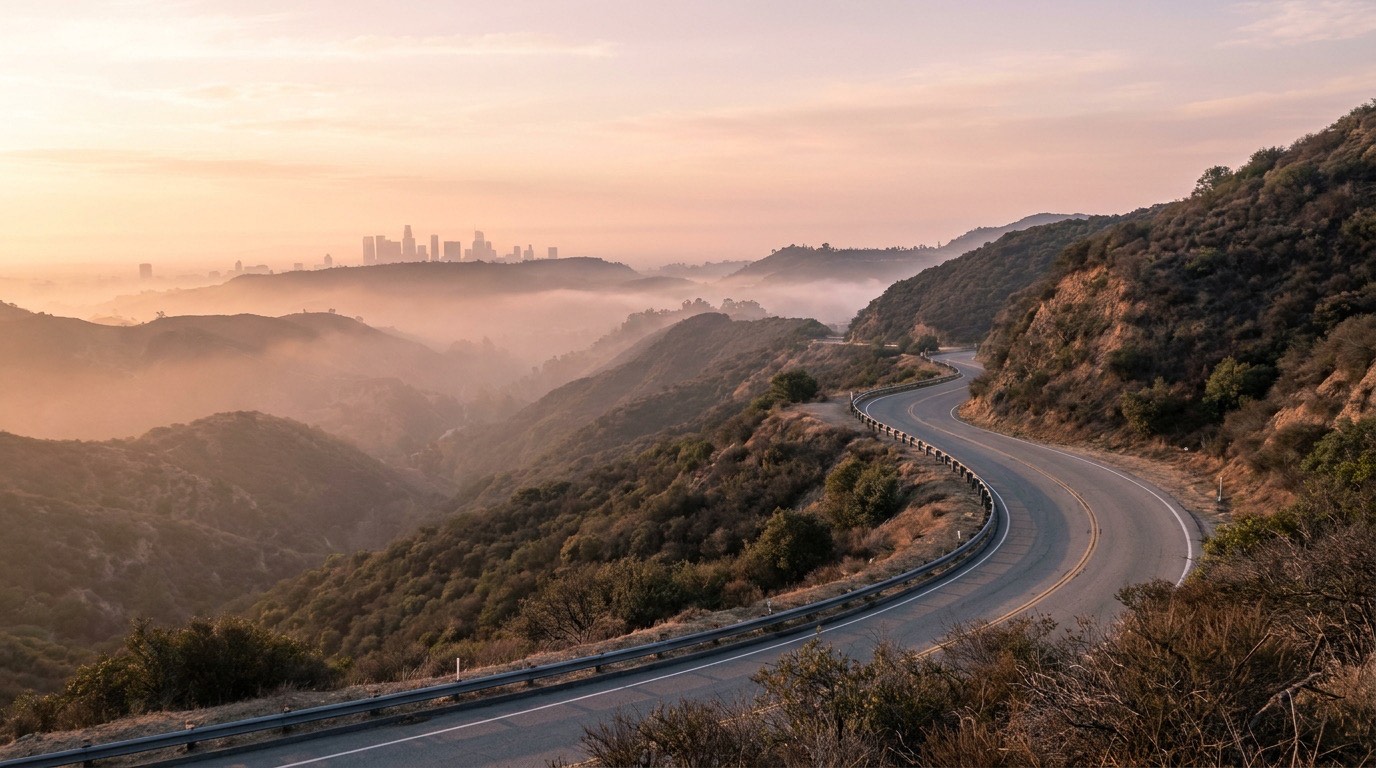
Every commute out of the Hollywood Hills starts with the same question: which canyon road are you on, and where does it actually let you out. Here’s how the main routes to LA’s job centers play out from up here.
Getting Down to Hollywood and the 101
Homes toward the eastern side of the Hollywood Hills, closer to Beachwood Canyon or the streets feeding into Cahuenga Boulevard, have the most direct path down to Hollywood proper and the 101 freeway through Cahuenga Pass. From there, Downtown, Burbank, and the eastern Valley are all reachable without much extra surface-street driving. Homes further west toward Laurel Canyon or deep along Mulholland have a longer descent first, since the terrain funnels traffic through fewer connector roads.
Laurel Canyon Boulevard Is the Main Artery West
Laurel Canyon Boulevard is the most direct route between the Valley side (Studio City, Sherman Oaks) and the Hollywood side of the hills, and it carries a lot of the daily commute traffic for residents on that side. It’s a real two-lane canyon road with tight curves, so treat published drive times as a starting point, not a guarantee, especially during morning and evening rush.
Mulholland Drive Connects Communities, Not Commutes
Mulholland runs along the ridge and links the different canyon communities to each other, but it’s not built for speed. It’s winding, mostly two lanes, with minimal shoulder and limited passing room. It’s genuinely useful for getting from one part of the hills to another, less useful as a fast route off the ridge toward a job center. If your commute plan assumes Mulholland as the main route, map it at actual rush hour first.
Reaching the Westside and Downtown
Getting to the Westside from the Hollywood Hills usually means dropping down to Sunset Boulevard or the 101, then working west or south from there, and it’s a real commute, not a quick hop, regardless of which canyon you start in. Downtown is reachable via the 101 through Cahuenga Pass or Hollywood Boulevard down to Highland, and travel time swings widely with time of day, the same way it does for most of central LA.
The Valley Side Can Be Genuinely Convenient
For residents whose canyon street feeds toward Laurel Canyon Boulevard or Coldwater Canyon, Studio City and Sherman Oaks are closer than they might expect, often a shorter drive than reaching Downtown or the Westside. If your job or daily life is Valley-based, this can make certain streets in the Hollywood Hills a more practical choice than their reputation as a purely Westside-adjacent submarket suggests.
Road Closures Are a Real Commute Variable Here
Canyon roads can close for fire risk during red flag conditions, for mudslide cleanup after heavy rain, or for maintenance, and when that happens there’s often no quick alternate route out of a specific street. This isn’t unique to the Hollywood Hills among LA’s hillside neighborhoods, but it’s worth asking directly what the backup route looks like for any address you’re seriously considering, rather than assuming the primary route is always available.
It Varies More Within the Hills Than People Expect
Two homes a mile apart, one near the base of a canyon and one close to Mulholland at the top, can have real differences in drive time to the same destination, simply because of how the terrain channels traffic to a limited number of roads. This is one of the reasons a real commute test, at the time of day you’d actually be driving, matters more here than in a flatland neighborhood with a predictable grid.
If commute logistics are a real factor in how you’re weighing a Hollywood Hills property, Efrat serves buyers and sellers across Los Angeles, including the canyon communities here, and can walk through the actual drive time from a specific street before you make an offer. Get in touch to talk it through.
