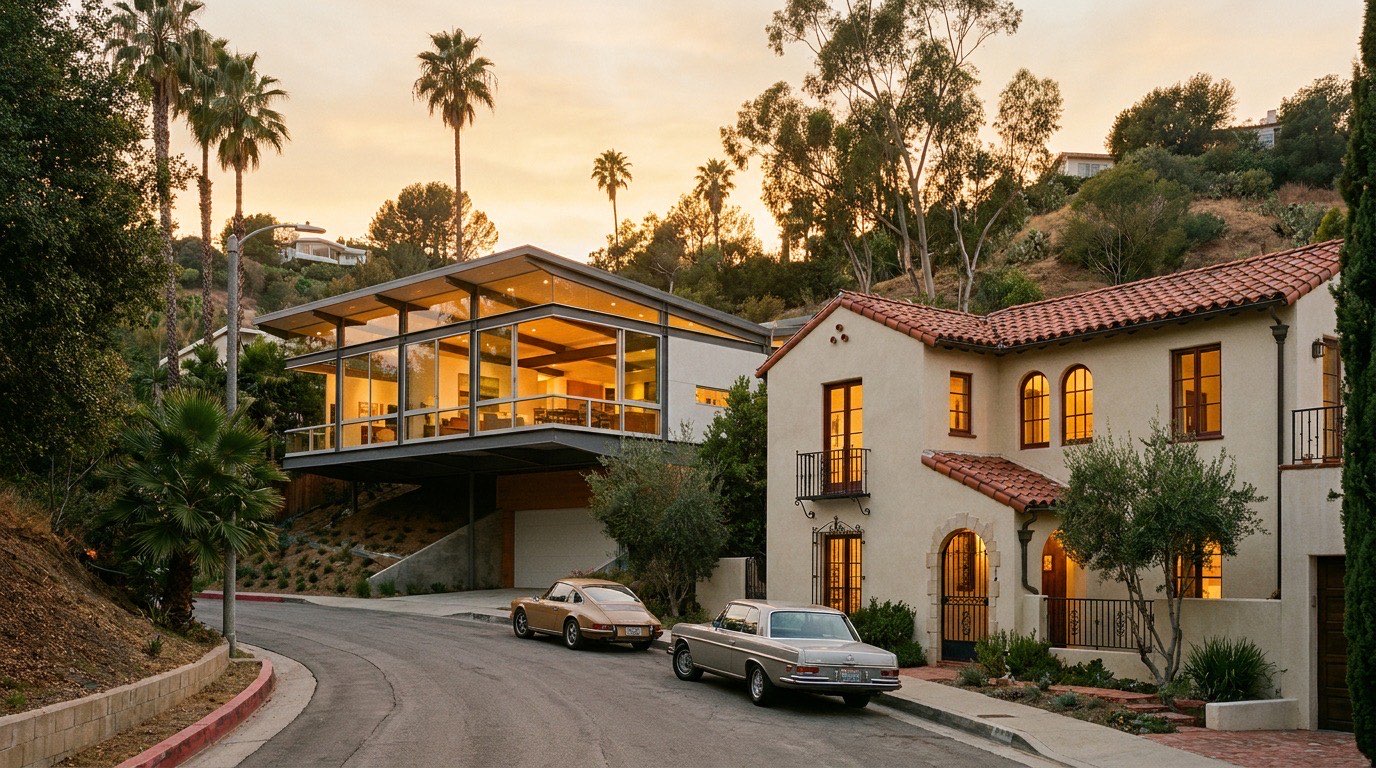
Deciding between renting and buying in Hollywood Hills involves the usual financial tradeoffs, plus a few considerations specific to hillside living.
The Standard Rent vs. Buy Math Still Applies
The core comparison is familiar: renting avoids a down payment, closing costs, and ongoing maintenance responsibility, while buying builds equity over time and locks in your housing cost against future rent increases. How that math works out depends heavily on how long you plan to stay in the area and current mortgage rates, the same factors that apply to any LA neighborhood.
Hillside Living Adds a Few Costs Worth Pricing In
Buying in Hollywood Hills specifically means factoring in a few costs that don’t show up the same way in a flatland rent-versus-buy comparison. Hillside properties can carry higher insurance premiums given fire-risk zoning in parts of the area, and ongoing maintenance on retaining walls or drainage systems is a real, if often infrequent, expense. Our guide to buying a hillside home in Hollywood covers these considerations in more depth, and they’re worth pricing into your comparison rather than treating a hillside home like a standard flatland purchase.
Renting First Can Be a Reasonable Test
If you’re not fully sure hillside living fits your daily routine, winding streets, a car-dependent lifestyle, and terrain-driven commute times, renting on a specific street for a period before buying is a reasonable way to test that fit. It’s a common approach for buyers moving from a flatland or more walkable neighborhood who want to be sure before committing to a purchase.
Rental Inventory in the Hills Has Its Own Limits
It’s worth knowing that rental inventory in Hollywood Hills is shaped by the same hillside terrain that limits for-sale inventory, so finding a rental on the exact street you’re considering for a future purchase isn’t always straightforward. Some buyers rent in a nearby, more flatland-adjacent pocket instead and simply spend time driving the specific hillside streets they’re considering before making a purchase decision, which can be a reasonable compromise if a direct rental isn’t available.
Equity Building Looks Different With Hillside Appreciation Patterns
Hillside properties in desirable view corridors have historically shown resilience in value tied to the genuine scarcity of buildable, view-oriented lots, since the terrain itself limits how much new hillside inventory can ever come to market. That scarcity is part of the equity-building case for buying rather than renting long term, though it shouldn’t be treated as a guarantee, and any specific projection should come from a current, property-level conversation rather than a general assumption about the neighborhood.
When Buying Tends to Make More Sense
Buying generally starts to make more financial sense once you’re confident you’ll stay long enough to build meaningful equity and absorb the transaction costs of a purchase and eventual sale. Pairing that timeline with a clear-eyed view of hillside-specific costs, insurance, maintenance, and any HOA or easement obligations, gives you a more complete picture than a generic rent-versus-buy calculator alone.
Getting a Real Number Instead of a General Estimate
Generic rent-versus-buy calculators are a fine starting point, but they don’t account for hillside-specific line items like elevated insurance premiums in fire-risk zones or the maintenance reserve worth setting aside for retaining walls and drainage systems. A more useful exercise is running the comparison against a specific property you’re actually considering, with real insurance quotes and a realistic maintenance estimate, rather than a generic percentage applied to any home in the neighborhood.
If you’re weighing renting against buying in Hollywood Hills, get in touch and Efrat can help you run the numbers against your specific timeline and the property types you’re considering.
