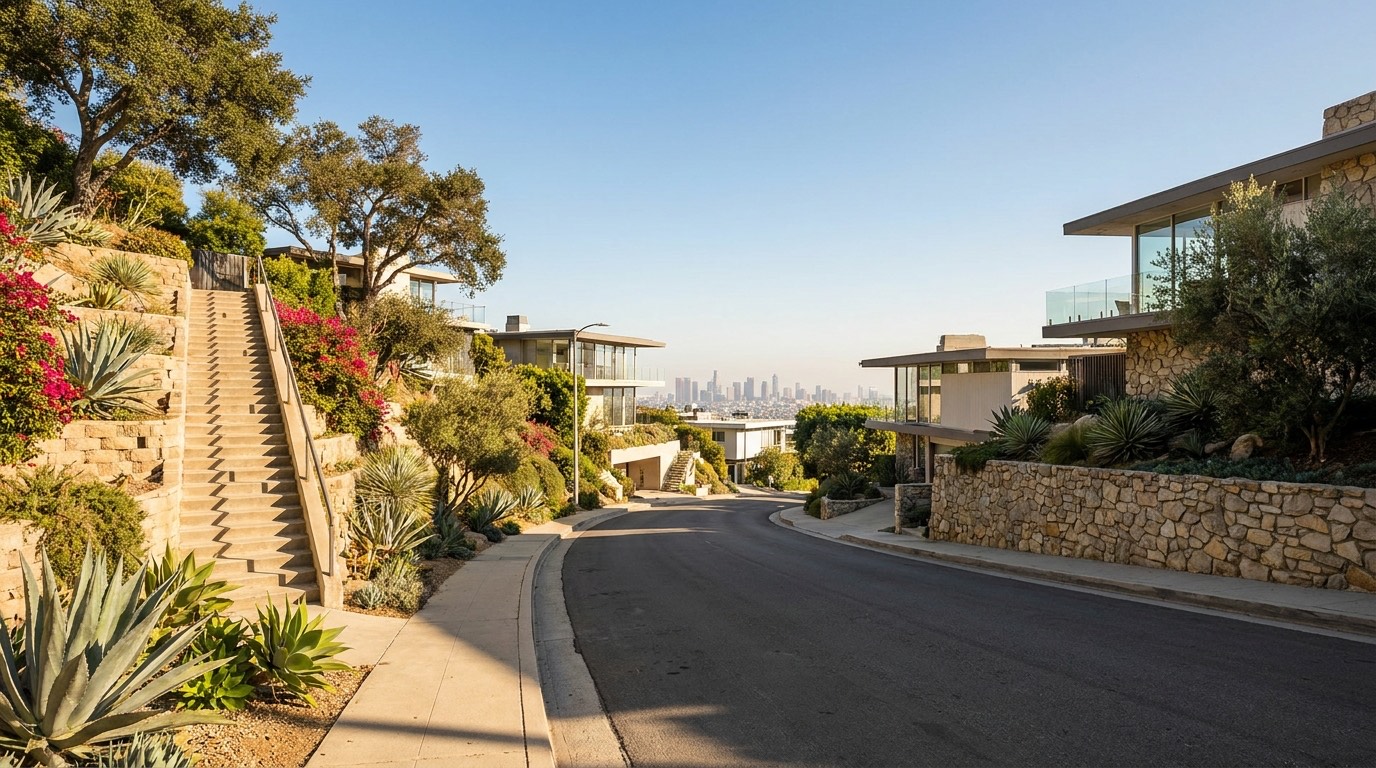
If walkability is high on your list, it’s worth knowing upfront: the Hollywood Hills is one of the least walkable submarkets in LA, and that’s not an oversight, it’s the tradeoff that comes with the privacy and views.
What You Can Actually Reach on Foot
Within most of the canyon communities, there’s essentially no retail or dining you can walk to. A few small exceptions exist, like the shops and market near the base of Laurel Canyon, but they serve as neighborhood touchpoints, not a walkable daily-errand network the way a flatland grid does. If you’re picturing a walk to pick up coffee or groceries, that picture doesn’t match most Hollywood Hills streets.
Beachwood Village Is the Closest Thing to a Walkable Pocket
Beachwood Village, at the base of Beachwood Canyon, has a small cluster of shops, a market, and a cafe within walking distance of the immediate surrounding streets. It’s genuinely useful if you land nearby, but it doesn’t extend up into the canyon itself, so a home even a few blocks up the hill is back to being car-dependent for the same errands.
Where Transit Actually Starts
Metro’s Red Line stops at Hollywood/Highland and Hollywood/Vine sit at the base of the hills, not in them. Getting to either one from most hillside streets means driving down first, since there’s no bus service running up into the canyons themselves. This is a genuine, structural difference from neighborhoods like West Hollywood, where daily errands are realistically walkable from a large share of addresses.
Trails Are a Real Perk, Just Not a Substitute for Errands
Runyon Canyon, Wattles Park, and the Lake Hollywood Park loop are all genuinely great for daily walking and hiking, and they’re a real reason people choose to live here. But they connect to walkable neighborhoods at their trailheads rather than functioning as a network for reaching a pharmacy or a restaurant. Treat trail access as a lifestyle asset, not evidence that the area is walkable in the errand-running sense.
Sidewalks Vary More Than You’d Expect
A lot of Hollywood Hills streets, especially the smaller canyon roads, have no sidewalk at all, which is standard for this kind of hillside terrain but worth knowing before you assume a given street is comfortable to walk at night or with a stroller. Streets closer to Mulholland or the wider boulevards tend to have better pedestrian infrastructure than the narrow side streets branching off them.
Rideshare and Delivery Have Their Own Quirks
Uber and Lyft drivers cover the hills, but pickup and dropoff on narrow, winding streets can take longer than the app estimates, and some addresses are easier to describe by cross street than by house number alone. Food delivery works, though drivers sometimes struggle with unmarked driveways or shared access points, worth a heads-up the first few times you order.
Who This Actually Suits
If daily walkability matters more to you than privacy and views, the Hollywood Hills is a poor match, and neighborhoods like West Hollywood or the Hollywood flats will serve you better. If you’re comfortable driving for errands in exchange for the setting, it’s a tradeoff a lot of residents make happily and don’t regret.
What to Ask Before You Assume
If a specific listing’s description mentions “close to shops” or “near transit,” it’s worth confirming exactly what that means in practice, since distances that look short on a map can involve a real elevation change or a road with no sidewalk at all. Ask what the actual walk looks like, not just how many tenths of a mile it covers, before you weigh it into your decision.
Not sure how much walkability actually matters to your day-to-day. Efrat serves buyers and sellers across Los Angeles, including the Hollywood Hills, and can help you weigh that tradeoff honestly against specific listings. Reach out anytime.
