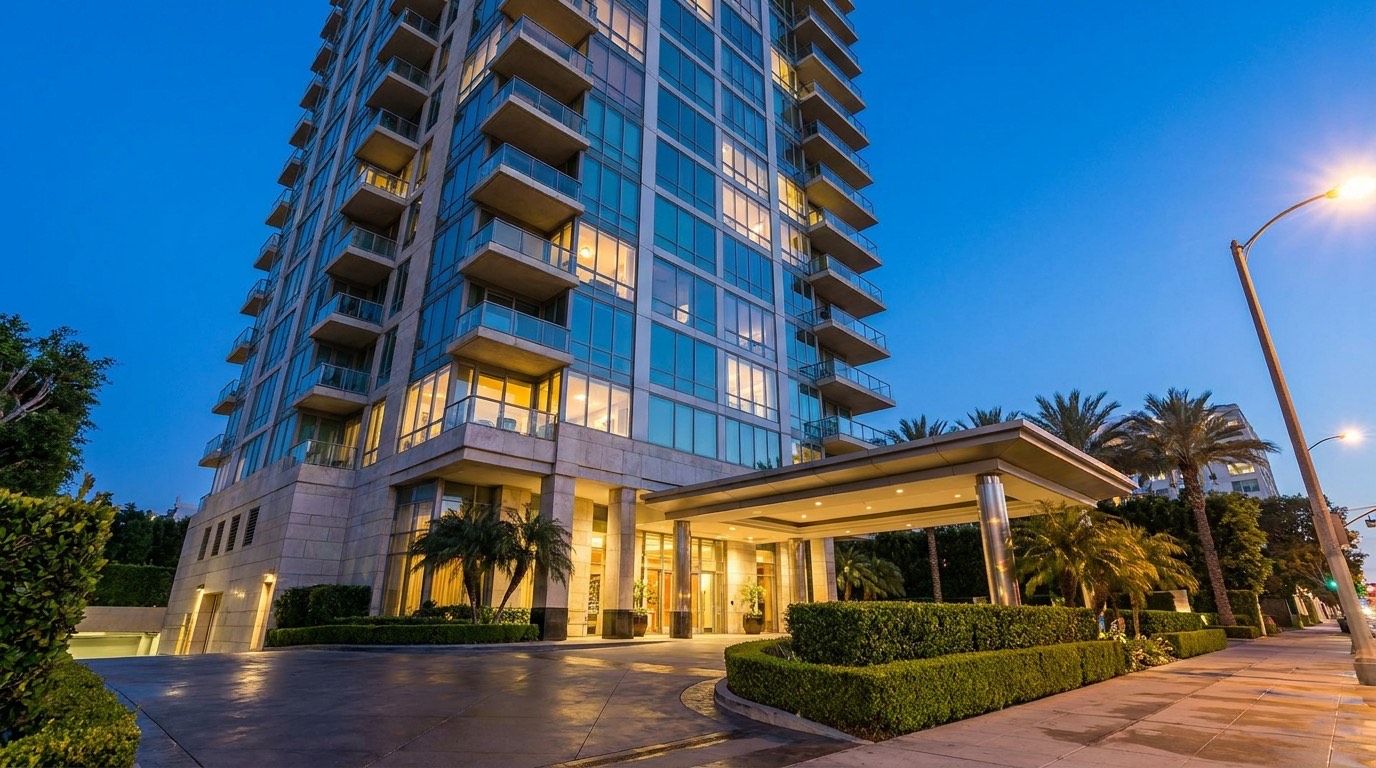
Pricing a Westwood property accurately means resisting the urge to use a single neighborhood average. Value here moves by building, by block, and by property type in ways that a broader Los Angeles pricing approach doesn’t fully capture, and getting it wrong in either direction costs sellers real money.
Condo Pricing Depends on the Building, Not Just the Neighborhood
Two similarly sized units in different buildings along the Wilshire corridor can carry meaningfully different values based on HOA financial health, building amenities, staffing, and reputation. Before settling on a list price, look specifically at recent sales within your own building where possible, and treat comps from other buildings as directional rather than definitive. A unit in a building with a strong reserve fund and no pending assessments is a genuinely different product than a similar unit in a building carrying deferred maintenance, even if the square footage matches.
HOA Fees Factor Into How Buyers Perceive Price
Buyers evaluating a condo purchase factor the monthly HOA fee into their overall budget much the way they factor a mortgage payment. A higher fee, even for a well-run building with strong amenities, can make an otherwise well-priced unit feel less competitive against a lower-fee alternative nearby. It’s worth being realistic about how your building’s fee structure compares to others buyers are likely considering before you finalize a number.
Single-Family Pricing Leans on Land and Privacy
Away from the condo corridor, Westwood’s residential streets price more like a traditional single-family market, where lot size, privacy, and proximity to the quieter parts of the neighborhood carry real weight. Comps here should draw from genuinely similar properties, similar lot size, similar distance from Westwood Village’s busier blocks, rather than a broad neighborhood average that blends quiet residential streets with busier ones.
UCLA Proximity Cuts Both Ways
Being close to campus can be a value driver for buyers prioritizing convenience, whether that’s staff, faculty, or investors looking at rental potential. But some family buyers actually pay a premium for a bit more distance and quiet. Understanding which buyer pool your specific property is likely to attract should shape how you weigh proximity in your pricing, rather than assuming closer to UCLA is automatically worth more.
Consider a Pre-Listing Appraisal for Unique Properties
If your property doesn’t map cleanly to recent comps, a condo in a building with few recent sales, or an older single-family home with unusual features, a pre-listing appraisal can add useful data before you commit to a number. It’s an added cost and a bit more time upfront, but it can prevent a pricing misstep that either scares off buyers or leaves money on the table. For the general fundamentals of comparative pricing, our core pricing guide is worth reviewing alongside these Westwood-specific factors.
Sales Pace Varies by Segment Too
Beyond price, it’s worth understanding how quickly properties similar to yours have actually been selling, not just what they sold for. A condo segment with a lot of active inventory in a given building might justify a more conservative starting price to generate quick interest, while a single-family home in a genuinely undersupplied residential pocket might support a firmer number with more patience built into the strategy. Your agent should be able to walk you through recent sales pace for your specific property type, not just a blended neighborhood average.
Get the Number Right Before You List, Not After
A Westwood listing priced without accounting for building-specific or block-specific factors tends to sit longer or require an early price correction, both of which can dent buyer confidence in the property. Getting the pricing conversation right before launch saves real time and negotiating leverage down the line.
If you’re preparing to sell in Westwood, reach out to Efrat. She serves buyers and sellers across Los Angeles, including Westwood, and can help you price your specific property against the comps that actually matter.
