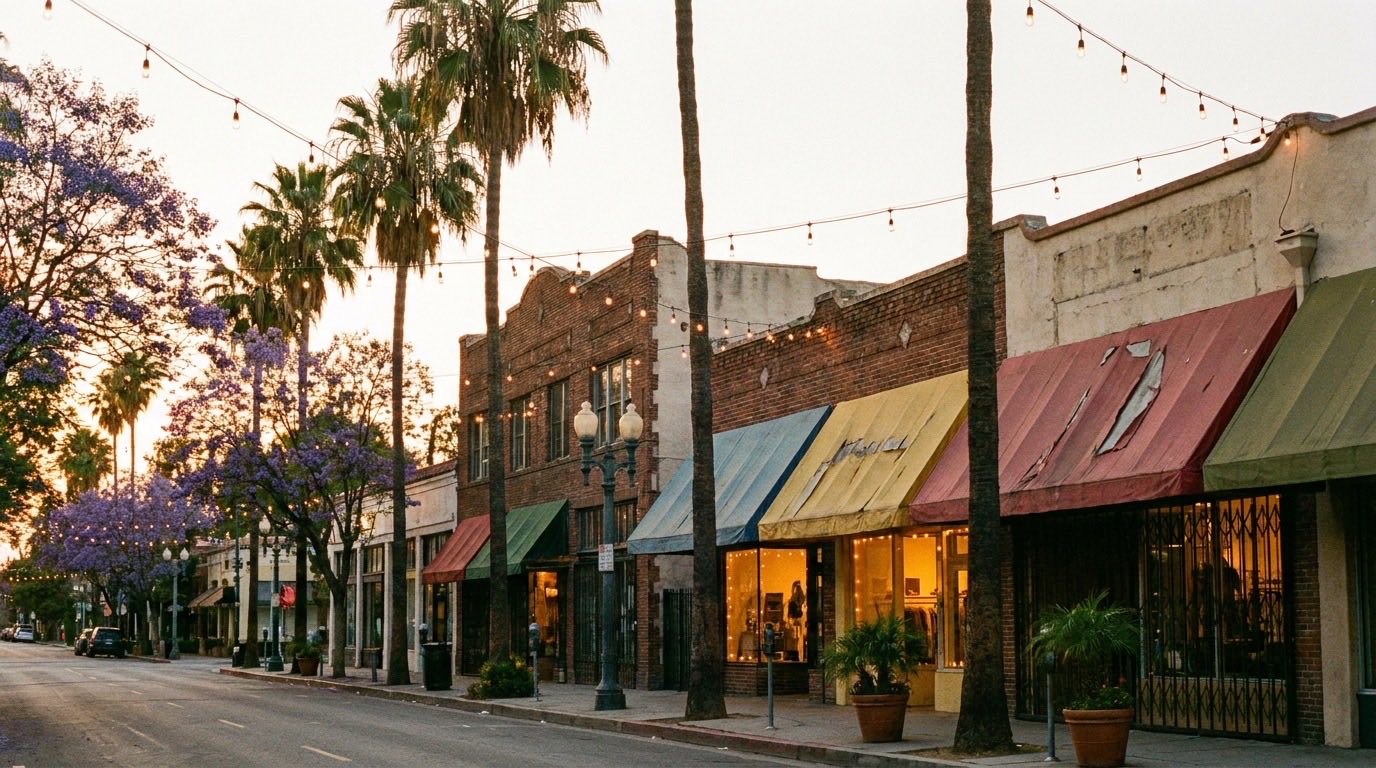
Los Feliz gets mentioned a lot in the same breath as Griffith Park, and that’s fair, the park genuinely shapes the neighborhood. But there’s more going on here day to day than proximity to green space, and it’s worth understanding the full picture before you decide whether it fits.
Griffith Park Sets the Backdrop
Griffith Park runs along the northern and eastern edge of Los Feliz, and it’s not a small detail, it’s one of the largest urban parks in the country, with hiking trails, the observatory, the Greek Theatre, and a lot of open space that most LA neighborhoods simply don’t have access to on foot. Living close to the park means trailhead access is a short walk or drive rather than a planned outing, and that changes how a lot of residents structure their weekends.
The Village Is the Neighborhood’s Walkable Core
Vermont Avenue and Hillhurst Avenue make up what people generally call the Los Feliz village, a stretch of independent coffee shops, restaurants, and a well-known local bookstore that gives the neighborhood a genuine walkable center. It’s not as sprawling as some LA commercial districts, which is part of the appeal, you can handle coffee, a meal, and a bit of shopping without moving the car. That said, walkability drops off the further you get from Vermont and Hillhurst, so it’s worth checking the actual distance from a specific address rather than assuming the whole neighborhood shares that same walkable feel.
Housing Stock Is Older and Architecturally Distinct
Los Feliz is generally known for its older homes, Spanish-style, Tudor, and mid-century designs built mostly in the early to mid-20th century, and that history is a real part of the neighborhood’s character. Our guide to Los Feliz housing stock and architectural styles goes deeper on what to expect from the different eras and styles you’ll come across.
Hillside Pockets Exist Alongside Flatter Streets
Not all of Los Feliz sits on flat ground. Portions of the neighborhood closer to Griffith Park climb into hillside terrain, with the winding streets and higher likelihood of geological or soils reports that come with that kind of lot. Other parts of Los Feliz are flatter and more walkable, closer to the village. It’s genuinely a mixed neighborhood in that sense, not a single type of terrain throughout, and it’s worth being clear on which part of Los Feliz you’re actually looking at before assuming either one applies.
Getting Around Day to Day
Los Feliz sits east of Hollywood and north of Silver Lake, with reasonably direct access to the 101 for anyone commuting toward downtown or the Valley. Local streets around the village can get tight for parking on weekend evenings, and the hillside pockets near the park involve narrower, winding roads that take more attention than a standard grid. Most residents end up relying on a car for anything outside the immediate village, even with the walkable core nearby.
Who Los Feliz Actually Fits
Los Feliz tends to fit buyers who want established architectural character, a genuine walkable commercial strip, and easy access to a large park, without needing the density or tourist traffic of neighborhoods closer to the beach or the entertainment core. It’s less of a fit if you want a brand-new build or a completely flat, uniform street grid throughout. If you’re weighing renting versus buying somewhere with this much architectural variety, the tradeoffs are a bit different than in a neighborhood built on newer, more uniform housing stock.
Getting a Real Read on the Neighborhood
The best way to understand Los Feliz is to walk the village at different times of day and drive a few of the hillside streets separately from the flatter ones near Vermont and Hillhurst. Efrat serves buyers and sellers across Los Angeles, including Los Feliz, and can help you figure out which pocket of the neighborhood actually matches what you’re looking for. Reach out to Efrat to talk through your search.
