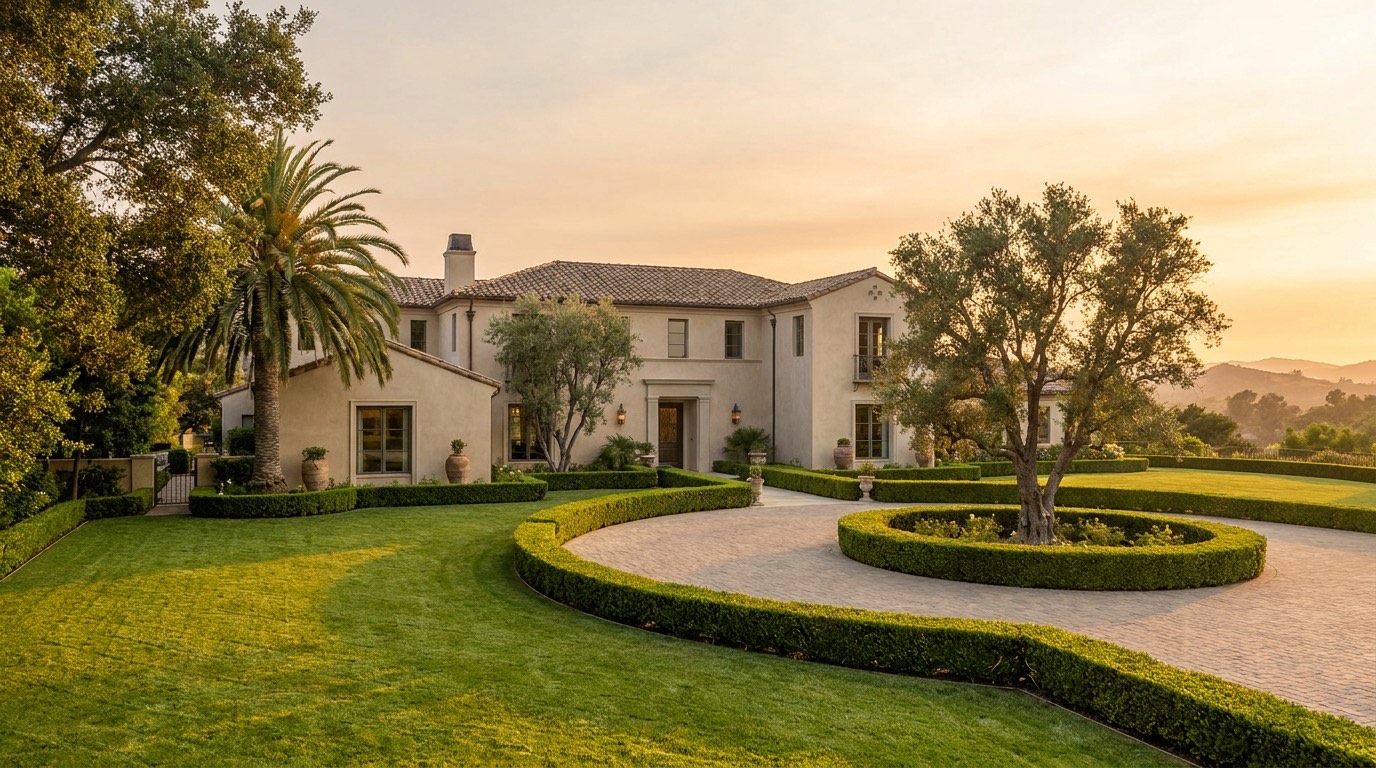
Beverlywood’s upper tier doesn’t look like a Beverly Hills estate or a Bel Air compound, and it isn’t trying to. What it offers instead is real, defensible value for a buyer who wants space and quiet without paying for a famous street address.
What “Luxury” Actually Means in This Neighborhood
At the top of Beverlywood’s market, you’re generally looking at a larger, well-updated (or fully rebuilt) single-family home on one of the neighborhood’s wider lots, often with a pool, a real backyard, and a floor plan built for how families actually live now. That’s a genuinely different category than the gated, mansion-scale estates you’ll find in some neighboring communities. If that estate-level scale is specifically what you’re after, it’s worth being upfront that Beverlywood isn’t built around that kind of inventory, and a different Westside neighborhood may fit the search better.
The Real Draw: Space and Quiet Without the Address Premium
Beverlywood’s biggest advantage at this tier is what you’re not paying for. The neighborhood sits close enough to Beverly Hills, Century City, and Culver City to offer a genuinely convenient location for buyers connected to those job centers, but without the price premium that comes attached to owning inside those city limits specifically. For a buyer who wants the space and the location, and doesn’t need the name recognition, that trade-off can represent real, honest value.
Original Traditional Homes vs. New Construction
A meaningful share of Beverlywood’s larger properties are original mid-century traditional or ranch-style homes, many well maintained by long-term owners, while others have been fully rebuilt or newly constructed on the neighborhood’s wider lots. Buyers at this tier often have a real choice between a character home with an established footprint and a from-the-ground-up new build, and which one makes sense depends on how much you value original architecture versus a fully modern floor plan and systems.
Move-Up Buyers Are a Bigger Part of This Market Than Outside Buyers
A significant share of demand at Beverlywood’s upper tier comes from buyers already living in the neighborhood, or nearby, moving up from a smaller home into more space as a family grows, rather than buyers relocating specifically for a prestige address. That local, move-up dynamic shapes the market here more than it does in a neighborhood that draws primarily from outside buyers chasing a name.
What to Expect on Lot Size and Privacy
Beverlywood’s grid does include a range of lot sizes, and the wider lots (the ones that support a pool, a substantial yard, or room for an ADU) tend to concentrate in specific pockets of the neighborhood rather than being evenly distributed. Privacy here comes more from quiet, low-traffic streets than from gates or long private driveways, which is a different kind of privacy than a true estate property offers, but a real one nonetheless.
Comparing Beverlywood Against Similarly Priced Nearby Options
At a comparable price point, a buyer could also be looking at options in neighboring communities with different trade-offs, more prestige and higher ceiling pricing in one direction, or a different housing stock and character in another. Our comparison of Beverlywood against Culver City is a useful starting point if you’re weighing Beverlywood against a nearby alternative at a similar budget.
Who This Tier of Beverlywood Actually Suits
This part of the market tends to suit a buyer who wants genuine space, a quiet, established residential setting, and a strong Westside location, without needing the property itself to signal status. It’s a weaker fit for a buyer whose priority is a recognizable prestige address or estate-scale grounds, since that buyer is generally better served looking elsewhere.
If you’re exploring the upper end of Beverlywood’s market, whether an updated original home or new construction, reach out to Efrat. She serves buyers and sellers across Los Angeles, including Beverlywood, and can walk you through what’s realistically available at this tier right now.
