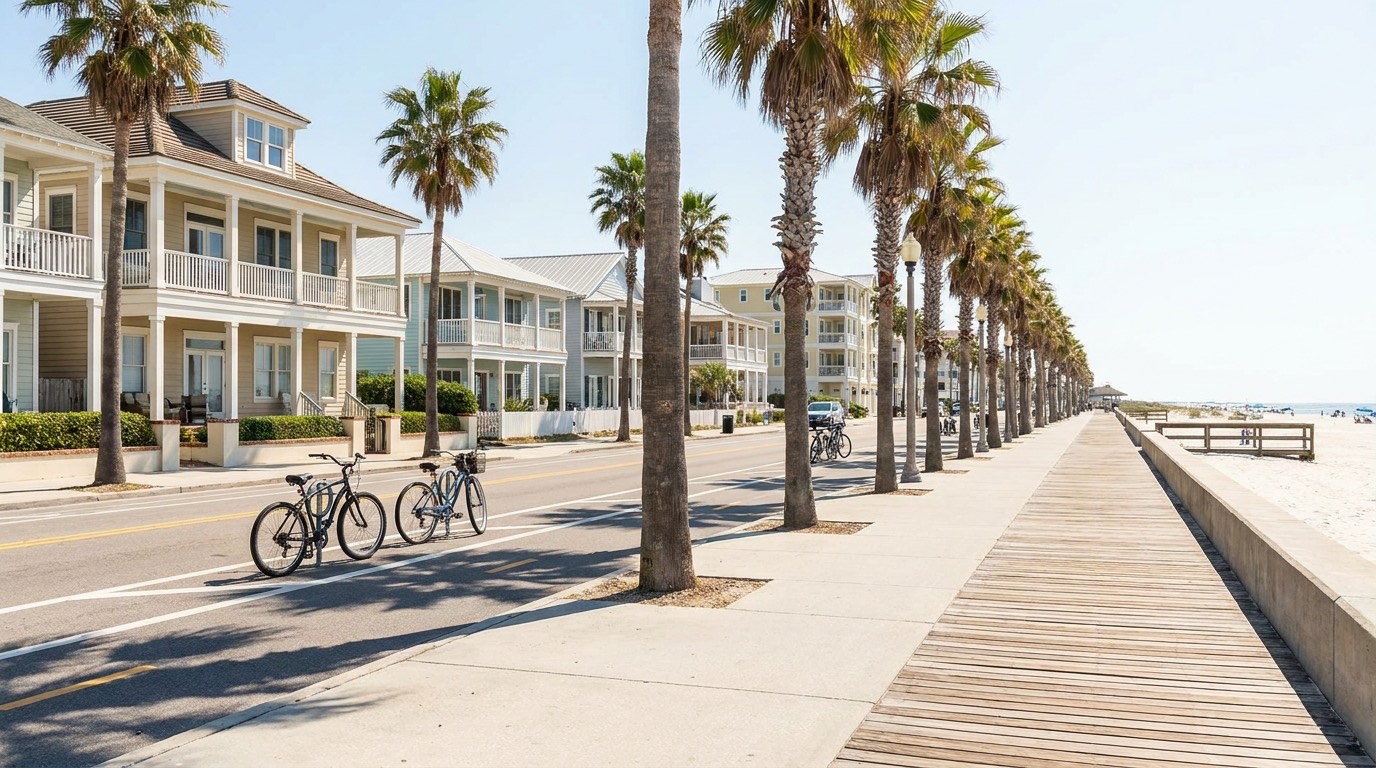
Playa Del Rey is a small town by LA standards, and its walkability reflects that. There’s a genuinely pleasant walkable core near the beach, and then there’s the hill section, which is a different experience entirely.
The Flat Section Is Playa Del Rey’s Walkable Core
The stretch along Culver Boulevard, Pacific Avenue, and the streets closest to the beach make up the walkable heart of the neighborhood. It’s compact, small-town in scale, and includes a handful of restaurants, a market, and casual businesses within an easy walk for residents nearby. It doesn’t have the density or variety of a neighborhood like Venice or West Hollywood, but for its size it covers the basics well.
The Hill Section Is a Different Kind of Walk
Above the flat area, Playa Del Rey’s hill section climbs steeply toward view lots overlooking the marina and, in some spots, the ocean. People absolutely walk these streets, for exercise as much as errands, but the grades are real and the commercial strip is down at the bottom, not woven through the hill itself. If daily walkability to shops and restaurants is a priority, that’s a meaningful factor to weigh against the views a hill address offers.
Del Rey Lagoon Park Anchors the Flat Section
Del Rey Lagoon Park sits right in the middle of the flat section and functions as a genuine neighborhood gathering spot, with a small lagoon, grass, and a playground within walking distance for a good share of nearby residents. It’s one of the clearest examples of what makes the flat section feel like an actual walkable community rather than just a beach-adjacent address.
The Marvin Braude Bike Path Runs Right Through
The coastal bike path connects Playa Del Rey to Marina del Rey to the north and Venice and Santa Monica beyond that, and it’s genuinely used for both recreation and shorter errands by residents in the flat section. E-bikes in particular have made trips up toward Marina del Rey or Venice a realistic option for people who wouldn’t otherwise consider it, though the hill’s terrain makes biking there a more serious workout than a casual ride.
Bus and Rail Coverage Is Limited but Present
Local bus lines run along Culver Boulevard and connect toward Westchester, where Metro’s rail network becomes reachable. Playa Del Rey itself isn’t a rail-connected neighborhood the way some inland LA communities are, so most residents drive or bike to a station rather than walking there directly. It’s a reasonable setup for occasional trips, not a substitute for a car in daily life.
Parking and Street Width Are Worth Checking
Some streets in both the flat section and the hill were laid out decades ago and are narrower than modern standards, which can mean tighter street parking and, on the hill in particular, limited turnaround room. It’s worth confirming what parking actually comes with a specific listing, especially on the hill, rather than assuming based on the neighborhood’s general reputation.
How Playa Del Rey Compares to Marina del Rey Next Door
Marina del Rey, immediately adjacent, has a more developed walkable zone around its harbor, with more restaurants and shops within an easy walk than Playa Del Rey’s own small strip offers. Some buyers who want maximum walkability end up choosing a Marina del Rey address instead, while others prefer Playa Del Rey’s quieter streets and are fine treating Marina del Rey as a short walk or bike ride away rather than home base. It’s worth touring both before deciding which fits your daily habits better.
What to Check Before Assuming a Listing Is Walkable
Because Playa Del Rey’s walkable zone is small and concentrated, it’s worth checking the actual walking distance from a specific address to Culver Boulevard’s businesses rather than assuming based on the neighborhood name alone. A few blocks can be the difference between an easy stroll and a genuine climb, especially anywhere near the hill.
If walkability or the flat-versus-hill tradeoff is a priority in your search, reach out to Efrat and she can help you evaluate specific listings against what actually matters to you.
