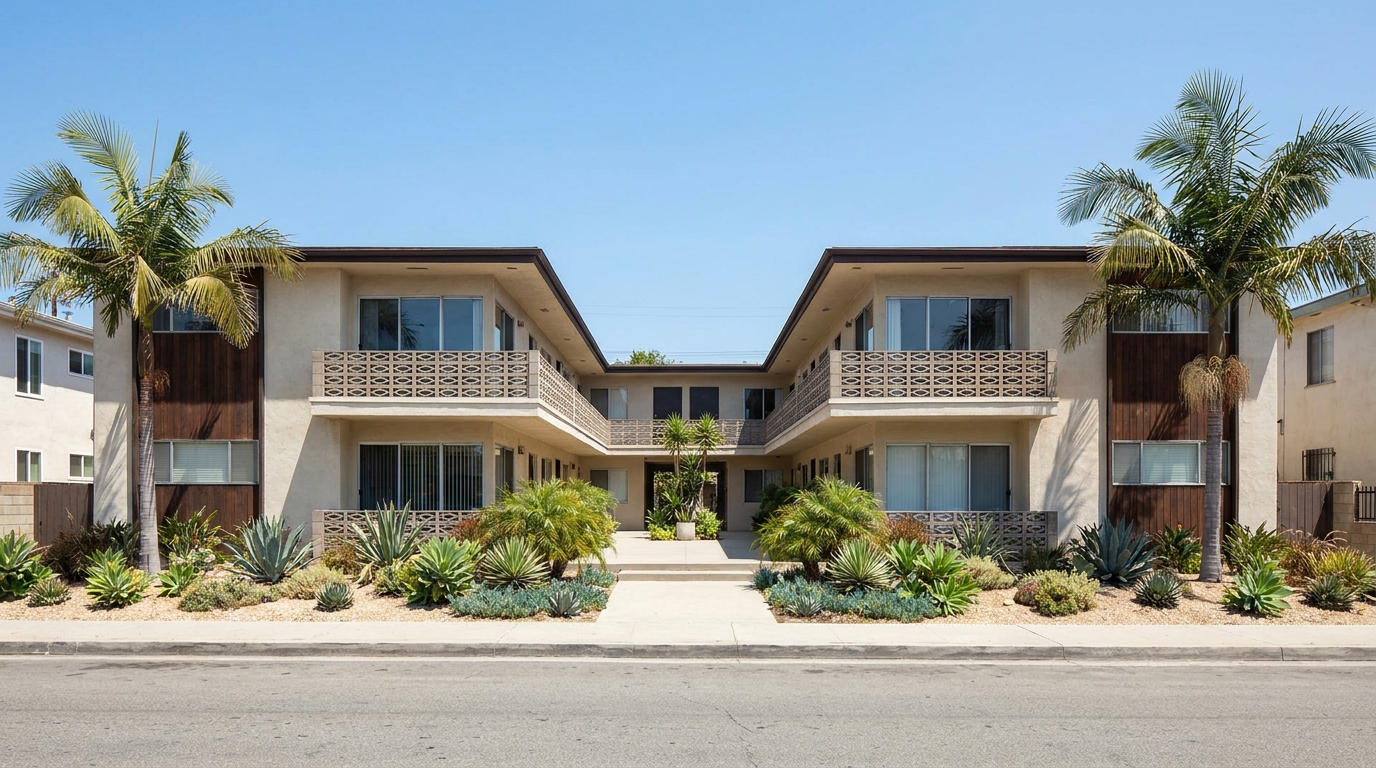
Costa-Hawkins is the state law that sets the boundaries for what a local rent control ordinance, including the City of LA’s Rent Stabilization Ordinance (RSO), can and can’t do, and any investor buying a multi-unit LA property should understand it before assuming what rents or turnover will look like.
What Costa-Hawkins Actually Does
California’s Costa-Hawkins Rental Housing Act, passed in 1995, shapes local rent control statewide in two big ways that matter directly to an investor. First, it exempts most single-family homes and condos from local rent control, with some exceptions and conditions depending on ownership and timing. Second, it establishes vacancy decontrol, which we’ll cover below. Everything the City of LA’s RSO does operates within the boundaries Costa-Hawkins sets.
Single-Family Homes vs. Older Multi-Unit Buildings
Because Costa-Hawkins exempts most single-family homes and condos from local rent control, LA’s RSO generally applies to older multi-unit apartment buildings, not most single-family rentals. This is a meaningful distinction when you’re deciding what type of property to buy as a rental. A single-family home generally gives you more flexibility on rent-setting and turnover than an older RSO-covered apartment building will, and that difference belongs in your investment math from the start.
Vacancy Decontrol Resets Rent at Turnover
Vacancy decontrol means that once a rent-controlled unit’s tenant voluntarily moves out, the landlord can reset the rent to market rate for the next tenant. This is different from the annual increase caps that apply while a tenant stays in place. If you’re buying an RSO-covered building with long-term tenants at below-market rents, understand that your ability to reach market rent depends on turnover happening, not on anything you can do while those tenants remain.
What LA’s RSO Caps and Requires
Where it applies, LA’s RSO caps how much and how often rent can be raised for a sitting tenant, and it imposes “just cause” eviction requirements, meaning a landlord generally needs a legally recognized reason to end a tenancy, not simply a wish to raise the rent or bring in a new tenant. This affects how straightforward it is to reposition a unit, and it’s worth understanding fully before you count on turnover as part of your return projections.
RSO coverage in the City of LA generally turns on when the building was constructed, with older buildings (built before a cutoff date in the late 1970s) falling under the ordinance and newer construction typically exempt. That construction-date cutoff is exactly the kind of detail worth confirming for a specific address rather than assuming from the neighborhood or the building’s general age, since two buildings a block apart can land on different sides of it.
AB 1482 Layers on Top of Local Rules
State-level AB 1482 adds a statewide rent cap and just-cause eviction law on top of local rules, applying to properties not otherwise covered by a stricter local ordinance like LA’s RSO. This means an investor needs to check both state and City of LA rules for a specific property, not assume that one set of rules covers it alone. A property that’s exempt from the RSO may still fall under AB 1482’s statewide protections.
Confirm Rent-Control Status Before You Buy
Before assuming what rents can be charged or how eviction and turnover would work on a multi-unit LA property, confirm its exact rent-control status directly with the city, whether it’s RSO-covered or exempt. This single detail materially affects the investment math, and it’s worth confirming before you’re under contract, not after. For a broader look at tenant-facing landlord obligations across California, our rent control and landlord-tenant law guide covers the general framework.
If you’re evaluating a multi-unit property in LA as an investment, get in touch and Efrat can help you confirm its rent-control status before you make an offer.
