Santa Monica sits at the western edge of Los Angeles, which means most commutes start with the same question: how far inland does your job actually pull you. Here’s how that plays out toward the places people who live in Santa Monica actually work.
Getting to the Westside Tech Corridor
Silicon Beach, the office cluster that includes companies like Google, Snap, and YouTube, largely overlaps with Santa Monica itself and spills into neighboring Playa Vista and Venice. For residents already living here, this can be one of the shortest, easiest commutes in the city, sometimes closer to a bike ride than a drive. Timing still matters. A trip that takes ten minutes at noon can take twice as long during the morning or evening crunch.
Reaching Downtown LA and Century City
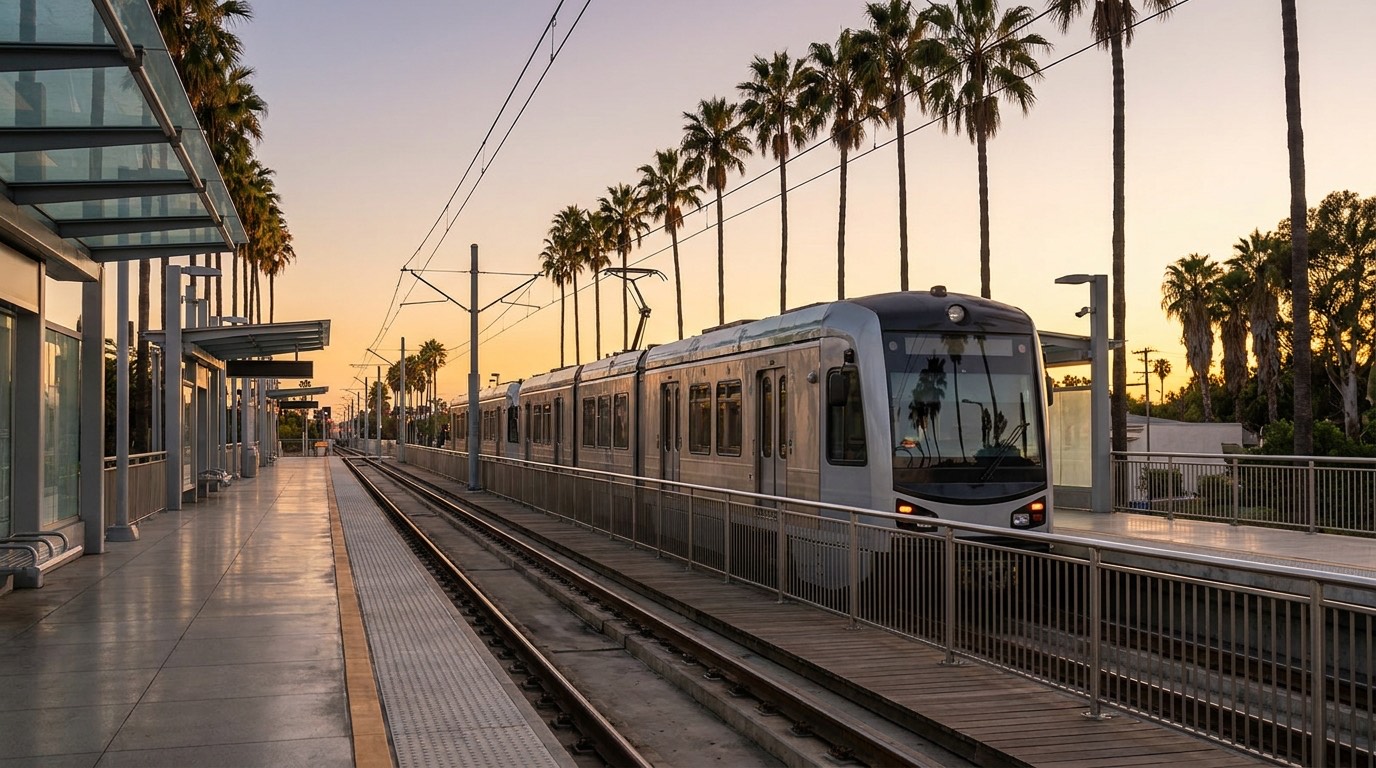
Downtown is a real commute from Santa Monica, but it’s more manageable than from most other coastal neighborhoods thanks to Metro’s E Line (the rail line most people still know as the Expo Line), which runs a fairly direct route between Santa Monica and Downtown with stops along the way. Driving the 10 freeway is the other option, and it’s a workable drive outside rush hour, though it slows down substantially during peak commute windows. Century City, home to a lot of entertainment and legal offices, is a shorter drive or bus ride up Santa Monica Boulevard or Wilshire and tends to be one of the easier inland commutes from here.
The Practical Case for the E Line
Not every job center is near a train stop, so it’s worth being honest about when the E Line actually helps. If your office is near one of the Downtown stations, or somewhere along the route through Culver City and the Westside, it can replace a driving commute several days a week. If your job is in the Valley, the South Bay, or somewhere off the rail corridor entirely, you’re likely driving regardless, and it’s worth test-driving that specific commute at actual rush hour before you commit to a home.
LAX Proximity Cuts Both Ways
Santa Monica isn’t as close to LAX as Venice or Playa Vista, but it’s still a reasonably short drive for residents who travel often for work. The tradeoff, as with most of the Westside, is airport-adjacent traffic on the streets that feed into LAX, which is worth factoring in if you’re a frequent flyer weighing specific listings.
The Corridors That Make or Break Your Commute
A handful of streets and freeways show up again and again in Santa Monica commute conversations. The 10 freeway is the main artery east, and it’s genuinely one of the more congested stretches in the city during both morning and evening rush. Lincoln Boulevard carries heavy traffic near the freeway interchanges, especially close to the airport. Pacific Coast Highway and Ocean Avenue are scenic but slow to a crawl on summer weekends and holidays when beach traffic backs up for miles. None of this is unique to Santa Monica specifically among LA’s coastal neighborhoods, but it’s worth knowing which routes to avoid and when before you settle on a daily commute.
Weighing the Commute Against the Lifestyle
The honest tradeoff with Santa Monica is that you’re buying into walkability, beach access, and a genuinely rare mix of transit options for LA, not necessarily the shortest possible commute to every job center in the region. For buyers working in Silicon Beach, Century City, or Downtown along the rail line, that tradeoff tends to be an easy call. For anyone commuting regularly to the Valley or further east, it’s worth mapping the actual drive at rush hour before making an offer, not after you’re already in escrow.
If a hybrid or remote schedule is part of your plans, the math shifts again, since fewer commute days lowers how much a longer drive actually costs you over a year. Efrat serves buyers and sellers across Los Angeles, including Santa Monica, and can help you think through how a specific commute tends to play out before you start touring. Reach out to Efrat if you want to talk it through.
