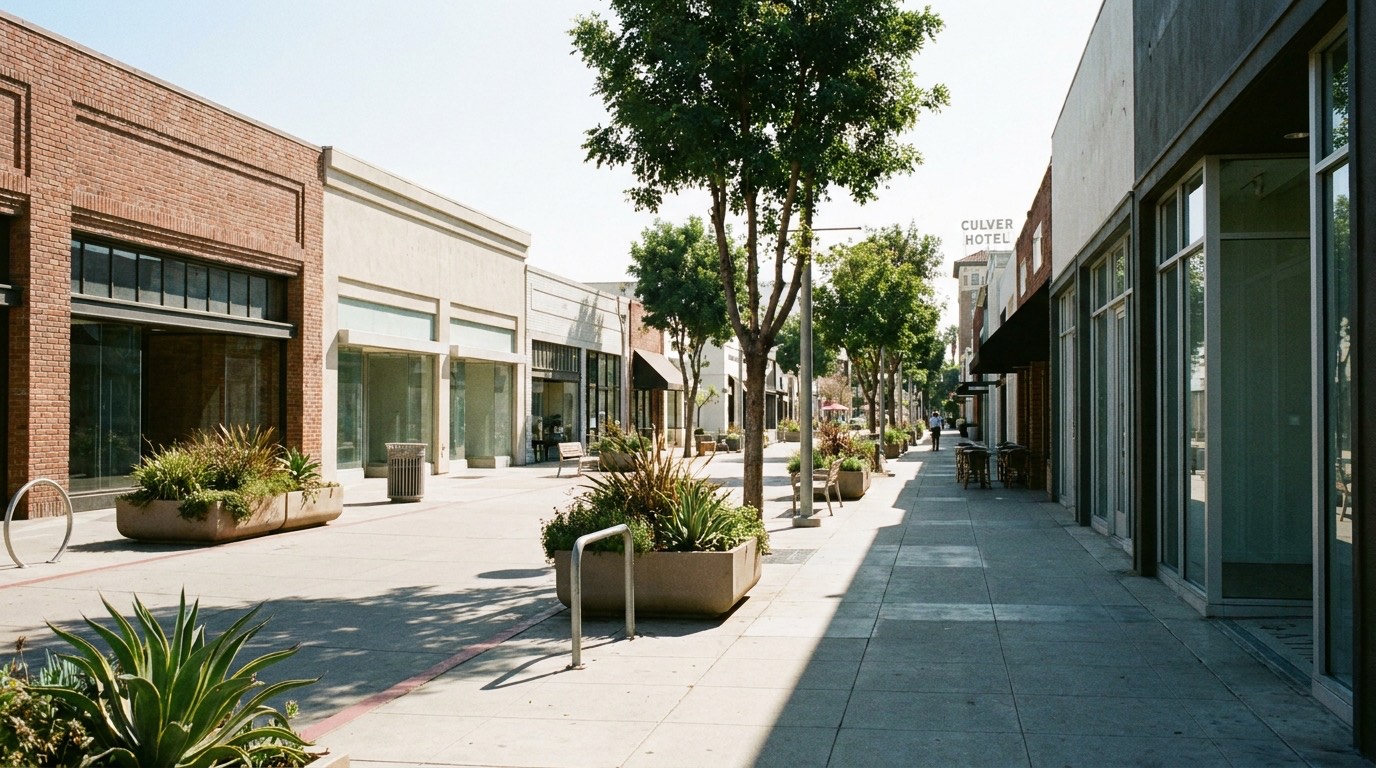
Culver City’s retail scene mixes a historic downtown core with newer mixed-use development, giving the neighborhood a genuinely varied shopping picture depending on what you’re after.
Downtown Main Street’s Boutique Core
The historic downtown corridor around Main Street and Culver Boulevard holds the neighborhood’s original retail character, a walkable mix of independent shops and boutiques near the Culver Hotel. It’s the natural place to start if walkable, small-scale shopping is a priority in your search.
Platform Brings a Newer, Tech-Adjacent Retail Mix
A few blocks from downtown, Platform combines retail, dining, and office space on Washington Boulevard, built partly with Culver City’s tech and creative workforce in mind. It reflects how much the neighborhood’s retail scene has evolved alongside its growth as a job center, rather than sitting apart from it.
Ivy Station Ties Retail to the E Line
Next to the Culver City E Line station, Ivy Station combines retail and dining with residential units, designed around the transit connection rather than requiring a drive. It’s a good example of the kind of transit-oriented development that’s reshaped parts of the neighborhood in recent years.
A Larger Indoor Mall for Bigger-Box Needs
Further from the historic downtown core, near Sepulveda and Slauson, an indoor mall covers more conventional retail and bigger-box shopping, useful for anyone who needs more than what the walkable downtown corridor offers. It’s worth checking distance from a specific listing if this kind of shopping matters to your daily routine.
Helms Bakery District for Home and Design
West of downtown, the Helms Bakery District has grown into a design-focused retail destination, with furniture and home goods showrooms occupying a building with real local history as a bakery that once supplied much of LA. It also hosts a regular farmers market, adding a different rhythm to the shopping scene than the more everyday downtown corridor.
What to Check Before Assuming Walkability
Retail development in Culver City has moved quickly in recent years, and what’s open or under construction shifts over time. It’s worth checking current listings for any specific development rather than relying on an older description, particularly for newer mixed-use projects still filling out their retail space.
Everyday Errands Still Require Some Driving
Even with the walkable downtown core and the newer mixed-use developments, most residents still end up driving for at least some errands, particularly larger grocery runs or specialty shopping not covered within the immediate downtown footprint. It’s worth thinking through your actual weekly shopping habits rather than assuming the walkable core covers everything, since it typically handles a meaningful share of day-to-day needs without replacing a car entirely.
How Retail Access Varies by Specific Street
Because so much of Culver City’s retail development is concentrated in a few distinct pockets, downtown, Platform, Ivy Station, and Helms Bakery District, walkable access can differ significantly depending on which specific street a listing sits on, even within the same general neighborhood. Two homes a mile apart can have very different practical shopping access, so it’s worth checking actual walking distance to whichever retail corridor matters most to you rather than relying on the neighborhood name alone.
How This Fits a Home Search
If walkable, everyday shopping matters to your daily life, downtown Culver City and the Ivy Station corridor near the E Line station are the strongest fit. If you’re comfortable driving a short distance for bigger retail needs, the wider neighborhood still covers that without requiring a premium for direct walkability.
If shopping and retail access are part of what you’re weighing in Culver City, reach out to Efrat and she can help point you toward listings close to the parts of the neighborhood you’d actually use.
