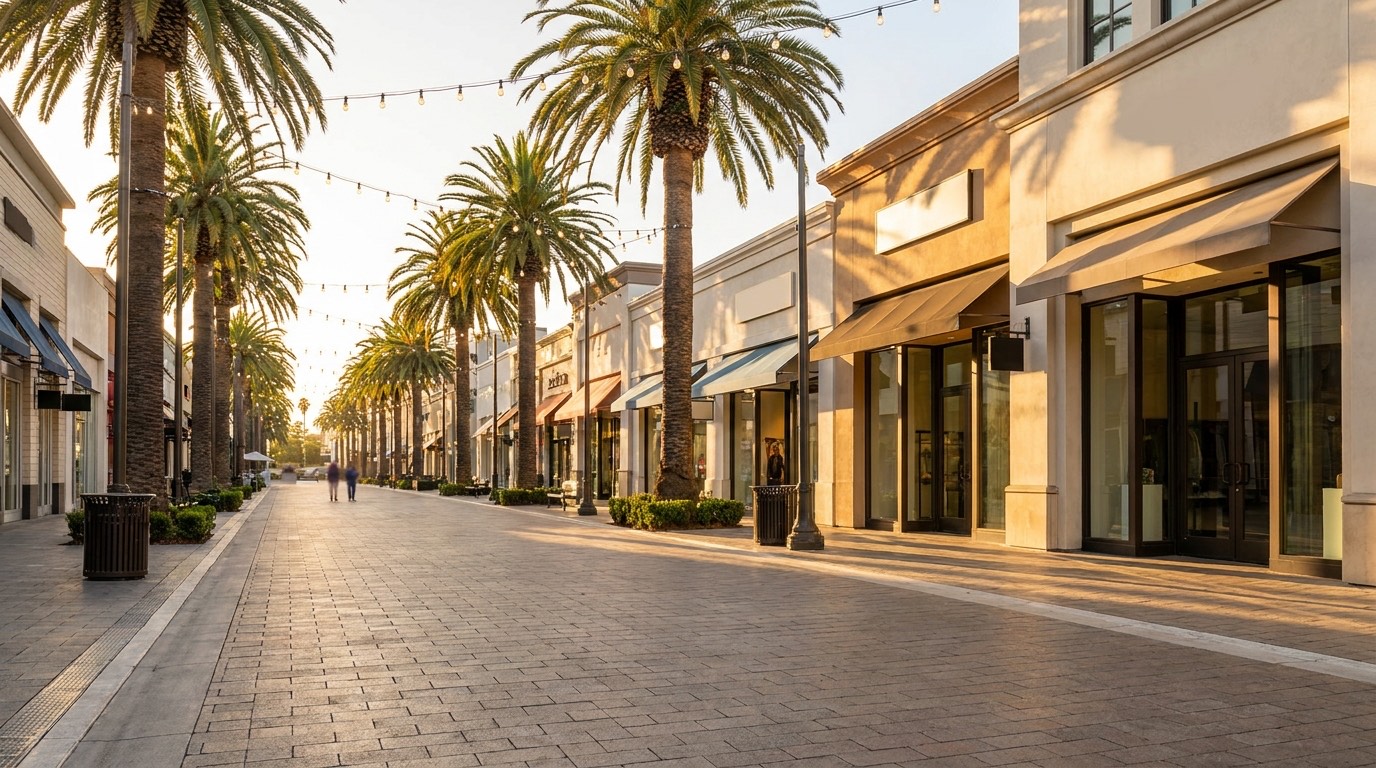
Santa Monica’s shopping scene splits into a few distinct areas, and each one has a genuinely different character, worth understanding before you assume the whole city shares one retail identity.
The Third Street Promenade and Santa Monica Place
The Promenade is Santa Monica’s main pedestrian shopping corridor, several blocks closed to car traffic and lined with retail, restaurants, and a steady stream of street performers. It connects directly into Santa Monica Place, an open-air mall that adds another dense layer of national and specialty retailers. Together they form the most walkable, high-traffic retail core in the city, and living within walking distance means shopping trips rarely require a car.
Montana Avenue’s Boutique Character
North of downtown, Montana Avenue offers a noticeably different experience, independent boutiques, home goods stores, and a slower, more residential pace than the Promenade’s crowds. It caters primarily to the neighborhood’s own residents rather than visitors, which gives it a quieter, more curated feel. Buyers who want a walkable retail street without downtown’s foot traffic often gravitate toward this part of the city.
Main Street’s Eclectic, Beachy Mix
Closer to the Venice border, Main Street carries its own smaller, more eclectic retail scene: independent shops, casual clothing boutiques, and a beachy character that fits its proximity to the sand. It draws residents from both Santa Monica and Venice and functions more like a laid-back neighborhood strip than a destination shopping district.
What Each Area Says About the Surrounding Neighborhood
The retail character of a given part of Santa Monica tends to reflect the residential feel around it. Downtown’s density and energy mirror the busier, more urban blocks nearby, while Montana Avenue’s quieter boutique strip fits the more residential streets around it. Main Street’s casual pace matches the beach-adjacent lifestyle of the area closest to Venice. Paying attention to which retail scene you’re drawn to can actually help clarify which part of Santa Monica fits your daily life best.
Parking and Practical Realities Around Downtown
Downtown Santa Monica’s popularity brings real parking pressure, especially near the Promenade and Santa Monica Place on weekends and during peak shopping hours. Several public parking structures serve the area, and a lot of residents who live nearby simply walk instead of dealing with downtown parking at all, which is part of why proximity matters so much if walkable shopping is a priority for you. Streets further from the core tend to have easier parking but a shorter list of things within actual walking distance.
How the Scene Shifts Through the Week and the Seasons
Downtown’s retail energy isn’t constant. Weekdays tend to feel calmer and more locally used, while weekends bring a heavier mix of visitors from across the region, particularly during summer when beach tourism peaks. Buyers who want the Promenade’s energy as a backdrop should expect that energy to swing noticeably between a quiet Tuesday afternoon and a busy Saturday, which is worth experiencing firsthand at different times before assuming one visit tells you everything.
Weighing Shopping Access in Your Search
For buyers prioritizing a walkable lifestyle, proximity to one of these corridors is worth factoring into your search the same way school district or square footage would be. It matters less in Santa Monica’s quieter residential pockets away from these streets, where a short drive for errands is simply part of daily life, which isn’t a downside, just a different set of priorities depending on what you value.
If access to a specific shopping and retail scene matters to your search, reach out to Efrat and she can help you figure out which part of Santa Monica actually fits the lifestyle you’re picturing.
