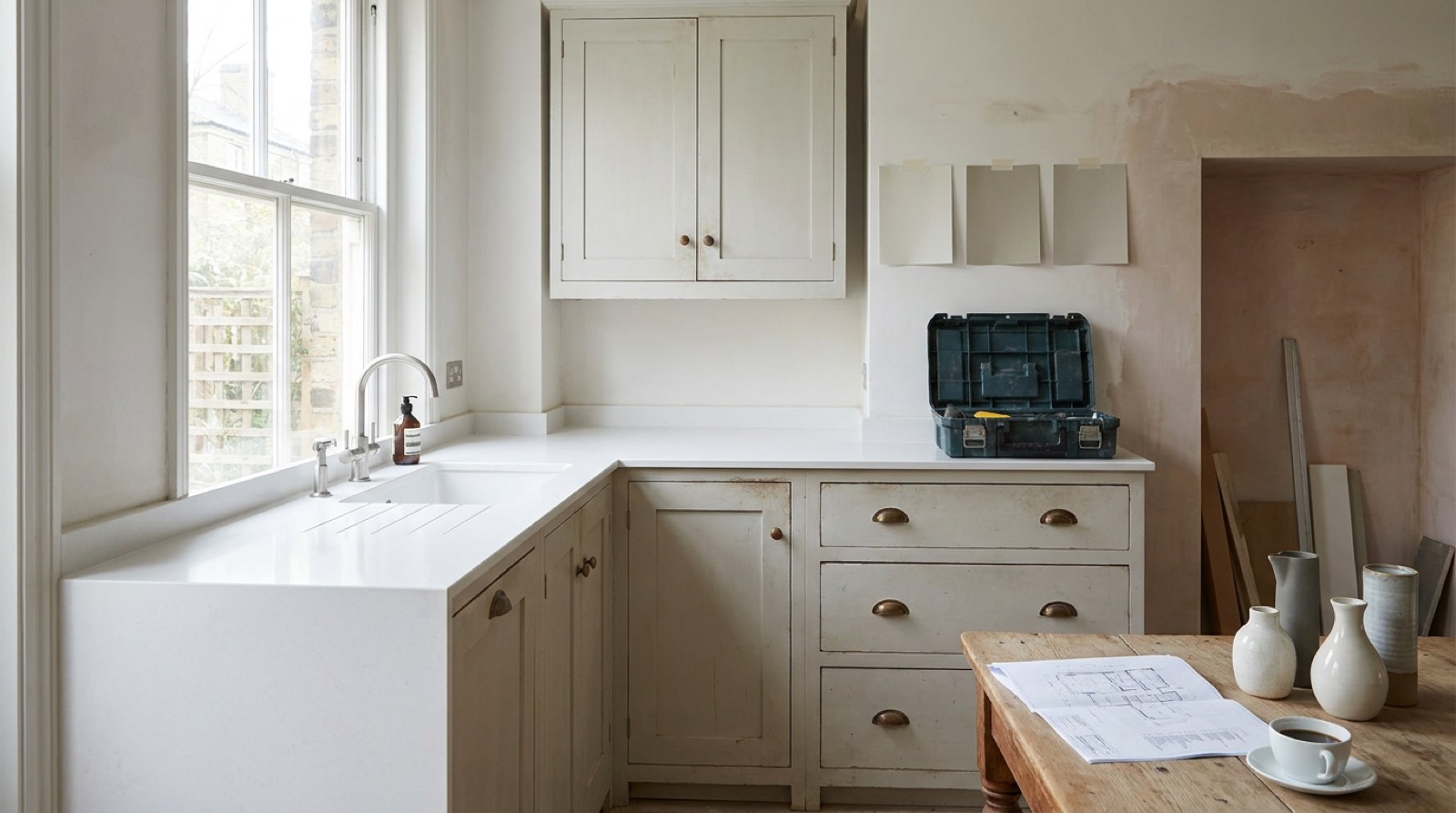
Not every dollar spent on renovation comes back at the closing table. The decision depends on what’s actually driving your home’s condition gap against comparable listings.
Kitchens and Bathrooms Usually Have the Best Return
Buyers weight these two spaces heavily. A dated kitchen or bathroom can suppress your price more than the actual cost of a reasonable update, which is why these tend to have the strongest return among major renovations.
Cosmetic Fixes Almost Always Beat Structural Ones for ROI
Paint, flooring, and light fixture updates are relatively cheap and reliably improve buyer perception. Major structural work, a new roof, foundation repair, is often necessary regardless of resale, but rarely returns its full cost at sale. If a structural issue exists, it’s usually better to disclose it and price accordingly than to spend heavily fixing it right before selling.
Consider Your Specific Comps, Not a Generic Rule
If every comparable home in your area has an updated kitchen and yours doesn’t, that gap is actively costing you at whatever price you set. If your comps are similarly dated, a major kitchen renovation may not move the needle as much, since buyers in that price range aren’t expecting a fully updated space.
Time Is a Real Cost Too
A renovation that takes months delays your sale and carries its own risk if the market shifts while you wait. Weigh the time cost against the expected price lift, not just the dollar cost of the work itself.
When Selling As-Is Makes More Sense
If a home needs extensive work, sometimes the better move is pricing it accordingly and marketing it clearly as a value-add opportunity, rather than investing heavily yourself. This especially applies to inherited properties or situations where you want a faster, simpler sale.
If you’re weighing whether to renovate before listing, get in touch and Efrat can help you figure out what’s actually worth it for your specific home and comps.
