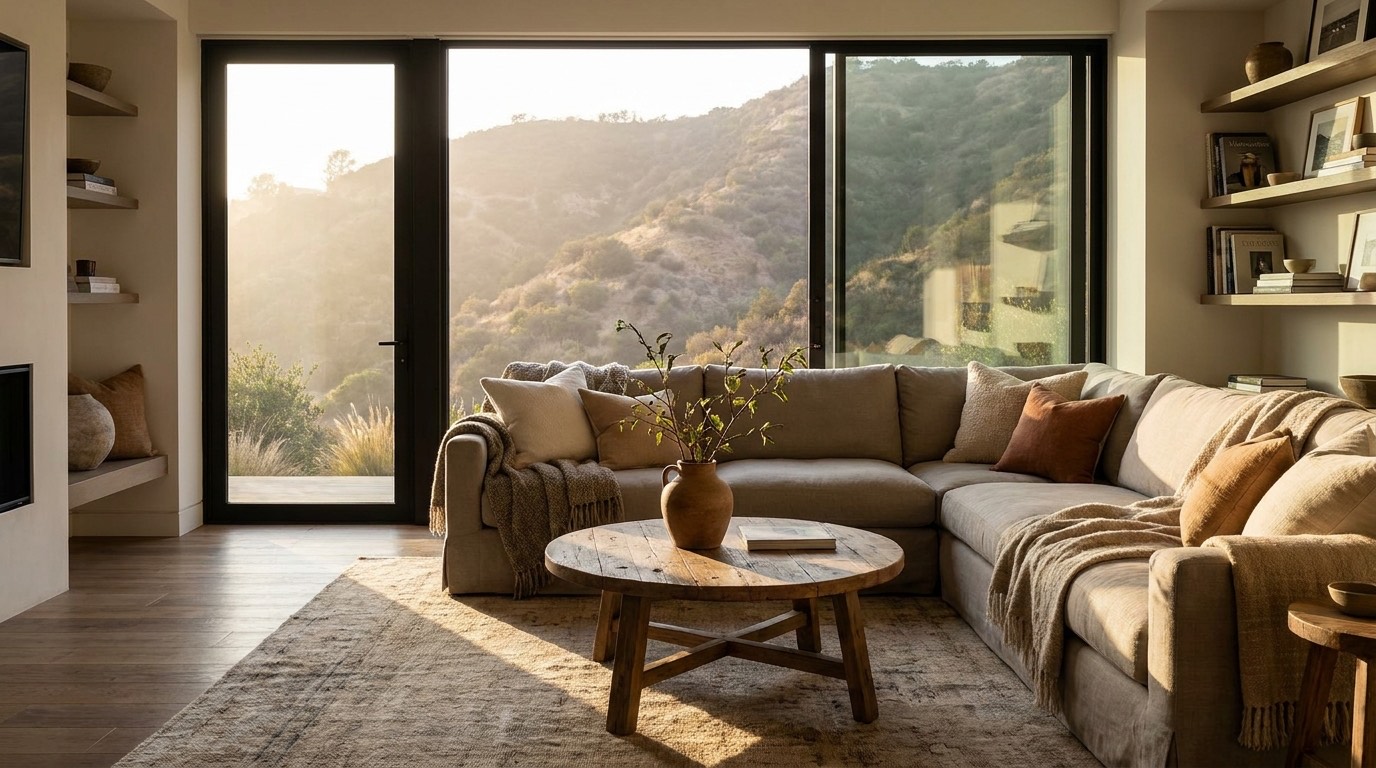
Staging works everywhere, but the version that resonates with Hollywood Hills buyers looks different from a standard flatland playbook. It’s less about a neutral showroom look and more about capturing view, privacy, and a genuine sense of place, and getting that balance right can meaningfully change how a listing performs.
The View Is the Real Selling Point
A lot of buyers actively looking in Hollywood Hills are paying for the view and the privacy as much as the structure itself. Staging that frames the view clearly, unobstructed sightlines from key rooms, furniture arranged to draw the eye outward, tends to connect more than a generic interior-focused setup. For general staging fundamentals that still apply as a foundation, see our luxury home staging tips.
Outdoor and View-Facing Spaces Deserve Priority
Decks, pools, and view-facing patios often do more selling work here than any single interior room. These spaces should be staged with real intention, comfortable seating, clean lines, good evening lighting for twilight photography, since a lot of the emotional pull of a Hollywood Hills home happens outside, not in the living room.
Photography Needs to Match the Setting
A well-staged Hollywood Hills home still needs photography that captures the light, the view, and the sense of privacy that draws buyers here in the first place. Twilight and daytime shots of view-facing rooms and outdoor spaces are worth the investment. Our general staging guide covers the fundamentals, but view-driven listings specifically benefit from photography planned around the time of day the light does the most work.
Don’t Erase Character That Fits the Setting
If a home has genuine architectural character, distinctive beams, an original mid-century layout, custom stonework, staging should work with those features rather than covering them up with a generic modern look. Buyers drawn to this submarket often want a sense of place, not a blank slate.
Address Genuinely Dated Interiors Honestly
Some homes here compete against fully renovated comps nearby, and staging alone can’t fully offset an interior that reads as dated relative to that competition. It’s worth an honest conversation with your agent about whether targeted updates, or pricing that reflects the current condition, makes more sense than staging around the issue.
Think About the Buyer Scrolling First
Most buyers see a Hollywood Hills listing on their phone before ever considering a showing. The first few photos need to do the work of stopping a scroll, ideally an image that captures the view or the setting right away rather than opening with a straight-on shot of a living room. Staging decisions should be made with that first impression in mind.
Vacant Homes Need Extra Thought Here Too
An empty home can read as cold anywhere, and it can feel especially flat in a submarket where buyers are shopping for lifestyle and view as much as square footage. Even minimal furnishing in main living areas and view-facing outdoor space helps buyers picture themselves there in a way a completely empty house doesn’t.
Small Budget, Focused Choices
Not every seller has room for a full professional staging package, and that’s fine. If you’re staging on a tighter budget, put your money toward the view-facing rooms and outdoor spaces buyers linger in, and good lighting for photos, rather than spreading a small budget thin across every room in the house.
Get a Second Opinion Before You Finalize the Plan
Staging choices can feel obvious from the inside after living somewhere for years, and less obvious to a buyer walking through for the first time. It’s worth getting an agent’s or stager’s honest read on the plan before furniture and props go in, rather than after, since adjustments are far easier to make on paper than once everything has already been delivered.
If you’re preparing to list in Hollywood Hills and want a staging and marketing approach built around what this buyer pool actually responds to, reach out to Efrat.
