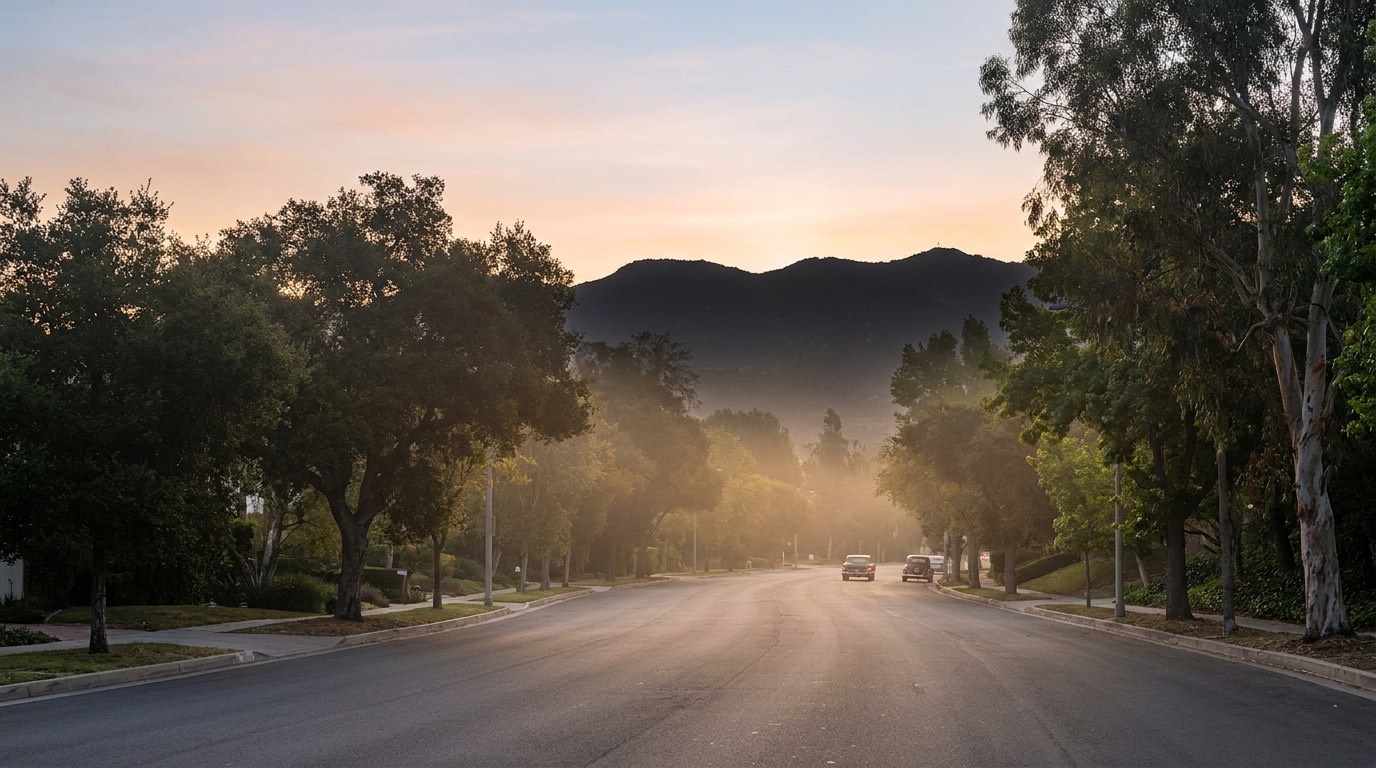
Studio City sits at the mouth of the Cahuenga Pass, right where the Valley starts to fold into the hills separating it from Hollywood and the Westside. That geography shapes almost every commute out of the neighborhood, since you’re either heading over a hill, through a pass, or along the flats of Ventura Boulevard depending on where you’re headed. Here’s how the major routes actually play out.
The Short Hop to CBS Studio Center and the Burbank Lots
CBS Studio Center sits inside Studio City itself, which makes it one of the rare cases in LA where “walk to work” is a literal option for some residents. The Burbank studio corridor, home to Warner Bros., Disney, and NBCUniversal, is a short drive over the hill or along the 134, and for anyone on a production schedule with early calls or late wraps, that short distance is a real quality-of-life factor. It’s worth checking a specific address against the actual studio you’d be reporting to, since Studio City is a fairly long neighborhood and travel time varies more within it than the name suggests.
Crossing the Hill to the Westside
Laurel Canyon Boulevard and Coldwater Canyon Avenue are the two main routes connecting Studio City to Beverly Hills, West Hollywood, and the rest of the Westside without dropping down to the 101 and around. Both are winding, two-lane canyon roads that work fine outside of rush hour, and both slow down considerably during the morning and evening crunch when they’re carrying commuter volume they weren’t really built for. If a Westside job is part of your daily routine, it’s worth driving the actual canyon route at the time you’d use it, since the difference between an off-peak and peak-hour trip over these hills can be significant.
Reaching Downtown and Hollywood
The 101 through Cahuenga Pass is the direct link from Studio City into Hollywood, and from there it’s a straightforward continuation toward Downtown via the 101 to the 110, or through surface streets depending on the exact destination. Outside peak hours this is a reasonable, even easy, drive. During rush hour, the Cahuenga Pass stretch of the 101 is one of the more reliably congested corridors in the city, and that’s worth factoring in honestly if a five-day Downtown commute is part of the plan.
Ventura Boulevard as the Neighborhood’s Spine
Ventura Boulevard runs the length of Studio City and functions as both a commercial corridor and a practical east-west surface route for shorter trips within the Valley. It’s rarely the fastest way to cover long distances, but for local errands, a trip to Sherman Oaks, or a shorter commute within the Valley, it’s a reliable option that avoids freeway backups entirely.
Metro and Transit Options
Studio City itself isn’t heavily served by rail, but Metro’s B Line (Red Line) stop in North Hollywood is a manageable drive from parts of the neighborhood and connects into Hollywood and Downtown. Most residents drive to the station rather than walking, so it functions more as a way to skip the worst of the freeway traffic on a specific leg of the trip than as a full transit replacement.
Weighing the Commute Against the Location
The honest tradeoff with Studio City is that you’re buying into entertainment-industry proximity and a walkable Ventura Boulevard lifestyle, and the commute math works out differently depending on which direction you’re headed. Anyone working in Burbank or on a studio lot in the immediate area tends to have one of the easier commutes in the city. Anyone commuting daily to the Westside over the canyons, or all the way downtown through Cahuenga Pass during rush hour, should weigh that honestly before making an offer.
If a hybrid schedule is part of the picture, the calculation shifts again, since fewer peak-hour trips per week changes how much a longer canyon or freeway commute actually costs you. Efrat serves buyers and sellers across Los Angeles, including Studio City, and can talk through how a specific commute tends to play out before you start touring. Reach out to Efrat if you want to think it through in advance.
