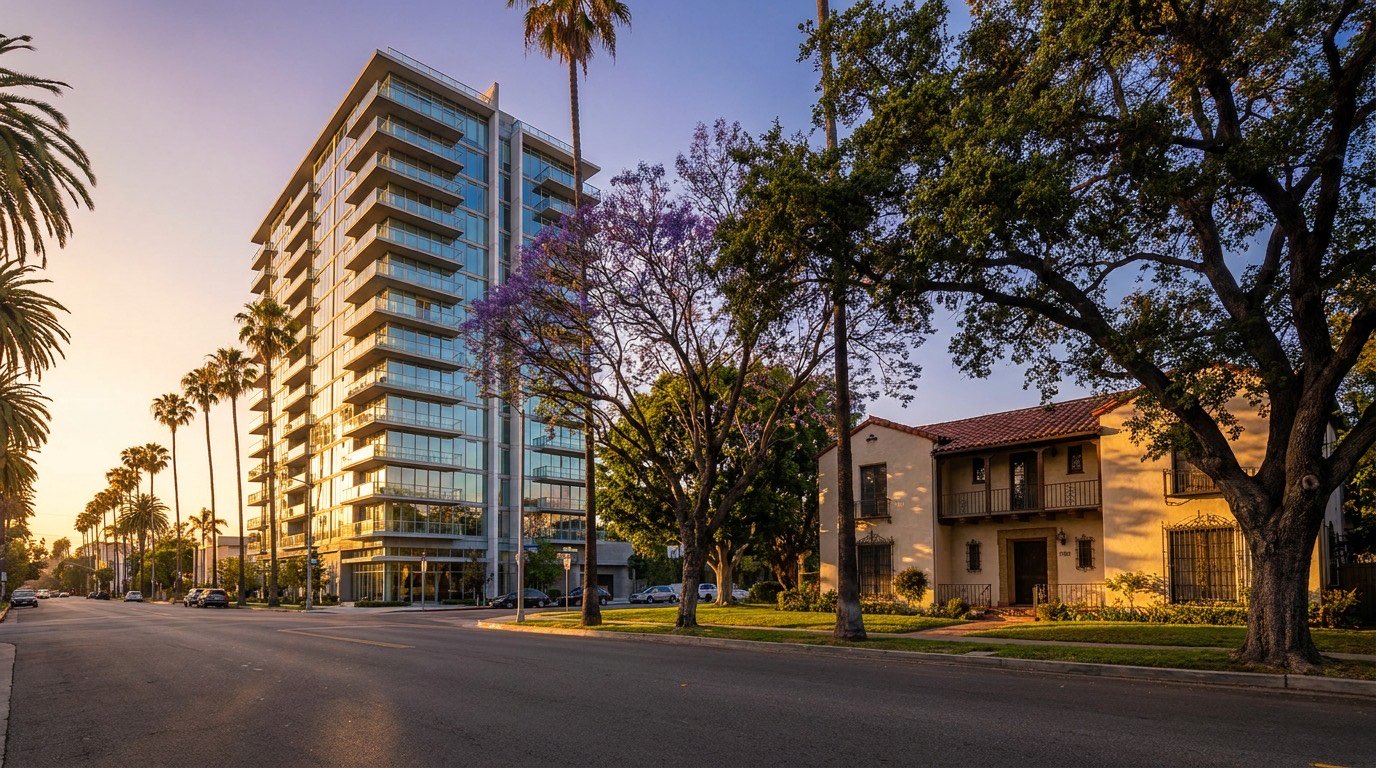
Westwood’s mix of full-service Wilshire Corridor condos and older single-family homes near Westwood Hills makes the turnkey versus value-add decision look genuinely different depending on which side of the neighborhood you’re looking at.
What Turnkey Looks Like in Westwood
A turnkey property here is typically either a well-maintained Wilshire Corridor condo in a full-service building or a recently updated single-family home ready to rent or occupy with little upfront work. You pay more per square foot for that condition, but you skip the contractor management and carrying costs that come with renovation. For the general mechanics of buying turnkey rental property, what to check before you buy, how to evaluate a property manager, financing considerations, see our turnkey rental property guide.
What Value-Add Looks Like Here Specifically
Value-add in Westwood usually means buying one of the neighborhood’s older single-family homes, some tracing back to the late 1920s and 1930s when Westwood first developed alongside UCLA, at a discount to comparable renovated homes nearby. The upside is a lower entry cost and the potential to capture the gap between what you pay and what a renovated comparable sells or rents for. The tradeoff is time, capital, and the real possibility of finding original systems behind a recently updated surface.
HOA Rules Change the Value-Add Math for Condos
Trying to run a value-add strategy inside a Wilshire Corridor building looks different from renovating a standalone house. HOA bylaws typically govern what can be changed, sometimes down to flooring type or window replacement, and often require board approval before work starts. That’s a real factor for a condo value-add timeline, since approval delays extend carrying costs the same way permitting delays do on a house.
Rental Income Looks Different for Each Strategy
A turnkey property in Westwood can typically be rented immediately at or near market rate, giving you a clearer, faster read on cash flow, particularly useful given how tightly rental demand here follows the academic calendar. A value-add property usually can’t be rented at its full potential until renovation is complete, which means holding costs without full rental income during that stretch. For a sense of what Westwood rentals actually look like once a property is ready, see our rental market overview.
Matching the Strategy to Your Capital and Timeline
Turnkey suits an investor who wants a cleaner, more predictable process and values getting to cash flow faster over squeezing out extra return through renovation. Value-add suits an investor with more capital cushion, more tolerance for delay, whether that’s contractor scheduling on a house or HOA board approval on a condo, and often more experience managing a renovation. Neither is objectively better, they fit different situations. If you’re weighing Westwood against a broader investment thesis, our take on Westwood as an investment overall covers the appreciation and risk side that applies to both strategies.
Financing Can Also Look Different Between the Two
Turnkey purchases in Westwood typically qualify for standard conventional financing without much friction, since the property is already in sellable, rentable condition. Value-add properties needing significant structural or systems work sometimes require renovation-specific loan products or a larger cash reserve to cover carrying costs during the project. It’s worth talking to a lender about financing specifics for the actual property type you’re considering before you commit to either strategy.
Getting the Numbers Right Before You Commit
Whichever path you’re leaning toward, the numbers only mean something once they’re run on an actual property: purchase price, realistic renovation or approval timeline, and achievable rent or resale value. A general strategy comparison can point you in a direction, but it can’t replace real diligence on a specific address.
If you’re deciding between turnkey and value-add in Westwood, reach out to Efrat. She serves buyers and sellers across Los Angeles, including Westwood, and can help you run the real numbers on specific properties before you choose a strategy.
