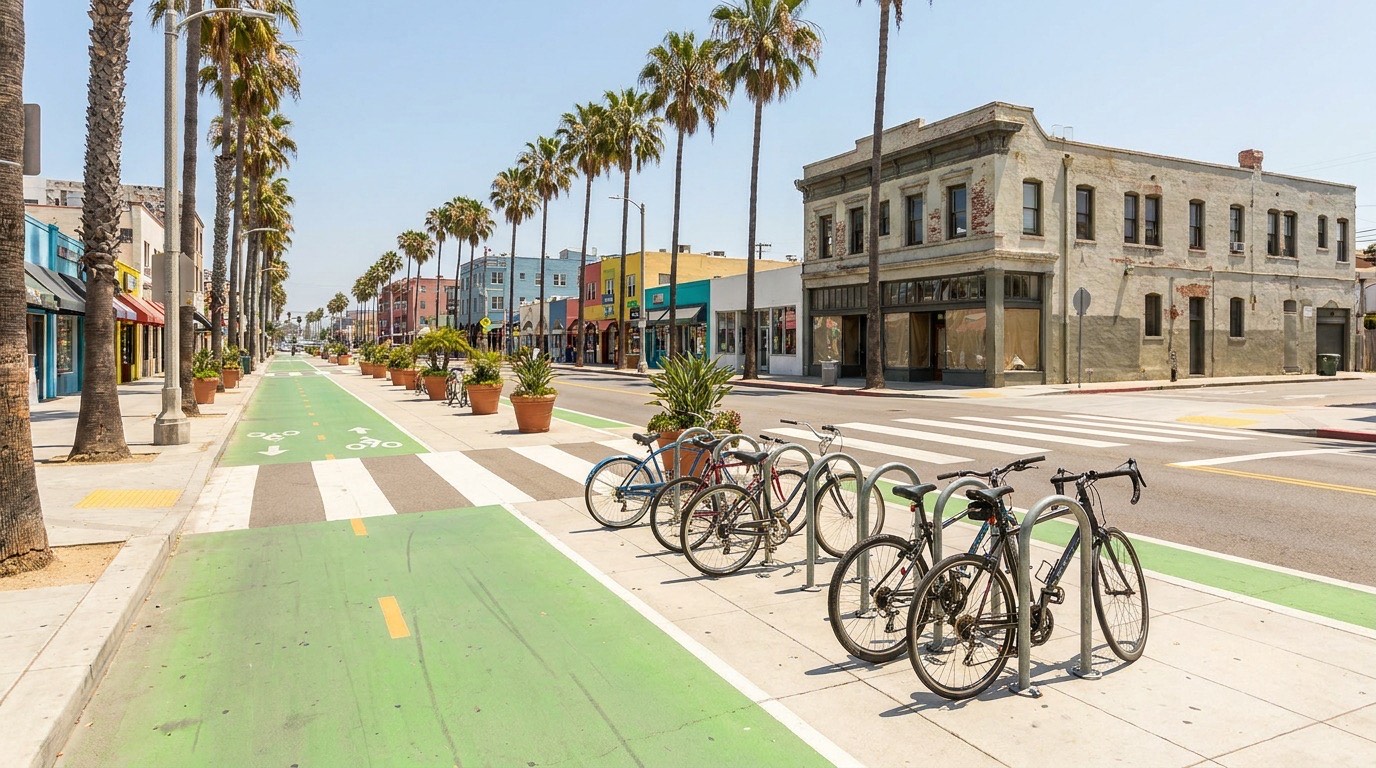
Venice is one of the handful of LA neighborhoods where you can structure a real chunk of your week around walking and biking instead of driving. It’s not a fully car-free lifestyle for most residents, but it’s closer than almost anywhere else in the city.
The Boardwalk and Abbot Kinney Set the Walkable Core
Two corridors do most of the work here. The Venice Boardwalk runs along the beach and puts food, shops, and people-watching within a flat, easy walk for anyone living nearby. Abbot Kinney Boulevard, a few blocks inland, is a walkable stretch of boutiques, restaurants, and cafes that functions almost like a small town’s main street. Homes within a short walk of either corridor tend to feel meaningfully different day to day than homes a mile or two away, even within the same zip code.
What’s Realistically Walkable From a Typical Address
Grocery runs, coffee, and casual meals are realistic on foot for a good share of Venice residents, especially those near Abbot Kinney or the boardwalk’s inland blocks. That said, walkability here is more block-by-block than in a neighborhood like West Hollywood, where the walkable zone is broader and more continuous. A block that looks close to Abbot Kinney on a map can still be a fifteen or twenty minute walk in practice, so it’s worth checking actual distance rather than assuming.
Rideshare and Micro-Mobility Fill the Gaps
For trips that fall outside walking distance and aren’t well served by bus or rail, rideshare and shared e-scooters have become a genuine part of how people get around Venice, especially for short hops to Santa Monica or Marina del Rey. It’s not a substitute for a car for most residents, but it does reduce how often a car actually gets used for local trips, which is part of what people mean when they describe Venice as easier to live in without one than most of LA.
Big Blue Bus and Metro Options
The Big Blue Bus operates several routes through Venice and connects into Santa Monica and the wider Westside, which covers a decent range of errands and short commutes without a car. Metro’s E Line light rail is reachable from parts of the neighborhood too, though most residents drive or bike to a station rather than walking there directly. Neither system replaces a car entirely for most people, but both genuinely get used for specific trips.
Biking Is Practically a Second Transit System
Flat terrain and the Marvin Braude bike path running along the beach make biking an everyday option here in a way it isn’t in most of LA. E-bikes in particular have made longer local trips, like a ride up to Santa Monica or over to Culver City, realistic for people who wouldn’t otherwise consider biking a commute option. It’s common to see residents run errands, grab coffee, or head to the beach by bike rather than car.
Parking Trade-Offs in a Walkable Neighborhood
Walkable neighborhoods often come with a tradeoff most buyers don’t think about until they’ve lived there a while: parking. Older buildings near Abbot Kinney and the boardwalk sometimes have limited, tandem, or street-only parking, which can matter a lot if you own more than one car or regularly have guests. It’s worth confirming exactly what parking comes with a specific listing rather than assuming a walkable location automatically means an easy parking situation.
What to Check Before Assuming a Listing Is Walkable
Walkability varies more within Venice than its reputation suggests. Before assuming a specific address is walkable, look at the actual route and distance to the businesses and transit stops you’d use regularly, not just the neighborhood’s general name recognition. It also helps to walk the route yourself at the time of day you’d actually use it, since a map’s straight-line distance doesn’t always match how a street feels on foot.
If walkability is a priority in your search, reach out to Efrat and she can help you evaluate specific listings against what actually matters to you.
