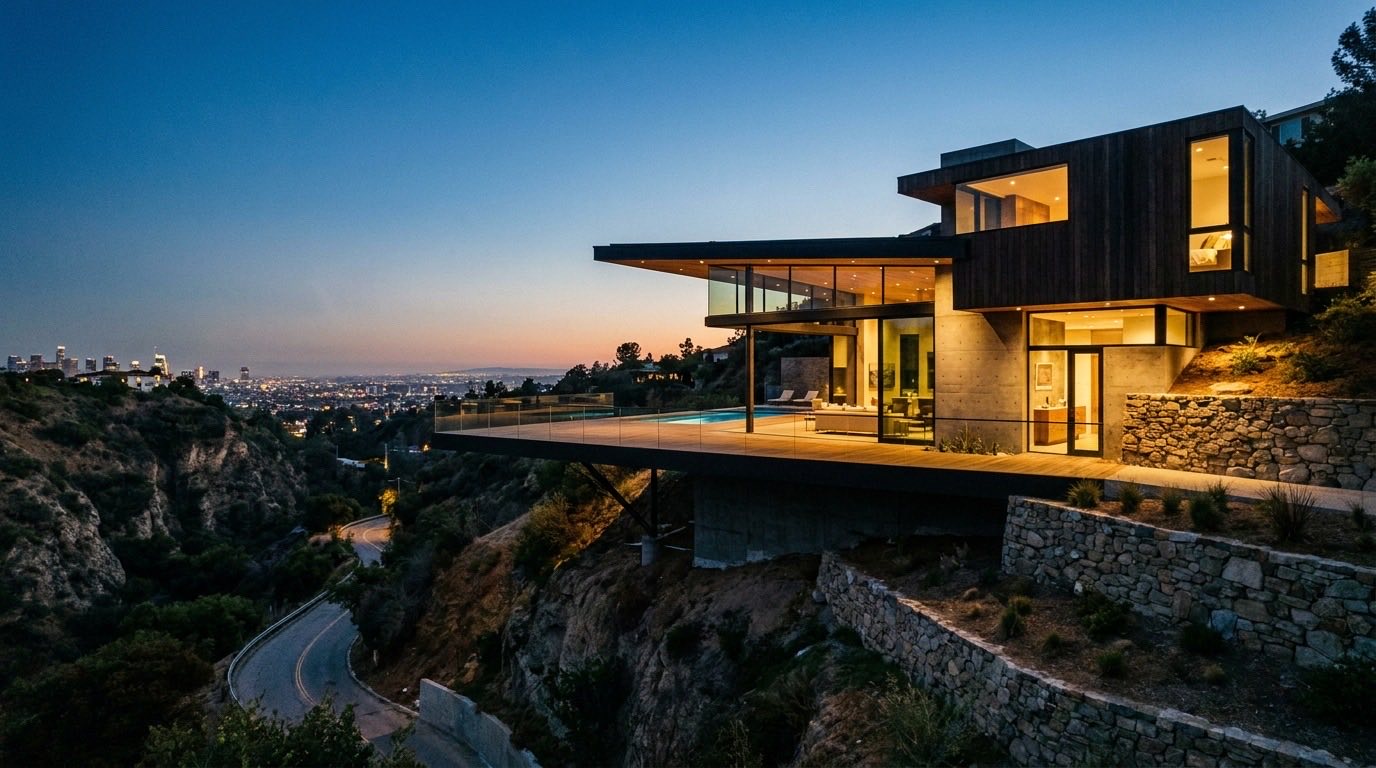
Los Feliz homes at the view and architecture tier are defined by two things working together: genuine proximity to Griffith Park’s greenery, and a housing stock with real early 20th century design pedigree.
The View Here Is About Greenery and Topography, Not Skyline
Most view exposure in Los Feliz faces toward Griffith Park’s canyon and hillside greenery, rather than an open city skyline. Some higher hillside pockets do capture city-facing views toward the basin, and those tend to carry a premium tied to how unobstructed the sightline is. Neither type is objectively better, and buyers should be clear on which one they actually want to wake up to, since “a view” in Los Feliz doesn’t automatically mean what it might in a hillside neighborhood built around skyline exposure. Our broader view homes guide covers how this distinction plays out across Los Angeles.
Architecture Here Reflects a Genuine Early 20th Century Design Legacy
Los Feliz’s architectural reputation comes from a wave of early to mid-20th century construction in Spanish Revival, Tudor, and Mediterranean styles, built by architects and developers who treated the neighborhood as a genuine design showcase rather than standard tract housing. That legacy also includes some more singular architectural landmarks that give Los Feliz a design pedigree few other LA neighborhoods can match. Buyers drawn to architectural character specifically, rather than just square footage, tend to gravitate here for exactly that reason.
A Great View Isn’t Automatically a Permanent One
The most common regret among view-home buyers anywhere is discovering, after closing, that a neighboring lot could be redeveloped taller or that mature landscaping on an adjacent property was going to grow in and block the sightline. Ask about zoning, height restrictions, and any recorded view easements before you assume today’s view is locked in, particularly on properties closer to the hillside where Griffith Park meets private lots.
Historic Homes Need Their Own Kind of Inspection
Original systems, period materials, and prior alterations on an early 20th century Los Feliz home deserve closer scrutiny than a standard home inspection typically provides. It’s worth working with an inspector who has genuine experience with historic construction of this era, not a generalist, and confirming HPOZ status if the property sits within one, since that affects what future changes will require.
Orientation and Time of Day Change What You See
Because a lot of Los Feliz’s view value comes from canyon and park greenery rather than a static skyline, the same room can read differently depending on the season and time of day. A canyon view framed by deciduous trees looks different in winter than in high summer, and morning light through park-facing windows differs from late afternoon glare on a west-facing room. Ask what orientation the main living spaces face and factor that into how the home will actually feel to live in day to day.
How This Differs From the Neighborhood’s Luxury Market Broadly
This post focuses specifically on view exposure and architectural style. For a fuller look at what defines the top of the Los Feliz market overall, including lot scarcity, privacy, and pricing dynamics beyond the view itself, see our luxury homes and estates guide for Los Feliz.
What to Do Before You Fall in Love With a View
Visit any view property more than once, at different times of day and, if possible, different seasons. A canyon view that looks lush in spring can read differently in late summer, and a hillside sightline that seems open today can change if a neighboring lot gets developed. Combine that with the inspection and zoning homework above before you write an offer based on the photo alone.
If a view home or architecturally distinctive property in Los Feliz has caught your eye, Efrat serves buyers and sellers across Los Angeles, including Los Feliz, and can help you evaluate whether a specific property’s view and history hold up the way they appear to.
