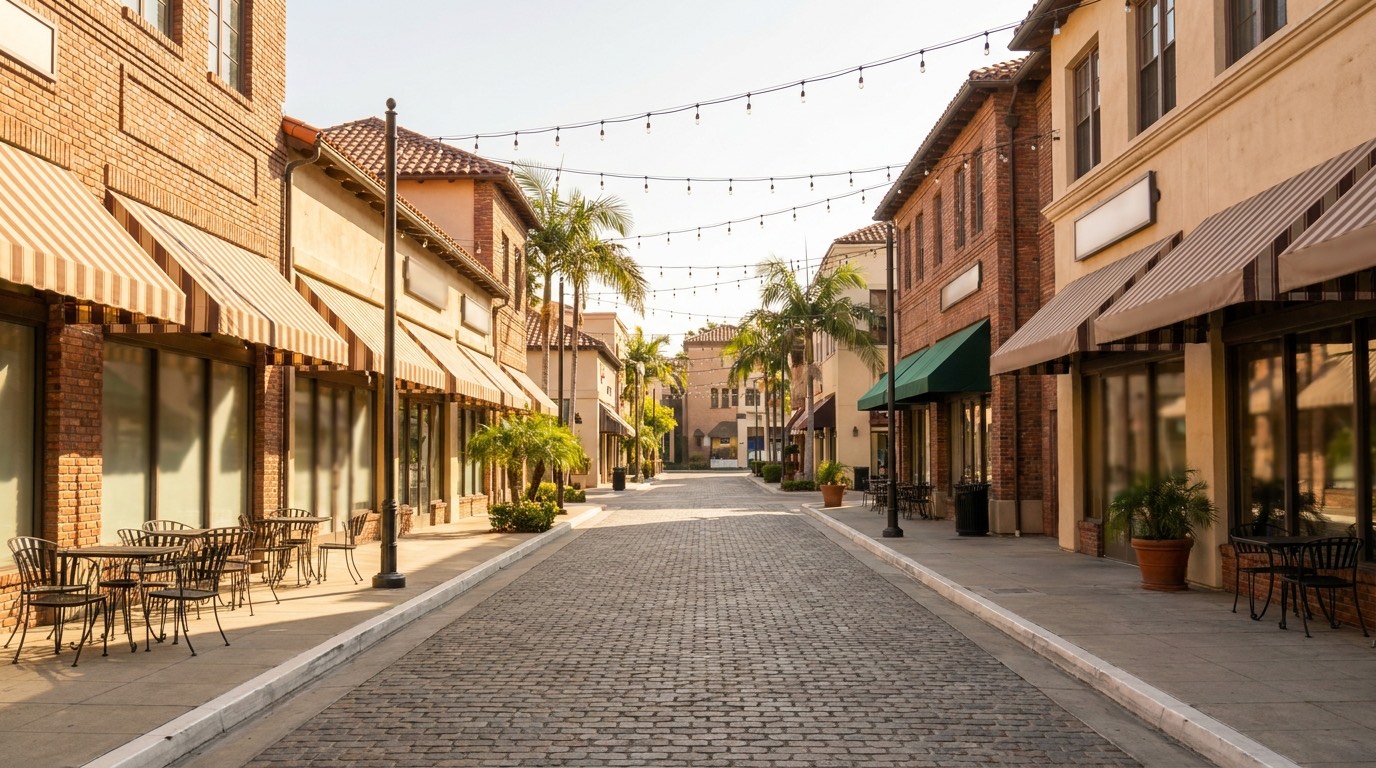
Westwood is one of the few LA neighborhoods built around a major institution, and that shapes its walkability in a way that’s genuinely different from most of the Westside. Here’s what’s realistically walkable, and where the car-dependent parts of the neighborhood begin.
Westwood Village Is the Walkable Core
Westwood Village, the commercial strip just south of UCLA’s main campus, is the most walkable part of the neighborhood by a wide margin. Restaurants, coffee shops, a movie theater, and everyday errands are all within an easy walk for residents in the surrounding blocks. It functions almost like a small downtown, driven heavily by student and staff foot traffic from the adjacent campus.
Proximity to Campus Changes the Walking Experience
Blocks immediately south and west of UCLA tend to feel busiest on foot, especially during the academic year. It’s a genuinely different rhythm than most LA neighborhoods, since a large share of the pedestrian traffic is tied to class schedules rather than general neighborhood activity. That can be a plus if you like an active, walkable street life, or a downside if you’re looking for a quieter residential feel.
Walkability Drops Off Outside the Village Core
Move further from the Village and campus, toward the residential streets closer to Beverly Glen or the northern edge of the neighborhood, and walkability declines noticeably. These areas are more conventionally car-dependent, similar to most of the Westside outside a handful of walkable pockets. It’s worth checking the actual walking distance from a specific listing to the Village rather than assuming based on the general Westwood name.
Transit Coverage Has Been Improving
Big Blue Bus and Metro bus lines run through Westwood, connecting to Santa Monica, Century City, and the broader Westside. Metro’s D Line extension has been gradually expanding rail service toward the Westwood and UCLA area, which is a meaningful shift for a neighborhood that’s historically leaned heavily on cars and buses. Coverage and station status have been evolving, so it’s worth confirming what’s actually running near a specific address rather than relying on general reputation.
Biking Works Well for Local, Campus-Adjacent Trips
Flat terrain around the Village and campus makes biking a reasonably practical option for short local trips, and it’s common to see students and staff biking between housing and campus. It’s less of an everyday substitute for a car across the wider neighborhood, but for anyone living close to campus or the Village, it can meaningfully cut down on how often a car gets used.
The Tradeoffs That Come With Village Proximity
Living within walking distance of Westwood Village has real upside, but it comes with tradeoffs worth knowing about upfront. Buildings closest to the Village and campus see more foot traffic and noise, particularly during move-in weeks, the start and end of each academic quarter, and event days. Parking can also be tighter in these blocks than in the more residential parts of the neighborhood. None of this rules out living there, but it’s worth weighing against the convenience of a genuinely walkable location.
Checking Walkability Before You Commit to a Listing
Because walkability varies so much within Westwood, it’s worth confirming the actual walking distance and route from any specific listing to the Village, campus, or whatever you’d use regularly, rather than assuming based on the neighborhood’s overall reputation. Walking the route yourself at the time of day you’d actually use it tends to reveal more than a map ever will.
Parking Reality in a Walkable Pocket
Walkable neighborhoods often come with a parking tradeoff that first-time buyers don’t always anticipate, and Westwood is no exception. Older buildings close to the Village, in particular, sometimes have limited, tandem, or street-only parking, which matters more if you own multiple cars or regularly host guests. It’s worth confirming exactly what parking comes with a specific listing before assuming that a walkable location automatically means an easy parking situation, since the two don’t always go together in a dense, older neighborhood like this one.
If walkability and transit access are priorities in your search, reach out to Efrat and she can help you evaluate specific Westwood listings against what actually matters to you.
