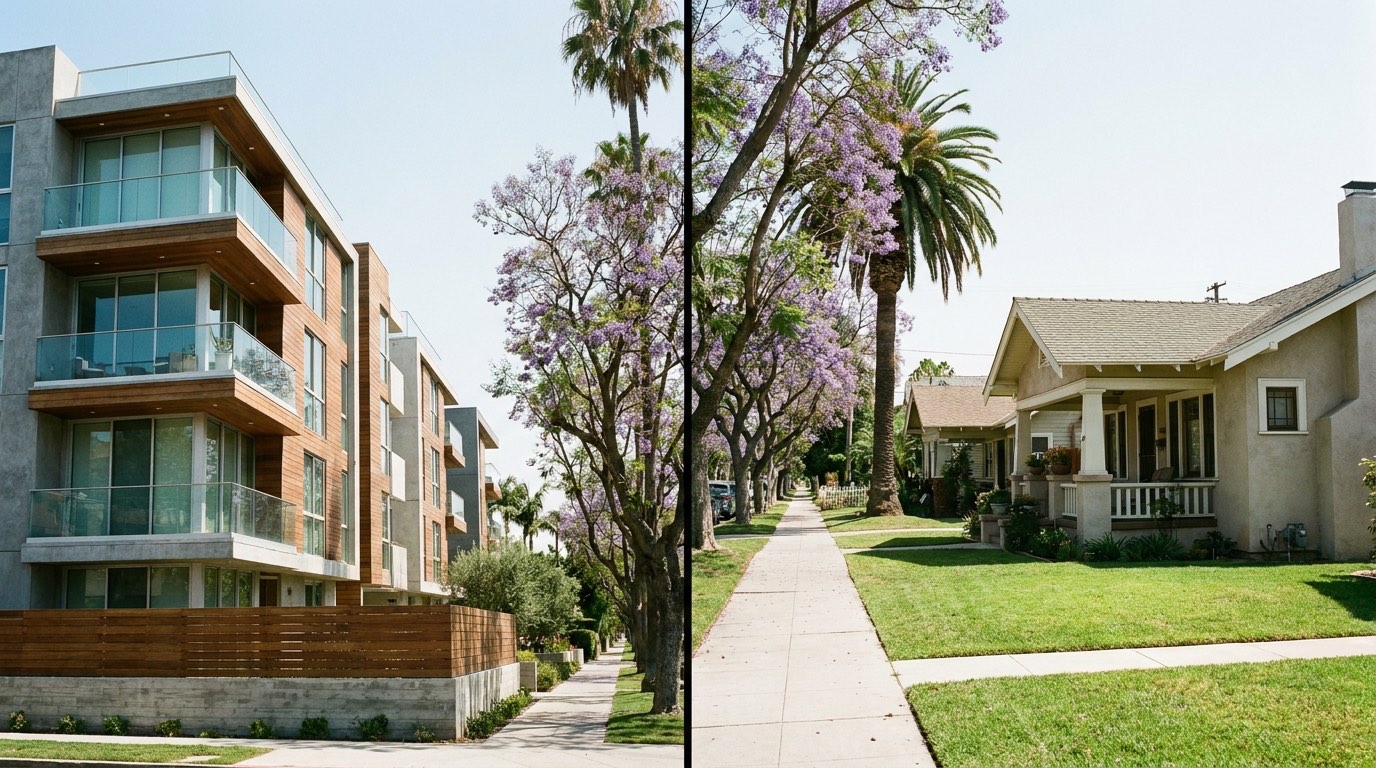
Both condos and single-family homes are real options in Brentwood, and the right choice usually comes down to how much you value entry price and low maintenance versus land ownership and full control over the property.
Entry Price Point
Condos along the Wilshire corridor generally offer a lower entry price into Brentwood than single-family homes in the flats or hills, which matters given how competitive the neighborhood’s single-family market can be. If getting into Brentwood at all is the priority, over holding out for a specific single-family lot, a condo is often the more realistic path in. For a broader look at what drives pricing across the neighborhood, see our Brentwood home prices guide.
HOA Dues and What They Actually Cover
The tradeoff for a condo’s lower entry price is a monthly HOA fee, which covers shared building costs like exterior maintenance, insurance, and often amenities. Fees vary a lot by building age, size, and what’s included, so it’s worth reviewing the actual budget and reserve study for any building you’re considering rather than assuming a rough number. Our Brentwood HOA and condo fees guide goes into more detail on what to check.
Maintenance Responsibility
Single-family homeowners are responsible for everything: roof, plumbing, landscaping, structural repairs. That’s real ongoing work and cost, but it also means full control over how and when things get done. Condo owners hand off exterior and structural maintenance to the HOA in exchange for the monthly fee, which appeals to buyers who want less hands-on responsibility, especially if Brentwood is a secondary residence rather than a full-time home.
Location Matters More Than Property Type
It’s a common assumption that condos are automatically more convenient than single-family homes, but in Brentwood that’s more about where the property sits than what kind of property it is. Buildings along Wilshire do tend to offer easier access to some daily errands, while single-family homes closer to San Vicente and the Country Mart can be just as convenient in their own way. Location within Brentwood matters more than property type when day-to-day convenience is the priority.
Land Ownership and Control
A single-family home means owning the land outright, full say over renovations, additions, and use of the property (within local zoning and hillside regulations, where applicable). A condo trades some of that control for the HOA’s shared decision-making and rules. If long-term flexibility to renovate or rebuild matters to you, that’s a real factor in favor of single-family ownership, separate from price.
Resale Considerations for Each Option
Single-family homes in a neighborhood like Brentwood tend to have a broader pool of potential buyers on resale, since they appeal to buyers who specifically want land and full control, in addition to anyone open to either option. Condos can have a narrower resale pool, and building-specific factors, HOA health, rental restrictions, pending litigation, can affect resale value in ways that are somewhat outside your control as an individual owner. That’s not a reason to avoid condos, plenty perform well, but it’s a real difference worth factoring into a long-term hold decision versus a shorter one.
Rental Potential If You’re Considering Investment Use
If part of your plan involves renting the property out at some point, check the specific building’s HOA rules for condos, some restrict rentals or short-term stays, while single-family homes generally give you more flexibility, subject to the city’s own short-term rental rules. Our guide to short-term rental rules in LA covers the general mechanics if that’s part of your thinking.
Making the Right Call for Your Situation
Neither option is objectively better, it depends on your budget, how much maintenance responsibility you want, and whether land ownership and full control matter to your long-term plans. If you’re weighing the two for a specific Brentwood search, reach out to Efrat. She serves buyers and sellers across Los Angeles, including Brentwood, and can help you compare actual current inventory in both categories.
