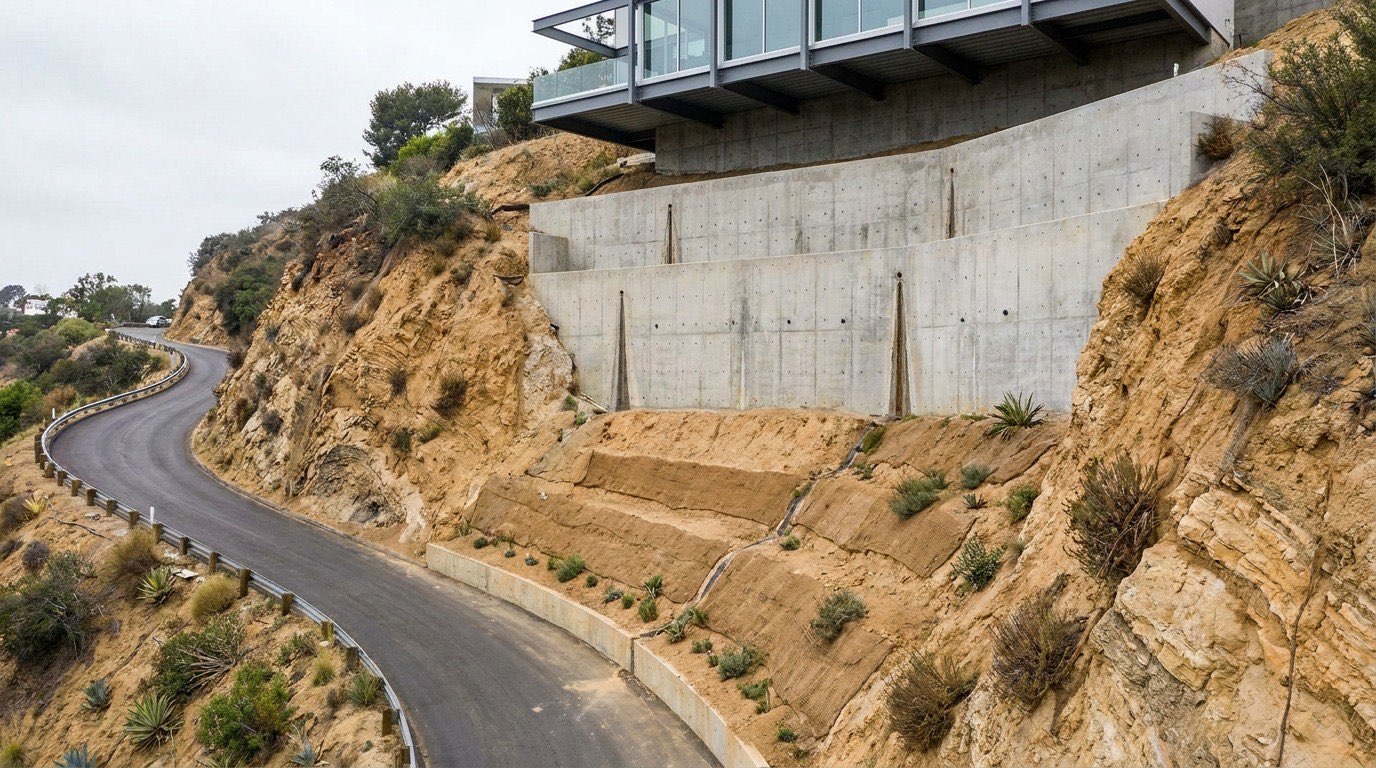
Hollywood Hills sits on genuinely varied hillside terrain, Mulholland Dr corridor lots, canyon streets in Laurel Canyon and Beachwood Canyon, and older construction going back decades in some pockets. That mix means soil reports and retrofit history matter here in a way they simply don’t on flat land. This isn’t meant as engineering advice. It’s a guide to what to ask for and who should be answering.
Ask for What’s Actually on File, Not What Sounds Reassuring
A seller’s agent saying “the home passed inspection” isn’t the same as a documented soil or geological report tied to permitted grading or construction work. Ask specifically what’s on file with the city for the property, past additions, pool construction, major landscaping or retaining wall work, and treat a vague answer as a reason to dig further, not a reason to move on.
Retrofit History Is a Real Line Item, Not a Footnote
Some Hollywood Hills homes have had foundation, retaining wall, or drainage work reinforced or replaced over the decades, and some haven’t. Neither situation is automatically a dealbreaker, but you want a clear, honest picture of which one you’re buying into before you’re deep in contract. A qualified structural engineer who specifically works hillside properties is worth the added cost over a general home inspector here.
Grading Permits Tell a Story Worth Reading Before You Offer
Permit history for grading, retaining structures, and drainage work is generally available through the city, and it’s worth pulling before you write an offer, not after. It can tell you whether past work was done to code and inspected properly, or whether it’s the kind of undocumented change that shows up as a surprise later. Our broader Hollywood hillside buying guide covers the general access and insurance questions that go alongside this.
Drainage Deserves Its Own Conversation
Drainage systems on a hillside lot aren’t cosmetic. Water that isn’t routed properly can affect slope stability over time, especially after a wet winter. Ask directly whether a property has had any drainage-related work done and whether it was engineered and permitted, rather than assuming a general inspection covers that level of detail.
A Geotechnical Engineer Is a Reasonable Ask on a Serious Purchase
If a property doesn’t have a recent soil report on file, or if you can see visible retaining walls, slope changes, or grading, bringing in a licensed geotechnical engineer before you remove contingencies is a sensible step. It’s an added cost during an already expensive process, but a small one relative to the price of hillside real estate in this submarket.
Don’t Let the View Distract From the Paperwork
It’s easy to fall for a Hollywood Hills view and skip past the less glamorous parts of due diligence. The homes that hold their value best here tend to be the ones with clean, documented histories behind the retaining walls and foundation, not just a great photo from the deck.
Use a Specialist, Not a Generalist
A general home inspector can flag obvious issues, but hillside-specific problems, soil movement, retaining wall integrity, drainage engineering, usually call for someone who works this kind of terrain regularly. It’s worth the extra step before you’re committed.
What a Reasonable Timeline Looks Like
Bringing in a geotechnical engineer or structural specialist adds time to your due-diligence window, and it’s worth building that into your offer and contingency timeline from the start rather than trying to squeeze it into a standard inspection period. Talk to your agent about extending the inspection contingency on a hillside purchase where a specialist review is genuinely warranted, rather than rushing a decision because the standard clock is running out.
Insurance Carriers Sometimes Ask for the Same Documentation
A soils report or documented retrofit history can also matter when you’re shopping for insurance, since some carriers ask about past geological work as part of underwriting a hillside property. Having that paperwork organized before you’re deep into the insurance conversation can make the process smoother and, in some cases, affect what a carrier is willing to offer.
If you’re considering a hillside property in Hollywood Hills and want help thinking through what to ask for, reach out to Efrat. She serves buyers across Los Angeles, including Hollywood Hills, and can help you build a due-diligence plan for a specific address.
