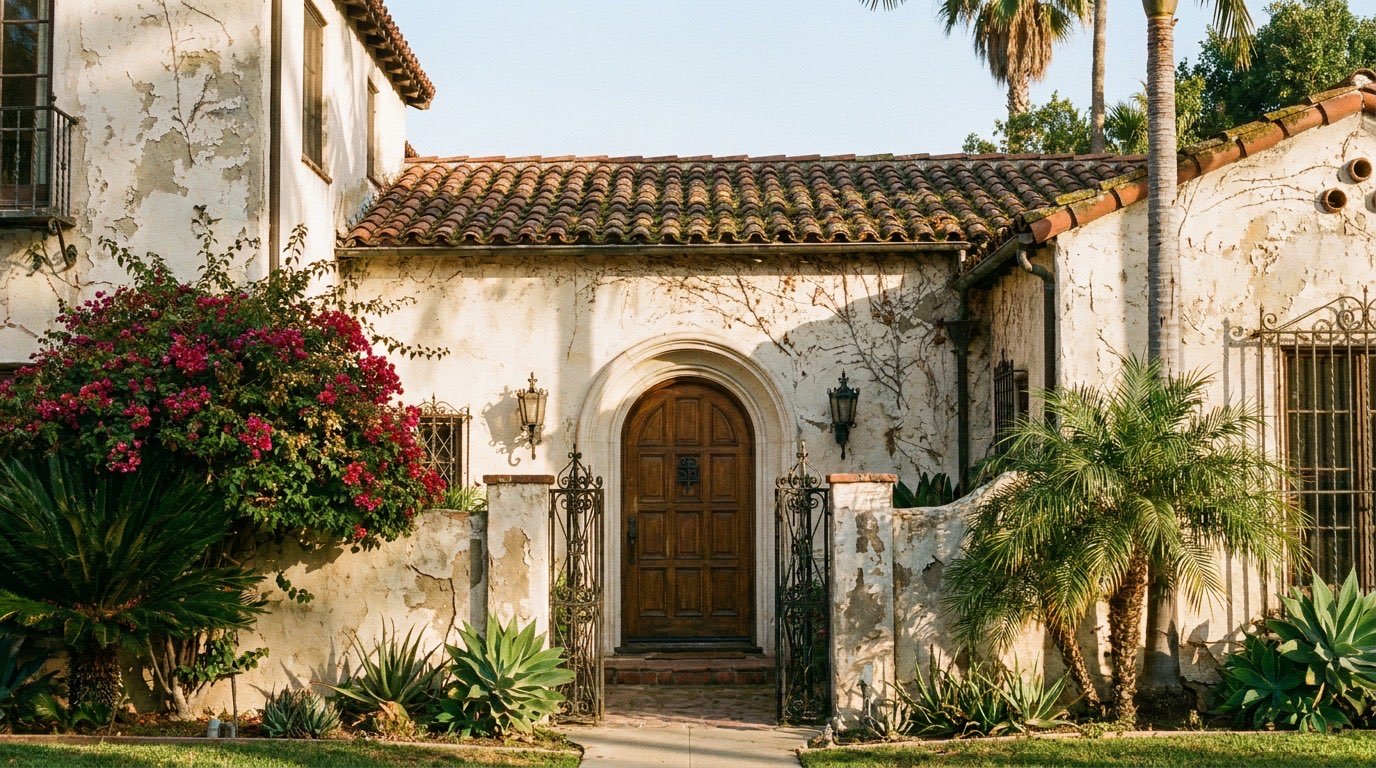
Beverlywood’s housing stock spans several decades of Los Angeles residential architecture, from Spanish and Colonial Revival homes built in the 1930s to mid-century designs that filled in later. That mix is part of the neighborhood’s character, but it also means buyers looking at an older Beverlywood home should go in with a clear sense of what that age actually implies for condition, systems, and renovation planning.
The Architectural Mix Is Wider Than It Looks From the Street
Driving through Beverlywood, the neighborhood can read as fairly uniform, quiet, tree-lined, single-family, but the architectural styles underneath that surface impression vary more than a quick pass would suggest. Traditional Spanish and Colonial Revival homes sit alongside mid-century designs, often on the same block. That variety is worth appreciating on its own terms, but it also means two homes that look similarly “vintage” from the curb can have very different systems, layouts, and renovation histories underneath. If a specific property does carry an individual historic designation, it’s worth checking whether it qualifies for the Mills Act’s property tax savings, since that designation can come with a real financial upside alongside the added review process.
Original Character Is Often a Selling Point, Not a Problem
A lot of Beverlywood’s charm comes directly from its older housing stock: coved ceilings, original hardwood, period tile work, details that a full gut renovation would erase. Buyers drawn to the neighborhood specifically for that character shouldn’t feel pressured to modernize everything just because a home is older. It’s worth having a real conversation with your agent and, eventually, a contractor about what’s worth preserving versus updating, rather than assuming every original feature needs to go.
Permit History Matters More Than the Home’s Current Appearance
Because so much of Beverlywood was built decades ago, many homes have been through multiple rounds of renovation, and not all of that work was necessarily permitted at the time. A beautifully finished kitchen or bathroom doesn’t tell you whether the work behind the walls, electrical, plumbing, structural, was done to code. Ask for permit history early, and treat gaps in that history as a reason to look more closely rather than assume the best.
Foundations and Additions Deserve Real Scrutiny
Older Beverlywood homes sometimes carry additions built at different points over the decades, and those additions don’t always match the quality or code compliance of the original structure. A thorough inspection should look specifically at how any addition ties into the original foundation and framing, not just whether the finished space looks good. This is one area where a specialist inspector, rather than a general one, can be worth the added cost.
Financing an Older Home Can Come With Extra Steps
Lenders sometimes ask more questions about homes with older electrical panels, outdated plumbing materials, or unpermitted additions, which can add time to your financing process if it’s not addressed early. Getting ahead of this with your lender before you’re deep into a contract’s contingency period helps avoid last-minute surprises. Our understanding offer contingencies post covers how to structure a contract that gives you room to work through these questions.
Weigh Preservation Against Renovation Honestly
Not every original feature in an older Beverlywood home needs saving, and not every modern update needs to happen either. The right answer depends on the specific property, your budget, and how you actually plan to live in the home. Buyers who go in with an open mind rather than a fixed renovation plan tend to make better decisions once they’ve actually walked the property with a contractor.
Get an Appraisal Team That Understands Older Homes
Appraisers unfamiliar with a neighborhood’s specific age profile can sometimes undervalue original character or overweight cosmetic condition relative to structural soundness. It’s worth confirming that your lender’s appraisal process accounts for Beverlywood’s older housing stock appropriately, since a mismatched valuation can complicate financing late in the process. Raising this with your lender early, rather than after an appraisal comes back low, gives everyone more room to work through any discrepancy calmly.
If you’re considering an older home in Beverlywood, reach out to Efrat. She serves buyers across Los Angeles, including Beverlywood, and can help you weigh a property’s history against your own renovation goals.
