People searching “how far is Los Feliz from the beach” are usually trying to figure out if they can have both a hillside, historic-home lifestyle and reasonable beach access. The honest answer: not really, and it helps to know that going in.
Los Feliz Is Inland, Not Coastal
Unlike a neighborhood such as Venice, where the ocean is the boundary, Los Feliz sits well inland, tucked against the base of Griffith Park. There’s no shortcut here. Reaching Santa Monica or Venice generally means a freeway drive, usually west on the 101 or through surface streets toward the Westside, and it runs noticeably longer during weekday rush hours than it does on a quiet Sunday morning. If beach access is a daily priority rather than an occasional trip, it’s worth being honest with yourself about that drive before you commit to Los Feliz.
The Drive to Downtown LA Is a Real Advantage
This is where Los Feliz genuinely shines for a lot of buyers. Downtown LA sits close enough that the 5 freeway or a surface-street route through Silver Lake and Echo Park makes for one of the more practical Downtown commutes available anywhere in the city. It’s still worth driving the route at your actual commute hours before assuming it, since traffic patterns on the 5 and through Echo Park can shift a lot between a Tuesday morning and a Friday afternoon, but the underlying geography works in your favor here.
Hollywood and the Studio Corridor Are Right There
Los Feliz borders Hollywood directly, which matters if your work touches the entertainment industry. Beyond that, Burbank’s studio corridor, home to a concentration of major production facilities, is a short drive north via the 5 or the 134. That proximity is a real, practical reason the neighborhood has long attracted people who work in film and television, on top of its residential appeal.
Griffith Park Changes What “Close” Means Here
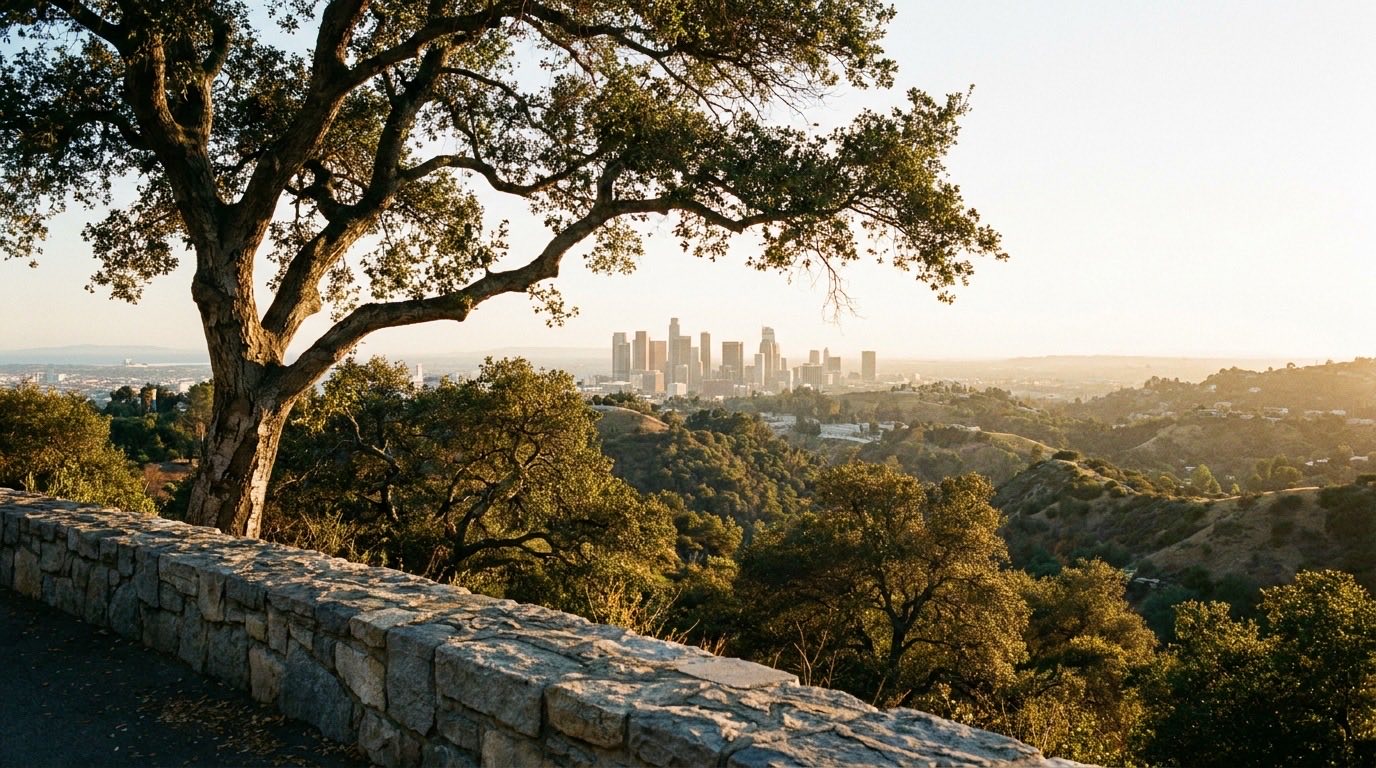
A meaningful part of daily life in Los Feliz happens inside Griffith Park itself, not just nearby. Hiking trails, the Griffith Observatory, and open green space sit essentially at the edge of the neighborhood, which is a different kind of proximity than a commute number captures. For buyers weighing Los Feliz against a flatter, more urban neighborhood, that access is worth counting as a real factor, not just a scenic bonus.
Getting Around the Village Itself
Once you’re actually in Los Feliz, the village area along Hillhurst and Vermont covers a genuinely walkable stretch of coffee shops, restaurants, and small retail. Plenty of daily errands don’t require pulling the car out at all. That local walkability is separate from the bigger commute question, but it’s part of why residents describe the neighborhood as feeling self-contained even though it isn’t coastal.
Public Transit Is a Real Option Here
Los Feliz is one of the better-served LA neighborhoods for rail transit, with Metro B Line stations nearby along Vermont, including stops that put Hollywood, Universal City, and North Hollywood within a train ride rather than a drive. It’s not a full substitute for a car in a city built around freeways, but for a commute to Hollywood or a trip into Downtown that avoids parking hassles, it’s genuinely usable in a way that a lot of LA neighborhoods can’t claim. Worth checking current routes and schedules directly before assuming it fits your specific commute.
The Honest Summary
Los Feliz works best for buyers whose daily destinations lean toward Hollywood, Burbank, Silver Lake, or Downtown, not for anyone whose routine depends on quick beach access. If your job or lifestyle pulls you toward the Westside regularly, that drive from Los Feliz is worth testing honestly before you buy. If your life is anchored more centrally in LA, the location works firmly in your favor.
If you’re weighing Los Feliz against a coastal neighborhood or somewhere closer to your specific commute, reach out to Efrat and she can walk through the tradeoffs with you honestly.
