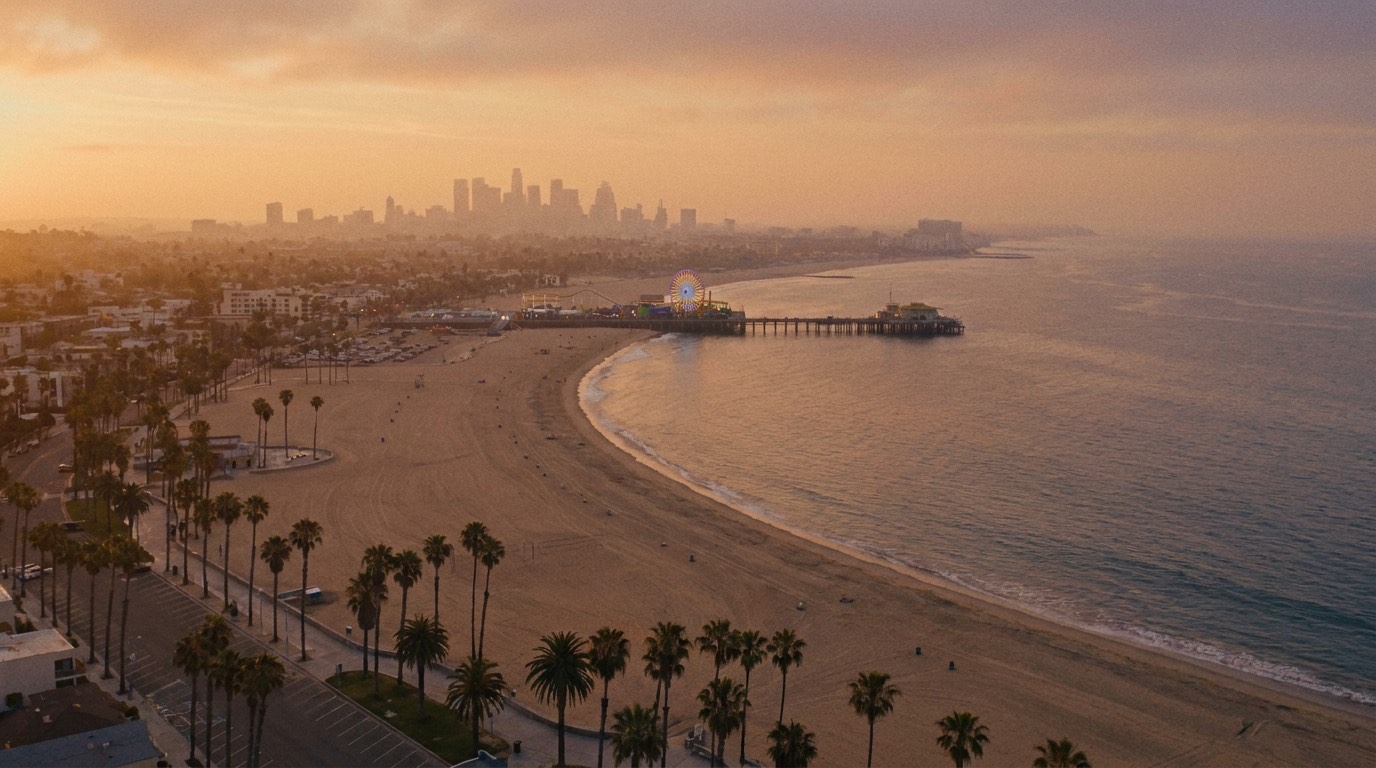
This question comes up a lot, and it’s worth clearing up the premise first: Santa Monica isn’t a certain distance from the beach, it is the beach. The more useful version of this question is how Santa Monica connects to downtown LA and the rest of the region.
Santa Monica’s Relationship to the Beach Is Different From Other Neighborhoods
Unlike inland LA neighborhoods where “distance to the beach” is a real commute consideration, Santa Monica sits directly on the coast. The pier, the beach path, and the sand are a short walk or bike ride from most of the city, not a drive. This is part of why Santa Monica functions differently in a buyer’s mental map than neighborhoods that are merely beach-adjacent.
Getting to Downtown LA Involves a Real Choice of Routes
Reaching downtown from Santa Monica typically means the 10 freeway, or surface streets like Olympic and Pico for shorter trips that don’t justify getting on the freeway. Which route makes sense depends heavily on time of day, since traffic patterns on the Westside shift a lot between rush hour and off-peak hours. Rather than quoting a fixed travel time, the honest answer is to check current traffic conditions for the specific time you’d actually be making the trip.
The Metro E Line Is a Genuine Alternative for Some Trips
The Metro E Line (the rail line most people still call the Expo Line) runs light rail directly between Santa Monica and downtown LA, with stops along the way through Culver City and other parts of the Westside. For commuters whose destination sits near a station, it removes a lot of the unpredictability that comes with freeway driving. It doesn’t cover every destination, so whether it’s a realistic daily option depends on where you’re actually headed.
Why This Matters Differently for Santa Monica Buyers Than Other Neighborhoods
Buyers looking in Santa Monica are usually prioritizing the coastal lifestyle first, walkability, beach access, the Promenade, and treating access to downtown or the rest of LA as a secondary factor. That’s a different order of priorities than buyers looking in a more centrally located neighborhood, where commute time to downtown often drives the decision. It’s worth being honest with yourself about which category you fall into before you weigh this factor too heavily.
What This Means If Your Job or Routine Requires Regular Downtown Trips
If you commute downtown regularly, it’s worth actually testing the drive or the Metro E Line at the time of day you’d be making the trip before committing to a Santa Monica purchase, rather than relying on a general sense of “it’s not that far.” Traffic on the Westside can turn a manageable trip into a genuinely long one depending on timing, and that’s the kind of thing worth verifying firsthand.
Distance to Other Westside Neighborhoods Matters Too
Downtown LA isn’t the only relevant reference point. Santa Monica sits close to Venice, Brentwood, Culver City, and other Westside neighborhoods that many residents move between regularly for work, dining, or family reasons. Depending on your actual routine, distance to one of these neighborhoods may matter more day to day than distance to downtown, which is worth factoring in honestly rather than defaulting to downtown as the only reference point.
The Bigger Picture
Santa Monica works well for people whose daily life is centered on the coast and the immediate Westside, and works less well for people who need a short, predictable commute downtown every day. Neither is wrong, it’s about being honest about your actual routine before you buy.
If you’re weighing Santa Monica against other LA neighborhoods based on how your daily routine actually works, reach out to Efrat. She serves buyers and sellers across Los Angeles, including Santa Monica, and can help you think through the tradeoffs honestly.
