Safety questions around Bel Air tend to split into two categories: natural hazards tied to hillside terrain, and the practical realities of gated, low-density living. Here’s a neutral look at both, along with where to find current, verifiable information for a specific address.
Fire Risk Is a Hillside Reality Across the Area
Large estate lots in Bel Air, like hillside neighborhoods throughout Los Angeles, often sit within higher fire hazard severity zones, particularly properties backing up to open brush or canyon terrain. That designation affects insurance availability and cost. It’s worth checking current official fire hazard severity zone maps for a specific address rather than relying on a general sense of the neighborhood. Our earthquake and flood risk guide for LA homes covers how to research natural hazard exposure more broadly.
Earthquake Risk Isn’t Unique to Bel Air
Seismic risk is a citywide consideration in Los Angeles, and Bel Air doesn’t carry a meaningfully different profile from other LA neighborhoods on this front alone. What does differ on large hillside lots is the added importance of geological and soils reports, since slope, retaining structures, and drainage can affect how a home performs during an earthquake, which is why a specialist inspection matters more here than on a flat parcel.
Guard Gates and Private Security Are Common, Not Universal
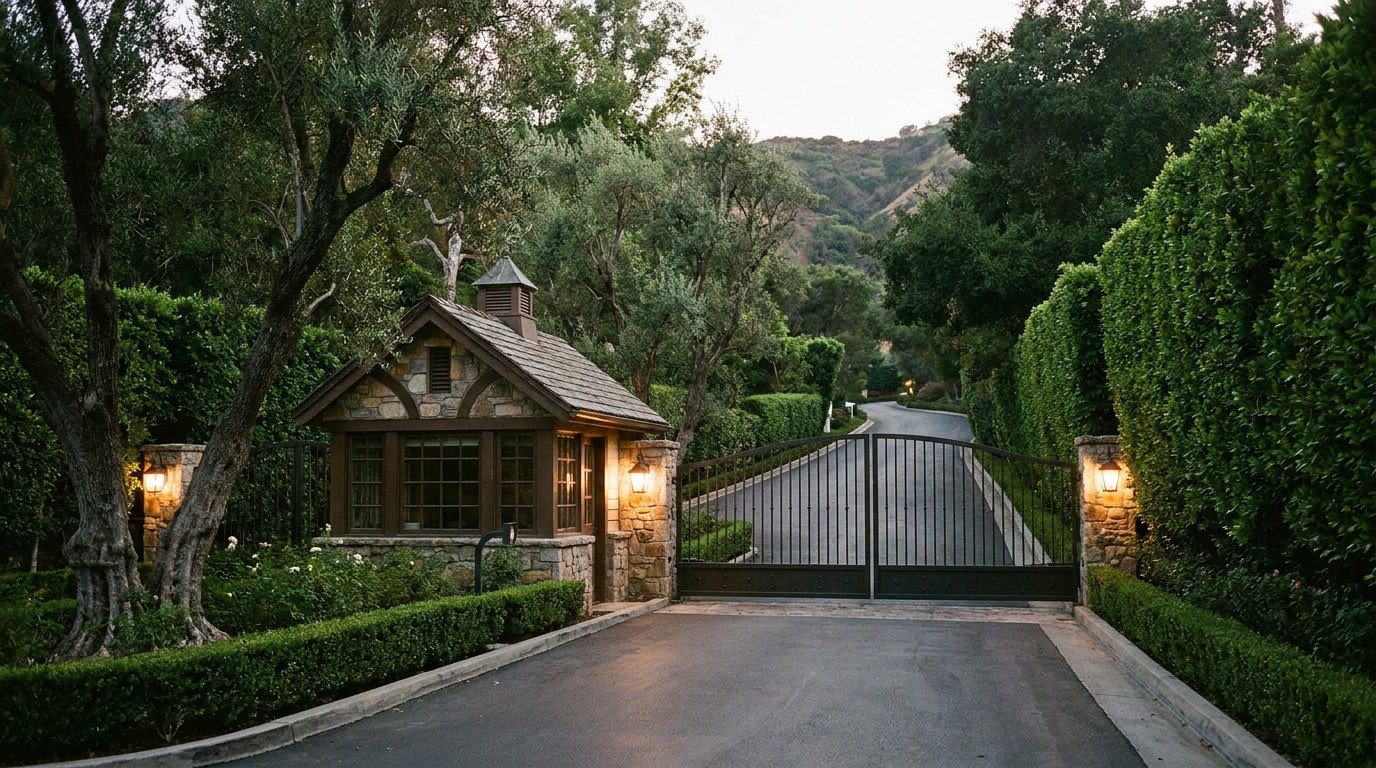
Bel Air includes several guard-gated communities alongside ungated estate streets, and private security patrols are a familiar part of daily life across much of the neighborhood. That layer of access control is a genuine feature many buyers value, but it manages who drives past a gate, not the specific security features, lighting, and visibility of an individual property. Evaluate each home on its own terms rather than assuming a guard gate covers everything.
Roads, Access, and Emergency Response
Bel Air’s canyon roads are often narrow and winding, with limited through-streets in some pockets. That’s worth thinking about from a safety standpoint, not just a driving-comfort one. Ask directly how an emergency vehicle would reach a specific property, and don’t assume every street handles access the same way. It’s a reasonable, normal question to raise with any listing agent.
Retaining Walls and Slope Stability Deserve Their Own Look
Beyond fire and earthquake risk, ongoing slope stability and the condition of retaining walls on a specific lot are worth evaluating separately from the broader hazard zone question. A property with documented, properly engineered retaining work is a genuinely different risk profile than one without that history, even on the same street. This is part of why a hillside-specific inspection, not just a standard home inspection, is worth the added cost on a Bel Air purchase.
Crime Data Should Come From Official Sources
General reputation isn’t a reliable way to evaluate crime for a specific street or block. If this is a specific concern, pull current official public safety resources and LAPD data for the exact address you’re considering, since conditions can vary within a neighborhood and change over time.
Insurance Is a Practical Proxy Worth Checking
Fire insurance premiums and carrier availability in higher-risk zones can serve as one practical, verifiable data point when you’re evaluating a specific Bel Air property, since insurers price risk based on current hazard data rather than reputation or address. Getting an actual quote during your contingency period gives you a concrete number to work with, not just a general impression of how exposed a given lot might be.
Private Roads Shift Some Maintenance Responsibility to Owners
Several Bel Air streets are privately maintained rather than city-maintained, which means road condition, drainage, and even some emergency access planning can fall partly to a homeowners’ association or a small group of property owners rather than the city. It’s worth asking directly whether a specific street is public or private, and if private, how road maintenance and any shared costs are handled, since this affects both safety and ongoing expenses in a way that doesn’t come up on a standard city street.
The Honest Bottom Line
Bel Air carries the natural hazard and access considerations common to hillside, low-density terrain throughout Los Angeles, plus the added layer of guard-gated and private security infrastructure found in parts of the neighborhood. None of that should be evaluated through reputation alone. Check official hazard maps, get the right inspections, confirm access, and pull current public safety data for any specific address before you draw a conclusion.
Want help researching the specific factors for a Bel Air address you’re considering? Efrat serves buyers and sellers across Los Angeles, including Bel Air, and can point you to the right resources to check before you make a decision. Get in touch to talk it through.
