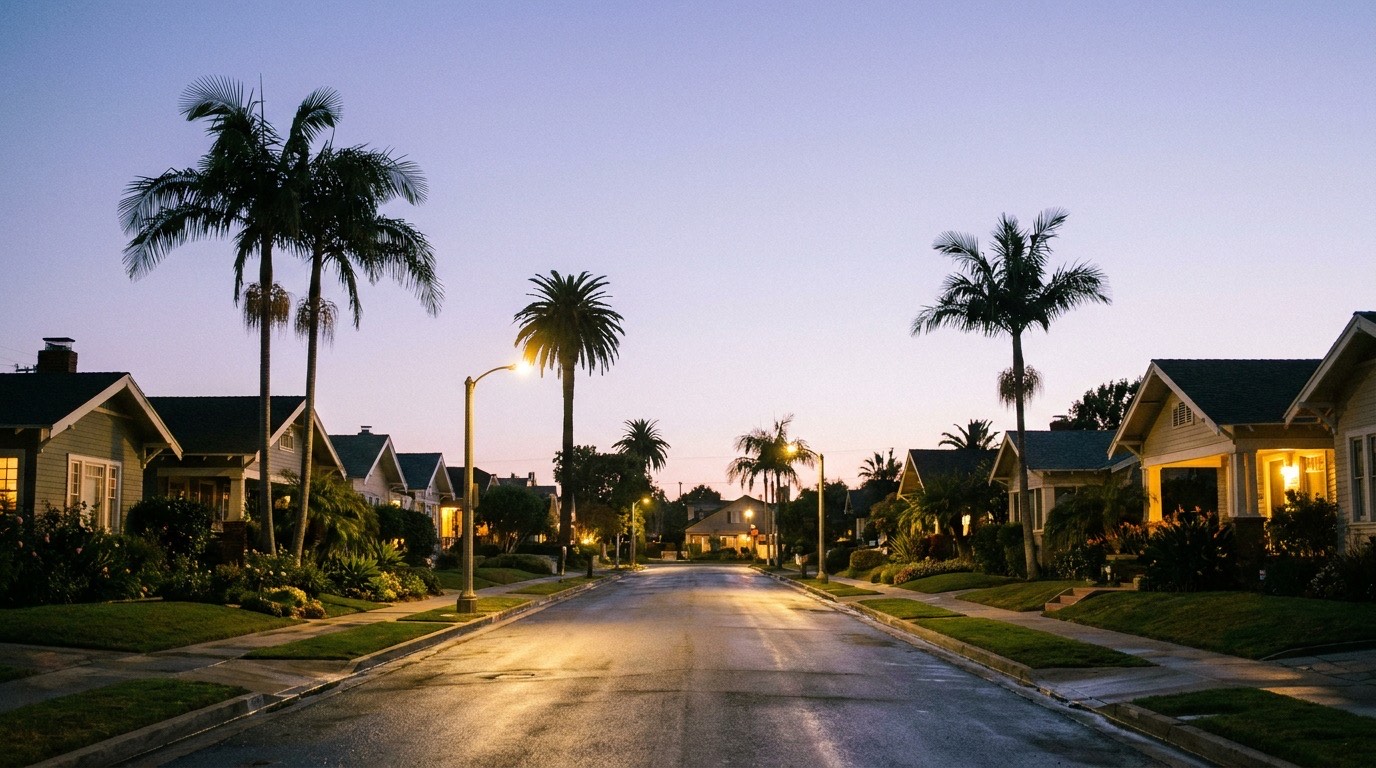
Here’s a neutral answer, without the alarmism and without pretending the question doesn’t matter: Venice is a dense, mixed-use, tourist-facing neighborhood, and safety within it varies block by block the same way it does across most of Los Angeles.
Safety Varies by Block, Not by the Neighborhood as a Whole
Treating “Venice” as one safety category misses the real variation inside it. The Venice Canals and quieter inland residential streets have a different daily character than the busiest stretches near the boardwalk. Judging a specific address requires looking at that specific block, not the neighborhood’s overall reputation, which is true of most dense, mixed-character LA neighborhoods.
The Boardwalk and Beach Corridor Carries More Visible Activity
Like a lot of dense, tourist-heavy beach areas, the boardwalk and immediate beach corridor in Venice see more foot traffic, more visible street life, and a more visible unhoused population than the neighborhood’s quieter residential streets. That’s worth knowing honestly as part of the area’s daily texture. Visibility isn’t the same thing as a crime statistic, though, so it’s worth looking at actual current data rather than drawing conclusions from what’s visible on a single visit.
Property Crime Is a Practical Concern in Dense Urban Areas Generally
As with most dense urban neighborhoods, property crime, things like vehicle break-ins, is a more common practical concern for residents than violent crime, and it’s the kind of thing standard precautions (secure parking, alarm systems, not leaving valuables visible in a car) address the same way they would anywhere else in LA. This isn’t unique to Venice, it’s a normal consideration in dense, walkable, tourist-adjacent neighborhoods generally.
Time of Day and Season Change the Picture Too
The same street in Venice can feel different at 8am on a Tuesday, 11pm on a Saturday, and 3pm on a busy August weekend. Tourist volume, and the activity that comes with it, isn’t constant across the year or the week, it concentrates around the beach, the boardwalk, and Abbot Kinney, and it peaks in summer and on weekends. Anyone forming an impression of safety from a single visit should be honest with themselves about which version of the neighborhood they actually saw.
This Isn’t Unique to Venice
Every dense, walkable, tourist-facing coastal neighborhood in a major city carries some version of this same profile, more visible activity near the main attractions, quieter residential streets a few blocks removed. Venice isn’t an outlier in that pattern, and treating it as uniquely risky compared to other similarly dense LA neighborhoods isn’t supported by anything beyond visibility and reputation. The honest approach is the same one that applies anywhere: look at current data for the specific address, not a general impression of the neighborhood’s name.
How to Actually Research Current Safety Data
Rather than relying on general reputation, which can be outdated or overly shaped by a single visit, check the LAPD’s public crime mapping and statistics resources for the specific area you’re considering, and reach out to the local Neighborhood Council for additional current context. Walking the specific block at different times, a weekday morning and a weekend evening, also tells you more than any general description can.
Compare It in Context, Not in Isolation
Safety questions are most useful when you compare a specific Venice block against a specific alternative you’re also considering, using current official data for both, rather than asking whether Venice is “safe” as an abstract yes-or-no question. That framing applies to almost any dense LA neighborhood, not just this one.
If you’re weighing safety as part of a broader decision about buying in Venice, reach out to Efrat. She serves buyers and sellers across Los Angeles, including Venice, and can help you think through a specific address honestly, using current data rather than general reputation.
