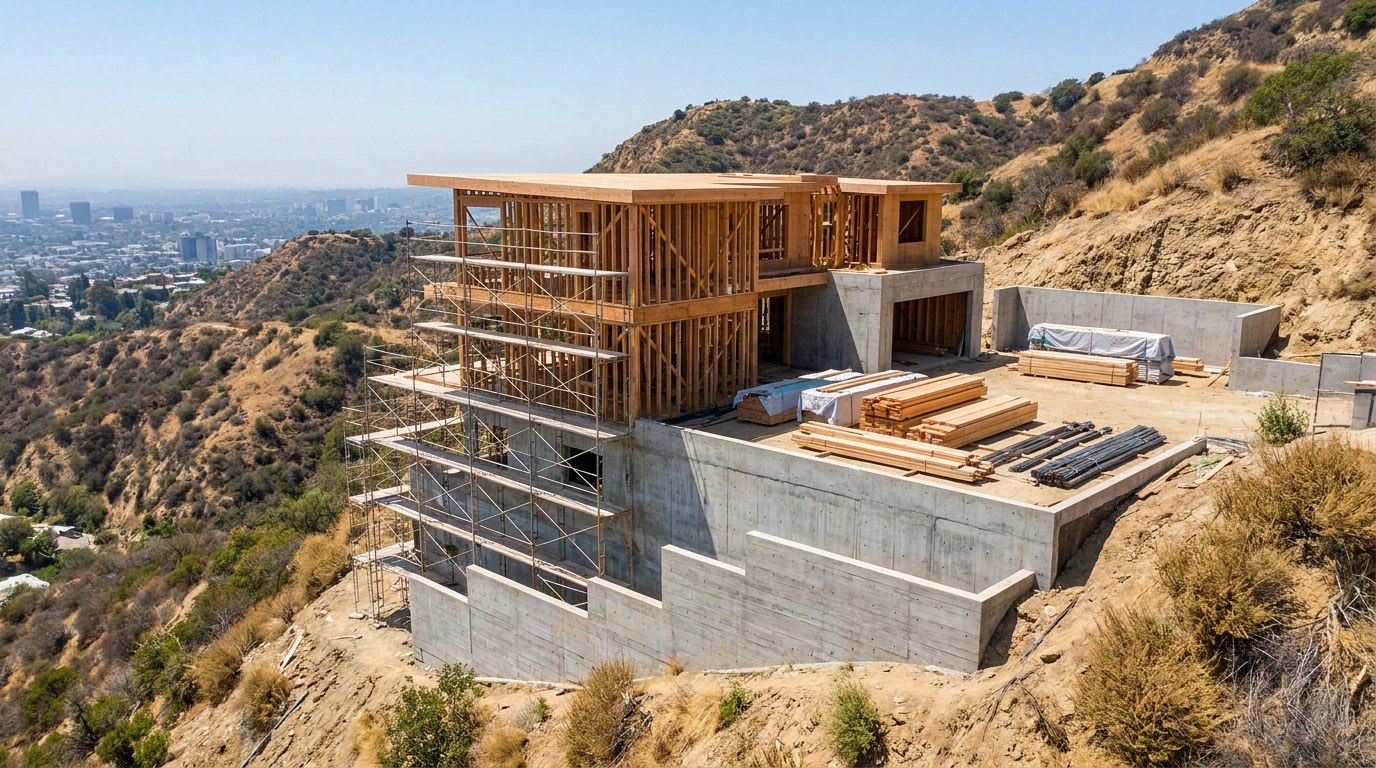
New construction in the Hollywood Hills doesn’t look like new construction in most of Los Angeles. There’s no large tract development happening on this terrain, what you’ll find instead is a steady pattern of individual rebuilds on existing view lots.
Spec Rebuilds Are the Dominant Pattern
The most common form of “new construction” here is a developer or owner tearing down an older, often smaller home on a strong-view lot and rebuilding a larger, design-forward property in its place. This has reshaped parts of several streets, mixing decades-old original homes with recently completed contemporary builds side by side. It’s a meaningfully different pattern than new construction in a flatland neighborhood, where you’d more likely see a whole tract built at once.
Why Large Developments Are Rare Here
The steep, irregular terrain that defines the Hollywood Hills also limits what large-scale development is realistically possible. Grading multiple adjacent lots, managing shared access and drainage, and clearing the permitting hurdles for a multi-home project are all significantly harder on this kind of slope than on flat ground. That’s a real part of why new construction tends to stay at the single-lot scale here rather than becoming large subdivisions.
What to Verify on a New or Recently Built Home
New construction doesn’t exempt a hillside property from the checks that matter on any hillside home. Ask for the complete permit history covering grading and construction, confirm current geological and soils reports, and get a specialist hillside inspection even though the systems are new. Slope stability, drainage design, and retaining wall engineering are the things that actually determine whether a hillside build holds up over time, not just the age of the finishes. Our hillside homes soil reports and retrofitting guide goes deeper on what documentation to request.
The Premium You’re Actually Paying For
New builds generally price higher than comparable older homes nearby, reflecting both the real cost of hillside construction and buyer demand for a turnkey property with modern systems. That premium is legitimate, hillside construction costs meaningfully more than flatland work, but it also means you’re paying for finish choices someone else made. If you have strong opinions about layout or design, it’s worth comparing the cost of a new build against buying an older home and renovating it to your own spec.
Financing a New or Recently Rebuilt Home
Newer hillside builds can present their own financing wrinkles, since a home with no sale history and few directly comparable neighbors can be harder to appraise than a standard resale. Getting pre-approved early with a lender experienced in luxury and hillside properties, and understanding your contingency timeline, matters more here than on a typical flatland purchase. Our mortgage preapproval guide and offer contingencies guide are worth reading before you write an offer on new construction.
Weighing New Construction Against an Older Home
There’s no universally right answer here. A new build gets you modern systems, current code compliance, and less near-term maintenance risk. An older home on a similar lot might cost less upfront and offer more room to shape the property to your own taste, though it likely needs a closer look at aging retaining structures and systems. Which makes more sense depends on your timeline, budget, and how much renovation you actually want to take on.
A Quick Gut Check Before You Tour
Walk into any new or recently rebuilt listing with a specific list of questions ready: full permit history, current soils report, and how the drainage was engineered for the specific slope. Sellers and their agents in this submarket are used to these questions, and a straight, documented answer is a good sign, vagueness on any of them is worth treating as a real caution flag rather than something to smooth over.
Looking at new construction or considering a rebuild lot in the Hollywood Hills. Efrat serves buyers and sellers across Los Angeles, including the Hollywood Hills, and can help you evaluate a specific property or development opportunity. Get in touch to talk through it.
