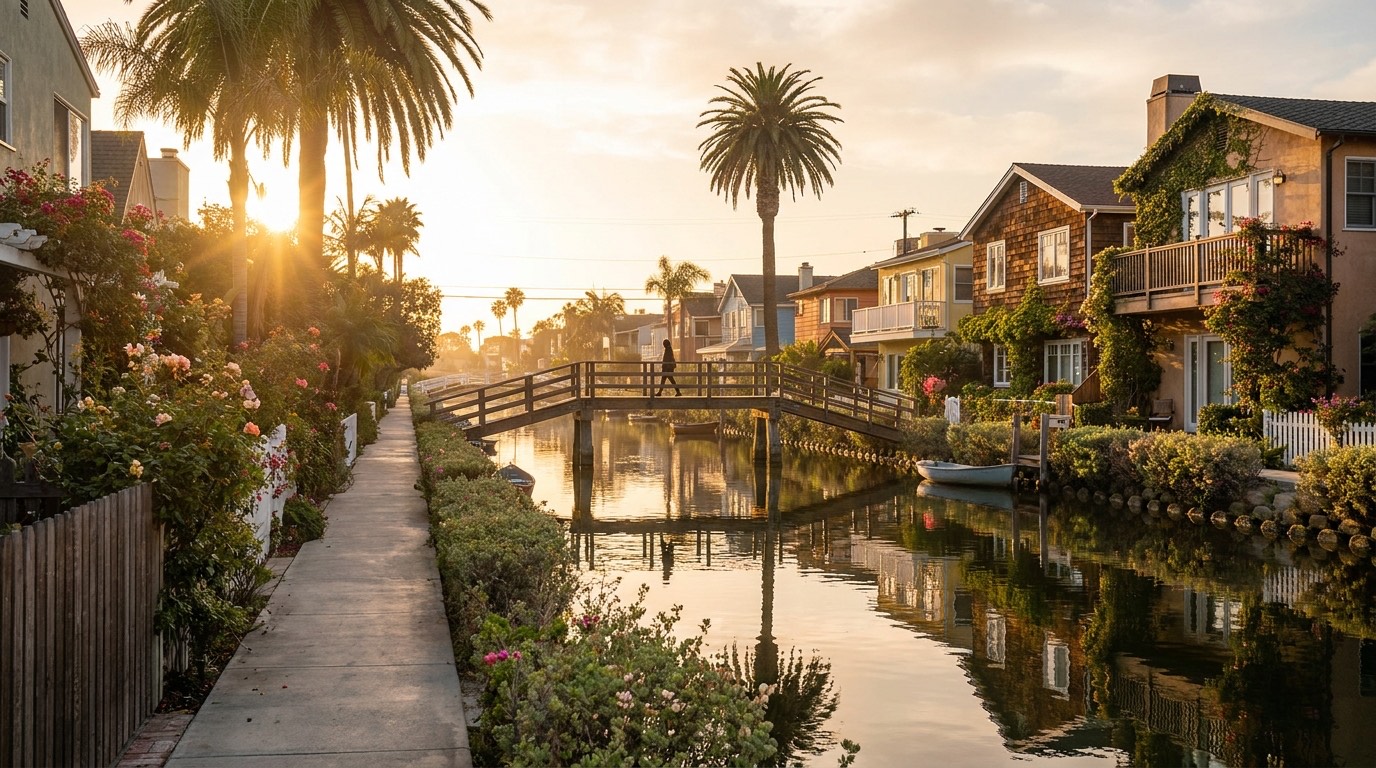
Santa Monica and Venice sit right next to each other on the Westside, share a coastline, and get cross-shopped constantly by buyers who assume they’re roughly interchangeable. They’re not. Here’s the honest comparison.
Transit Access Sets Them Apart Immediately
Santa Monica has direct Metro E Line (Expo Line) access into downtown LA and Culver City, giving it a rail-connected commute option that Venice simply doesn’t have. If a car-free or car-light commute matters to your daily life, this is one of the clearest, most practical differences between the two, and it’s worth weighing before location or lifestyle preferences alone.
Housing Stock Looks Genuinely Different
Santa Monica’s inventory leans toward mid-rise and high-rise condo buildings, particularly downtown and along Ocean Avenue, alongside North of Montana’s single-family estate stock. Read our full look at Santa Monica’s luxury homes and estates for more on that tier. Venice’s stock is dominated by smaller original beach bungalows, modern architectural rebuilds, and canal-front homes, a very different mix, covered in our guide to Venice’s luxury homes and estates. Buyers comparing the two on price alone often miss how differently the actual housing stock behaves.
Regulation Is Where the Two Cities Diverge Most
This is the comparison buyers underestimate most often. Santa Monica runs its own rent control ordinance, administered by its own Rent Control Board, genuinely separate from the City of Los Angeles rules that cover Venice. See our breakdown of how Santa Monica’s rent control differs from LA’s for the specifics. Short-term rental rules diverge even more sharply: Santa Monica’s home-share model is one of the stricter frameworks in the state, generally limiting whole-home rentals under 30 days to owner-occupants, while Venice follows the citywide LA primary-residence rule instead, covered in our Venice short-term rental rules guide. Treating the two cities as regulatory equivalents is a real source of mistakes for investors.
Daily Character Reflects Two Different Identities
Santa Monica’s daily rhythm centers on the Third Street Promenade, the pier, and a more polished, commercially developed downtown core, alongside quieter residential streets in North of Montana. Venice leans more bohemian and artistic, with Abbot Kinney’s boutique-and-restaurant strip and a boardwalk that draws heavier tourist foot traffic and a more visible street life. Neither is objectively better; they suit different daily preferences. For a closer look at what daily life actually feels like in each, see our answers to what it’s like to live in Santa Monica and what it’s like to live in Venice.
Job Base and Renter Demand Overlap, But Aren’t Identical
Both cities sit inside the broader Silicon Beach tech and media cluster, which supports similar underlying rental and buyer demand. Santa Monica’s downtown professional and tourism economy adds a layer Venice doesn’t have to the same degree, while Venice’s proximity to Snap’s headquarters and a concentrated creative industry base gives it its own distinct pull. See our Santa Monica rental market overview and Venice rental market overview for the fuller pictures side by side.
Which One Actually Fits You
If rail access, a more polished downtown, and North of Montana’s estate-style privacy matter most, Santa Monica is the stronger fit. If bohemian character, canal-front or architectural rebuild inventory, and Abbot Kinney’s walkable strip matter more, Venice tends to win out. Investors specifically should weigh the regulatory differences, particularly around rent control and short-term rentals, as heavily as location preference, since they meaningfully change the numbers on either side.
If you’re deciding between Santa Monica and Venice, reach out to Efrat. She serves buyers and sellers across Los Angeles, including both cities, and can help you weigh the tradeoffs against your specific goals before you commit to a search in either one.
