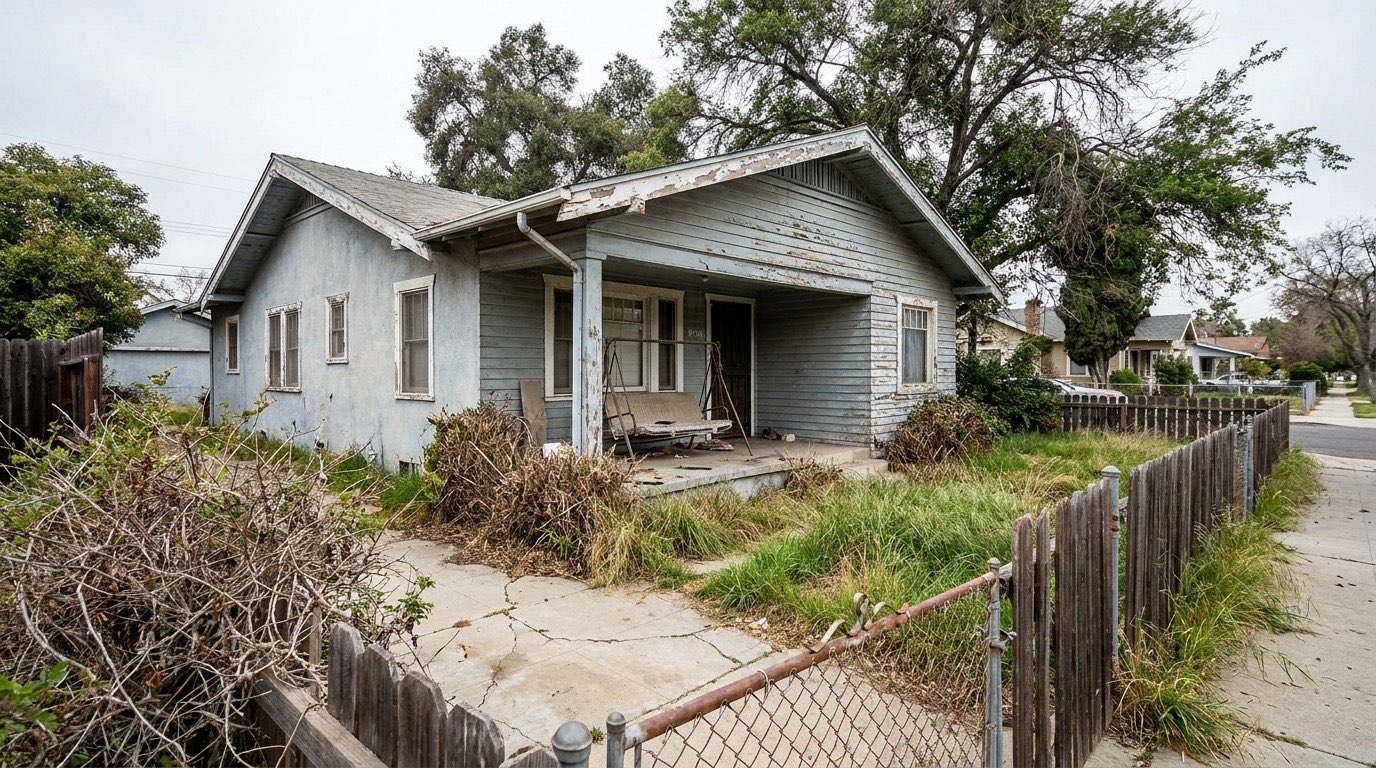
Culver City’s growth as a job center, driven largely by Sony and Amazon’s presence, has made even its older, less-updated housing stock genuinely attractive to buyers willing to put in renovation work. A fixer-upper here isn’t just a discount entry point, it’s often a real bet on a neighborhood that’s still building out. That said, the trade-off is real and worth thinking through honestly before you commit.
The Location Is Doing a Lot of the Work
A lot of what makes a Culver City fixer-upper appealing isn’t the structure itself, it’s the land and the location relative to downtown, the studios, and the broader job corridor. Buyers willing to renovate can often unlock real value in a property that a move-in-ready comparable simply doesn’t offer at the same price. That’s especially true on quieter residential streets that haven’t seen as much recent turnover as the areas immediately around downtown.
Older Systems Rarely Match the Home’s Age Uniformly
Culver City’s older single-family homes have often been updated in stages over the decades, one owner redoing the kitchen, another handling the roof, rarely all at once. That means electrical, plumbing, and foundation work can be a genuine patchwork rather than one consistent system. Go in assuming you’ll find more than what’s visible on a walkthrough, and budget your inspection accordingly.
Converted Loft and Live-Work Units Come With Different Constraints
If the fixer-upper you’re considering is a converted unit near the Hayden Tract rather than a standard single-family home, confirm what the HOA or building rules actually allow before you assume a renovation plan is feasible. Structural changes in a converted building can be more limited than in a standalone house, and it’s worth confirming that before it becomes part of your budget assumptions.
Budget for the Unknowns, Not Just the Visible Scope
Any fixer-upper carries the risk of finding more once the work actually starts. In Culver City, layer in the age of a lot of the residential stock, and a realistic renovation budget needs real cushion beyond the initial scope estimate. Talk to your contractor about an honest contingency percentage before you commit to a number you’re comfortable with.
Weigh a Full Rebuild Against a Renovation
Some Culver City fixer-uppers, particularly ones with significant foundation or system issues layered on top of a dated layout, make more sense as a full rebuild than a piecemeal renovation. That’s a bigger decision with its own permitting timeline, and it’s worth discussing both paths with your contractor and agent before deciding which one actually fits your budget and goals.
Financing a Fixer-Upper Takes Extra Planning
Standard conventional loans don’t always account well for a property that needs significant work, and some lenders look more closely at a home’s condition when the scope of needed repairs is substantial. Renovation loan products exist for exactly this situation, but they come with their own timelines and documentation requirements. Talk to your lender early about which loan product actually fits your specific Culver City property and renovation plan, rather than assuming a standard mortgage will cover it the same way it would for a move-in-ready home.
When Move-In-Ready Is the Smarter Call
If your timeline is tight or your budget doesn’t have real room for the unexpected, a move-in-ready home in Culver City, even at a higher purchase price, may genuinely be the lower-stress path. There’s no wrong answer here, it’s a real trade-off between upfront cost and predictability, and it’s worth being honest with yourself about which one you actually want to manage.
If you’re weighing a fixer-upper in Culver City, reach out to Efrat. She serves buyers across Los Angeles, including Culver City, and can help you think through the trade-offs before you commit to an offer.
