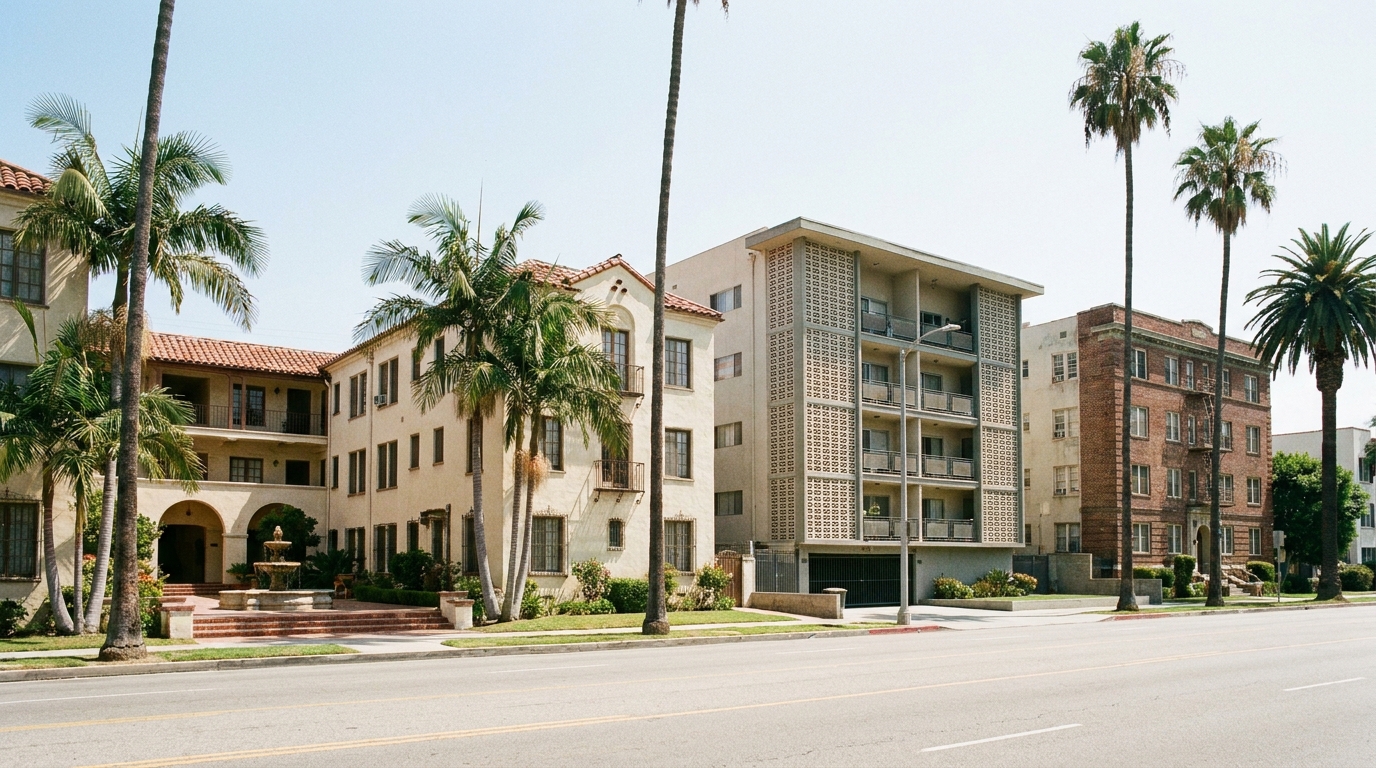
Tenancy-in-common, usually just called TIC, comes up often enough in certain LA buildings that a buyer should understand it before making an offer, since it works differently than a condo in ways that affect financing, resale, and what you’re actually buying.
What TIC Ownership Actually Means
In a TIC, the building is one legal parcel, not a set of separately deeded units. Each owner holds an undivided percentage interest in the whole property, and that interest is paired with an exclusive right to occupy a specific unit. That right to occupy comes from a private TIC agreement signed by all the co-owners, not from a separate deed the way a condo unit works. You’re buying a share of the whole building plus a contractual right to live in one part of it, and that distinction shapes everything else about how the ownership functions.
Why TIC Ownership Exists in Certain LA Buildings
TIC structures usually show up in older, denser parts of the city, in a building that hasn’t gone through condo conversion, or in a building where conversion is restricted or too expensive to pursue. Setting the property up as a TIC lets multiple owners buy in without the building needing to go through that process, which often makes it a lower-cost path into ownership in a location or building type that would otherwise be out of reach.
Financing a TIC Purchase Works Differently
Fewer lenders offer TIC-specific loans, and the terms are often less favorable than a standard condo or single-family mortgage, sometimes at a higher rate. Some lenders offer a fractional loan tied specifically to your individual percentage share of the building. Confirm early in the process which lenders in your area actually do TIC lending, since not every mortgage broker handles these regularly.
Two Types of TIC Loan Structures, and Why the Difference Matters
Older-style TICs often carry one underlying mortgage on the building as a whole, with the co-owners mutually responsible for it. That means one owner’s default can affect everyone else’s ownership, a real risk worth understanding before you buy in. Newer, fractionalized TIC loan structures reduce this risk by giving each owner an individual loan tied to their own share, so one owner’s problem doesn’t automatically become the whole group’s problem. Ask directly which structure applies to a specific building, since both exist in LA and the answer changes your risk exposure.
Resale Takes Longer and the Buyer Pool Is Smaller
A TIC unit generally takes longer to sell than a comparable condo, and the buyer pool is smaller since fewer buyers understand or are comfortable with TIC ownership and the financing hurdles that come with it. This is worth factoring into your decision if you expect to sell within a few years, not just into your purchase price comparison.
The TIC Agreement Governs Everything, Read It Carefully
There’s no public HOA or CC&Rs here. The private TIC agreement among the co-owners governs use of the property, what alterations are allowed, how costs are shared, and what happens if an owner wants to sell or a dispute comes up between owners. Reading this agreement carefully during due diligence matters more in a TIC purchase than it would in a standard condo deal, since it’s the actual rulebook you’ll be living under.
If you’re considering a TIC purchase in Los Angeles, work with an agent and a real estate attorney who handle TIC transactions specifically, since the financing and legal structure differ enough from a standard purchase that general experience isn’t a substitute. Get in touch and Efrat can walk you through what to look for in a specific building.
