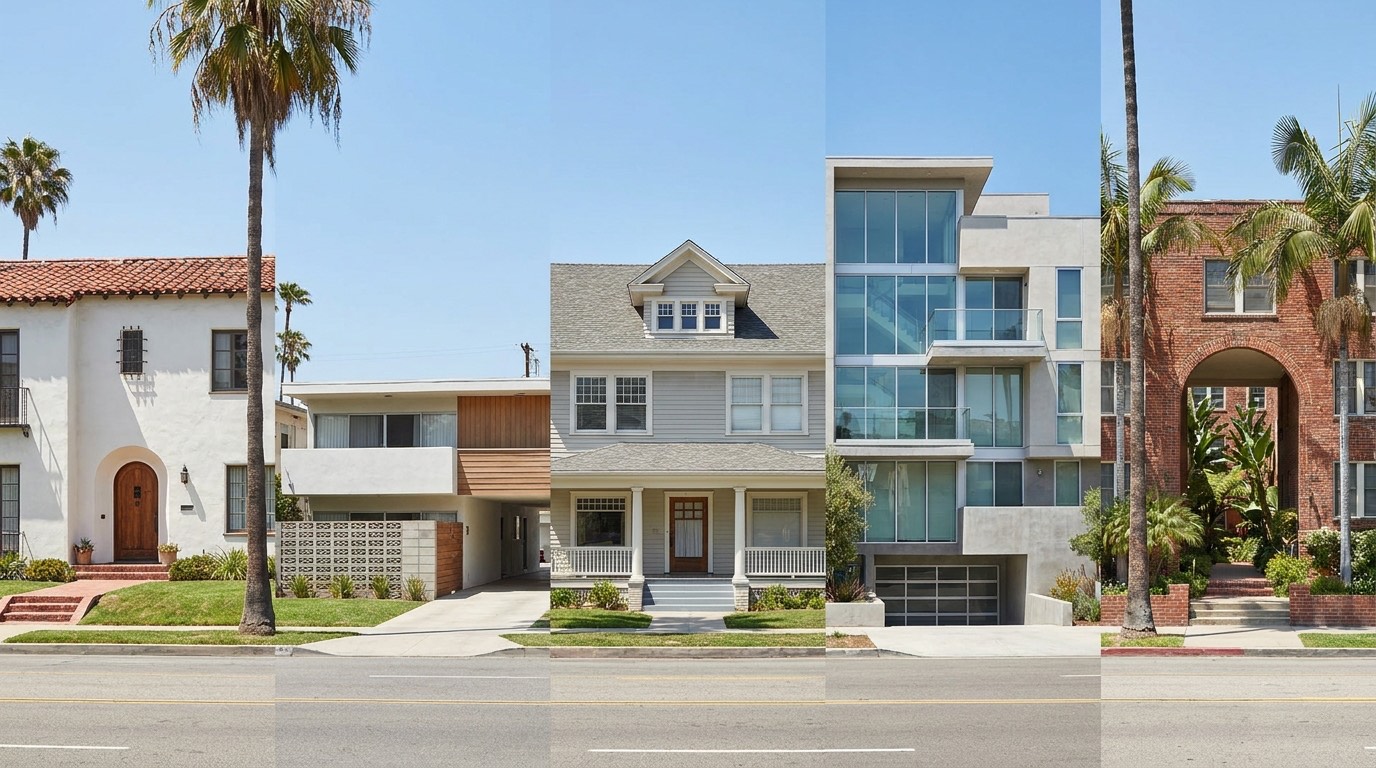
Westwood’s housing stock looks different from most Westside neighborhoods for one big reason: decades of UCLA-driven rental demand pushed development toward density rather than the single-family model you’ll find in nearby areas like Brentwood or Cheviot Hills. Here’s what that actually looks like on the ground.
Mid-Century Apartment and Condo Buildings Dominate
A large share of Westwood’s housing stock is mid-century apartment and condo buildings, built from the 1950s through the 1970s to house the growing population UCLA generated. Many of these are modest, low-rise buildings, three or four stories, brick or stucco exteriors, that have aged into a genuinely dated but functional style. Buyers looking at these should expect to weigh original character against likely deferred updates.
The Wilshire Corridor’s High-Rise Towers
Along Wilshire Boulevard, Westwood’s housing stock shifts dramatically into high-rise territory. These full-service condo towers, some dating to the 1960s and 1970s and others more recent, represent some of the tallest residential buildings on the Westside. Their architecture tends toward a more formal, tower-block style built around amenities and service rather than any particular design movement. Our condos vs. single-family comparison covers who this buyer profile actually is.
Single-Family Pockets Toward the Edges
Away from the Village and the Wilshire Corridor, particularly toward Westwood’s northern and western edges near Little Holmby and the areas closer to the VA campus, single-family homes do exist, generally in a mix of traditional and Spanish-influenced styles common across the Westside. These pockets are smaller and less numerous than in neighboring single-family-dominant areas, which makes them a genuinely scarcer, more sought-after category within Westwood specifically.
Student Housing Influence Near the Village
Close to Westwood Village and the UCLA campus edge, some of the housing stock reflects its student and young-renter market directly, smaller unit layouts, higher density per building, and a design emphasis on efficient use of space over larger family-oriented floor plans. This isn’t the whole neighborhood, but it’s a real and visible part of the housing mix closest to campus.
Renovation and Updating Trends
Given how much of Westwood’s stock dates to the mid-century era, renovation activity is common, updated kitchens and bathrooms, modernized common areas in older condo buildings, and occasional full gut renovations in single-family homes. Buyers should expect a wide range of condition even within a single building or block, since individual owners update on their own timelines.
HOA Considerations Tied to Building Age
Because so much of Westwood’s stock is condos of varying age, HOA health and reserve funding vary a lot from building to building, and that’s worth understanding as its own factor separate from the unit’s finishes. Our Westwood HOA and condo fees guide covers what to check before buying into a specific building.
Common Areas and Shared Amenities in Older Buildings
Beyond individual units, the shared spaces in Westwood’s older condo buildings, lobbies, hallways, courtyards, laundry rooms, often show their age more visibly than a well-kept unit interior. A building can have a fully renovated apartment behind a dated, worn-looking lobby, so it’s worth judging a building on its common areas and its individual unit separately rather than assuming one reflects the other.
What This Means for Buyers Comparing Options
If architectural character and land ownership matter most, the neighborhood’s smaller single-family pockets are worth prioritizing, understanding they’re a scarcer category here than in most Westside neighborhoods. If low-maintenance, amenity-rich living matters more, the Wilshire Corridor’s towers are the more natural fit.
Getting an Honest Read on a Specific Building or Home
Because Westwood’s housing stock varies so much by era and building type, the most useful next step is walking a few specific properties and comparing their actual condition and updates rather than judging by a general sense of the neighborhood’s architecture. Reach out to Efrat, she serves buyers and sellers across Los Angeles, including Westwood, and can help you evaluate what a specific property’s style and condition actually mean for your search.
