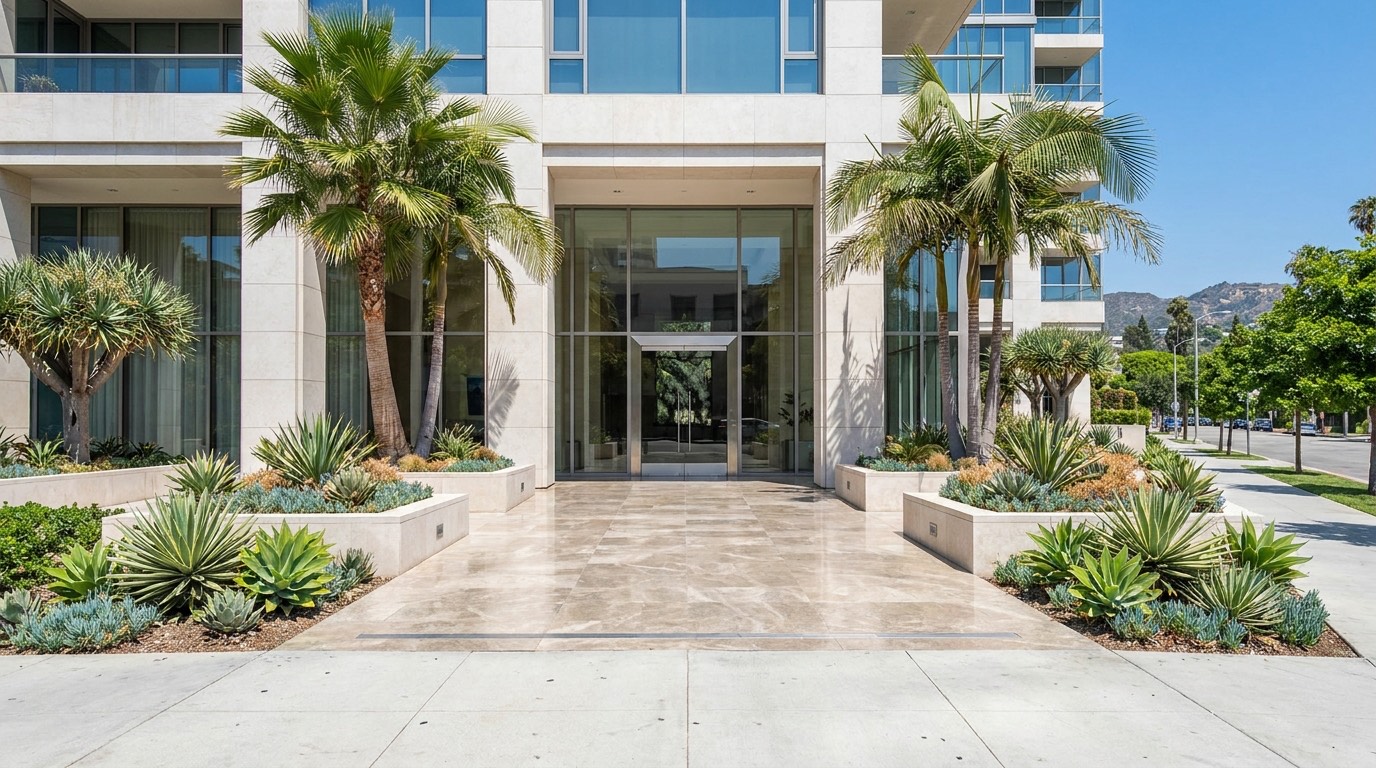
Westwood has one of the largest concentrations of condo buildings anywhere on the Westside, from small mid-century walk-ups to full-service high-rise towers along the Wilshire Corridor, and HOA fees vary enormously across that range. That range is exactly why a single Westwood number doesn’t mean much until you know which type of building you’re actually comparing.
The Baseline Rules Are the Same Everywhere
Whether you’re looking at a mid-century walkup near the Village or a full-service tower on the Wilshire Corridor, the same statewide rules govern what an HOA fee has to fund, how a reserve study works, and what a seller is legally required to disclose. Our HOA fees explained guide walks through that framework in full, so this post picks up where that one leaves off, with what actually changes building to building in Westwood. This guide assumes a standard condo with a recorded HOA. If a building you’re considering is actually structured as tenancy-in-common, our TIC ownership guide explains how financing and the governing agreement work differently there.
Why Westwood’s Condo Stock Varies So Much
Westwood’s condo buildings range from modest mid-century low-rises built to house UCLA-driven rental demand decades ago, to full-service high-rise towers along the Wilshire Corridor with doorman, valet, and pool amenities. That range means HOA fees vary dramatically building to building, more so than in most Westside neighborhoods. Our Westwood housing stock guide covers that full range in more depth.
Full-Service High-Rises Carry Real Amenity Costs
The Wilshire Corridor’s high-rise towers often include staffed lobbies, valet parking, pools, fitness centers, and other full-service amenities, all of which push HOA fees meaningfully higher than a smaller, no-frills building near the Village. Whether that level of service is worth paying for is your call to make, not a given, so get the actual dollar gap between a full-service tower and a smaller building before deciding the extra staff and amenities pencil out for you.
Older Buildings and Deferred Maintenance
Many of Westwood’s smaller mid-century buildings are decades old, and some carry deferred maintenance, aging plumbing, roofing, or structural systems, that can mean higher current fees or the risk of a future special assessment if the reserve fund isn’t well funded. Ask for the reserve study and the last couple of years of board minutes for any specific building rather than assuming age alone tells the story.
Rental Restrictions Matter More Here Than in Most Neighborhoods
Because Westwood’s rental demand from UCLA students and staff is so strong, some HOAs specifically restrict rentals or set minimum lease terms to manage turnover and building wear. If renting the unit out is part of your plan, confirm a specific building’s rental policy before you’re in contract, rather than assuming it’s open in either direction.
Special Assessments and What Triggers Them
A special assessment is a one-time charge on top of the regular monthly fee, usually triggered when a building needs major work the reserve fund doesn’t fully cover, a roof replacement, elevator overhaul, or structural repair. Older Westwood buildings with underfunded reserves are more exposed to this risk than newer or well-managed ones. Ask directly whether any special assessment has happened in the last few years, and whether one is currently being discussed, rather than only reviewing the monthly fee in isolation.
Building-Specific Questions Worth Asking
Past the standard document pull, CC&Rs, budget, reserve study, and recent minutes, get direct answers on the building’s age, any deferred maintenance, and its rental policy, since Westwood’s UCLA-driven demand makes that policy matter more here than in most neighborhoods. If you’re looking at a high-rise, add one more question: what share of the monthly fee goes to staffing, and has that line item grown faster than the rest of the budget in recent years.
Comparing Fees Across Building Types
A useful way to compare is side by side, not against a single neighborhood average. Line up a mid-century low-rise, a renovated mid-size building, and a full-service Wilshire Corridor tower for the same budget range and see how the fee and amenity tradeoff actually looks for each. Our condos vs. single-family comparison covers the broader tradeoff if you’re still weighing property types.
Given how many condo buildings exist within a few blocks of each other in parts of Westwood, comparing three or four specific buildings side by side, not just one, is usually worth the extra time before you settle on a favorite.
Comparing a Wilshire Corridor tower against a mid-century walkup on paper only gets you so far. Efrat works with buyers and sellers across Los Angeles, including Westwood, and can help you pull the actual documents for specific buildings and sort what’s a real red flag from what’s normal for the building type.
