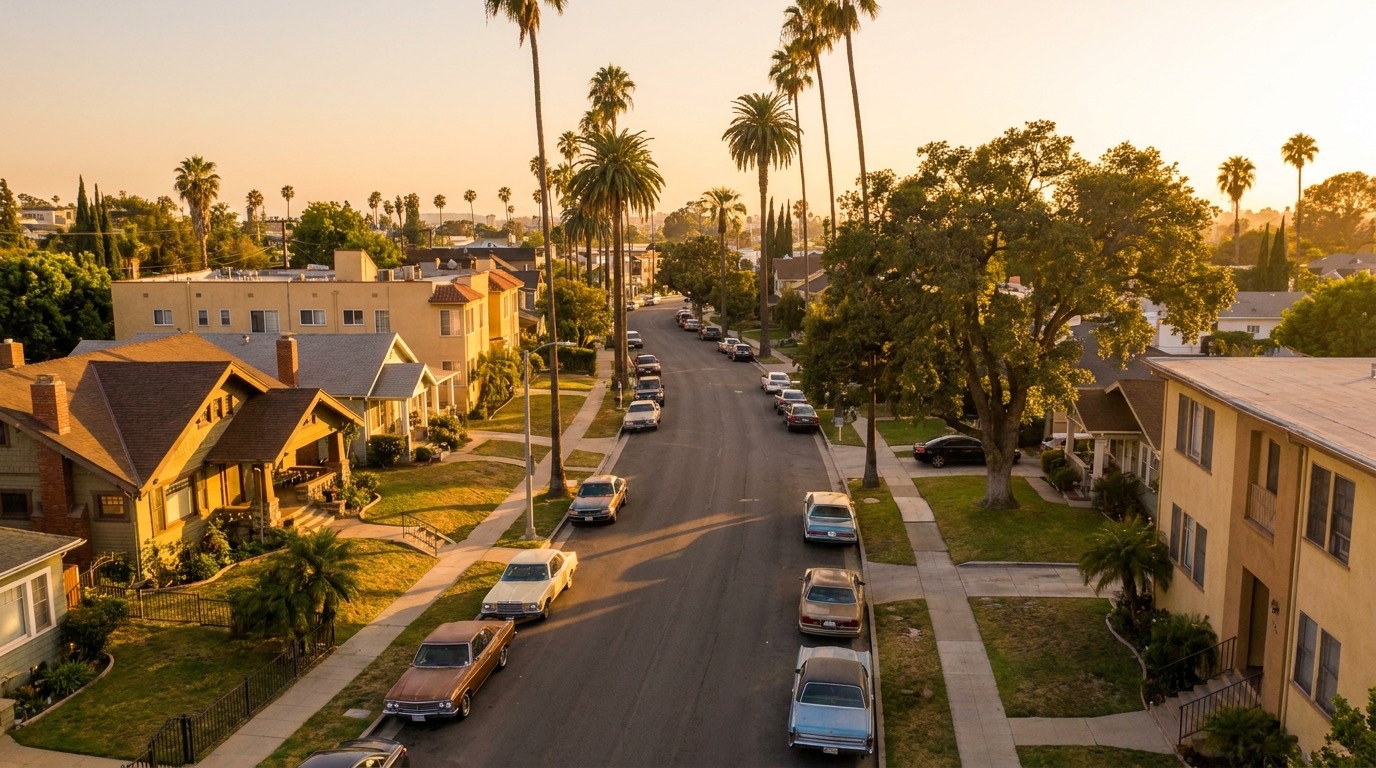
Ask a longtime Westwood resident why they stay, and the answer usually comes down to a combination of location, walkability, and the particular energy a major university brings to a neighborhood.
Central Westside Access Without the Density of Neighboring Areas
Westwood sits within easy reach of Beverly Hills, Century City, Brentwood, and Santa Monica, which gives residents genuine flexibility for work, dining, and daily errands without needing to live in the busiest, most expensive core of any single one of those neighborhoods. For professionals working in entertainment, law, or finance with offices in Century City, this proximity is a real, practical draw, not just a convenience talking point.
UCLA Brings Energy Most Neighborhoods This Size Don’t Have
A major university changes what a neighborhood offers day to day: lectures and cultural events open to the public, sports and campus activities, a built-in population of students and staff that supports restaurants, bookstores, and other small businesses that wouldn’t otherwise survive in a neighborhood this size. Residents who enjoy that kind of intellectual and cultural energy tend to genuinely value living close to it, even if they have no direct connection to the university themselves.
Westwood Village Offers Real Walkability
Westwood Village gives the neighborhood something a lot of LA lacks: a walkable commercial core where residents can handle errands, grab a meal, or meet friends without getting in a car. For people used to LA’s car-dependent sprawl, that shift toward a more walkable daily life is often one of the first things they mention after moving in.
A Genuine Mix of Housing and Lifestyle Options
Westwood’s housing stock ranges from denser condo and apartment buildings along the Wilshire corridor to quieter single-family pockets, particularly toward the edges near Holmby Hills. That range means residents can choose their preferred pace within the same general neighborhood, a high-rise condo close to the energy of the Village, or a calmer residential street a short distance away.
The Tradeoffs Are Real Too
None of this comes without tradeoffs. UCLA-driven traffic is a genuine daily factor, particularly during move-in weeks, the start and end of each academic quarter, and game days. Our Westwood commute guide goes into more detail on how that plays out for different routes. Most residents who love living in Westwood describe these as a manageable cost of a neighborhood that otherwise delivers a rare combination of access, walkability, and energy.
Weighing Westwood Against What You Actually Want Day to Day
The people who end up loving Westwood tend to be the ones whose daily priorities line up with what the neighborhood actually offers: central Westside access, some genuine walkability, and a tolerance for the traffic and noise that comes with living near a major university. If your priorities lean toward total quiet and a purely residential feel, it’s worth weighing Westwood against a neighborhood like Brentwood that doesn’t carry the same university-driven rhythm.
A Neighborhood That Rewards Knowing It Well
Because Westwood covers so much ground between a busy commercial core and quieter residential edges, the experience of living there can vary a lot depending on the exact block. Two residents a few streets apart might describe completely different daily lives, one immersed in Village foot traffic and campus energy, the other in a calm, tree-lined pocket that happens to share the same neighborhood name. That range is part of what makes Westwood work for so many different kinds of people, but it also means it’s worth exploring specific streets in person rather than judging the neighborhood as a single, uniform experience.
Long-Term Residents Often Cite the Same Handful of Reasons
Talk to residents who have stayed in Westwood for a decade or more, and a similar short list tends to come up: the central location that’s saved them from a punishing commute over the years, the sense of continuity that comes from a stable, institution-anchored neighborhood rather than one that reinvents itself every few years, and a genuine attachment to the Village’s small businesses and familiar routines. It’s not a flashy pitch, but it’s the kind of steady, practical satisfaction that tends to keep people in a neighborhood far longer than initial excitement alone ever could.
If you’re trying to figure out whether Westwood’s particular mix fits what you’re looking for, reach out to Efrat and she can walk you through specific streets and buildings that match your priorities.
