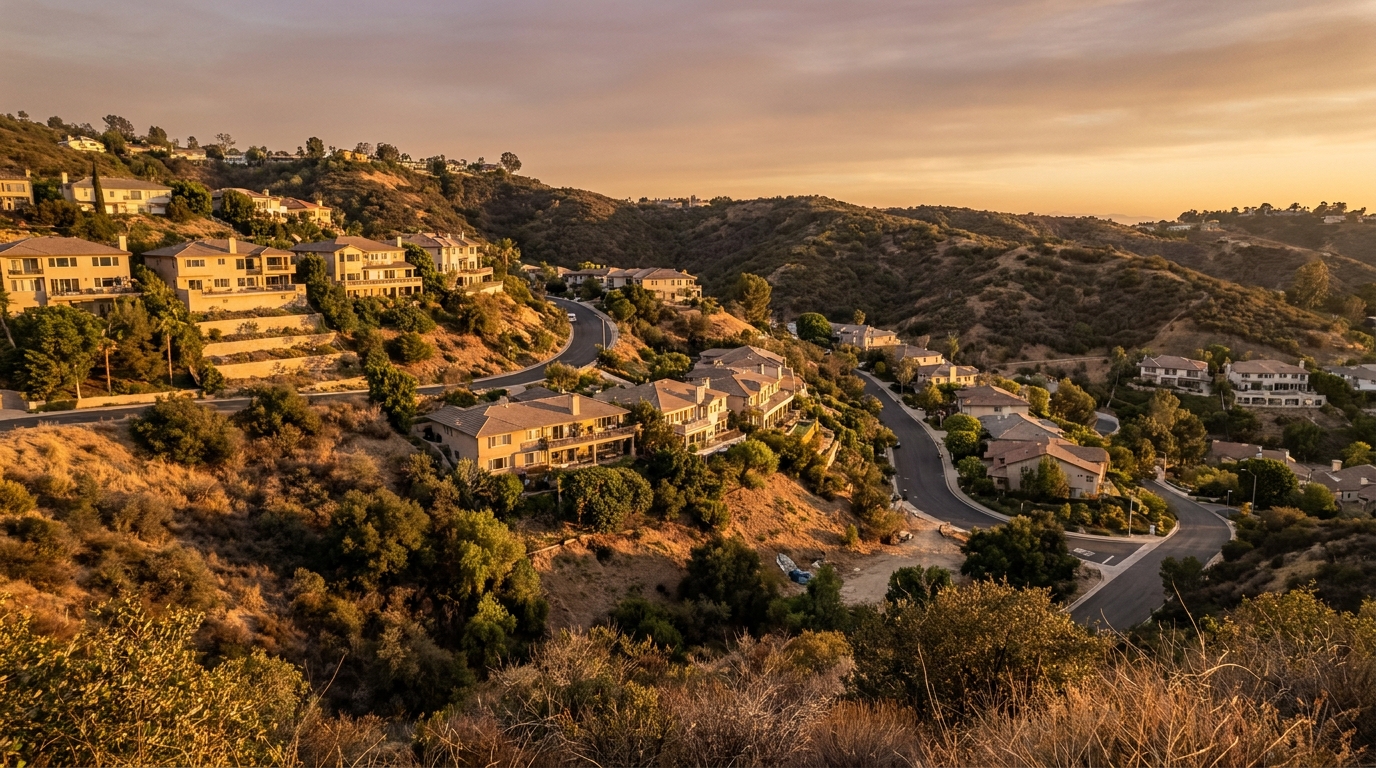
If you’re buying or selling in one of LA’s hillside or canyon neighborhoods, the insurance conversation now matters as much as the inspection.
Why Standard Insurance Has Gotten Harder to Find
A lot of Greater LA, especially hillside and canyon areas like Bel Air, the Hollywood Hills, Brentwood, and pockets of Mid Wilshire and areas adjacent to Beverly Hills, now sits in zones where standard insurers have pulled back or exited entirely. This isn’t unique to LA, but the January 2025 Palisades and Eaton fires accelerated it here specifically, and a lot of buyers and sellers are running into it for the first time mid-transaction.
It used to be that insurance was a formality you sorted out somewhere in the middle of escrow, a phone call your lender needed answered before funding. That’s changed. In some of these neighborhoods, insurance now belongs in the same conversation as the inspection and the appraisal, something you check on early rather than assume will work itself out.
What the FAIR Plan Actually Is
The California FAIR Plan is the state’s insurer of last resort. It exists so property owners in high-risk areas aren’t left with no coverage option at all. It absorbed billions of dollars in losses from the January 2025 fires, and it’s since filed for a significant rate increase, with proposals in the range of 35 to 36% for 2026. That said, the impact on any individual policy varies a lot: some homeowners are actually seeing decreases, and others are seeing increases well over 300%. There’s no single number that applies across the board, so don’t anchor to a headline rate without getting a property-specific quote.
That range is wide enough that hearing a neighbor’s renewal number tells you almost nothing about what your own quote will look like. Rate changes get applied unevenly depending on the property’s specific risk factors, prior claims in the area, and the insurer’s own exposure, so two homes a few streets apart can see very different outcomes at renewal.
Why You’ll Likely Need a Second Policy Too
The FAIR Plan generally covers fire and not much else. It doesn’t cover theft, liability, or water damage. Because of that, most lenders require a companion Difference in Conditions (DIC) policy to fill in those gaps. That means the real cost comparison isn’t FAIR Plan versus a standard policy, it’s FAIR Plan plus DIC versus a standard policy, and both pieces of that combination usually run above what standard coverage would have cost.
What This Means If You’re Buying
Get an insurance quote before you waive a financing contingency on a home in a higher-risk area. This is easy to skip when a deal is moving fast, and it’s exactly the kind of thing that surfaces late and derails a closing. Insurability isn’t guaranteed just because a home is in good condition, and finding out after you’ve waived contingencies puts you in a much weaker position than finding out before.
Ask for a quote as soon as you’re seriously considering an offer, not after you’re already in contract. A broker can usually turn around a preliminary number within a day or two, and that timing works far better for you than discovering a coverage problem during a 17-day contingency period when you have far less leverage to negotiate or walk away cleanly.
What This Means If You’re Selling
If your property has done real mitigation work, defensible space compliance, home hardening, vent screening, or consistent roof and gutter maintenance, document it and have it ready. Getting ahead of the insurance question with current, specific documentation helps a buyer feel confident the property is insurable, rather than leaving them to guess or delay while they shop for coverage during their contingency period.
Put that documentation together before you list, not after a buyer’s broker asks for it. A folder with dated photos of hardening work, receipts for vent screening or roof maintenance, and any defensible space inspection reports gives a buyer’s insurance broker something concrete to work with, and it can shorten the time it takes them to get a usable quote back to their client.
Insurance details on any specific property change often and vary by carrier, so talk to an insurance broker directly for current, property-specific numbers rather than relying on a general rate you’ve seen elsewhere. If you’re navigating a purchase or sale in one of these areas, get in touch and Efrat can help you think through the timing before you’re under contract.
