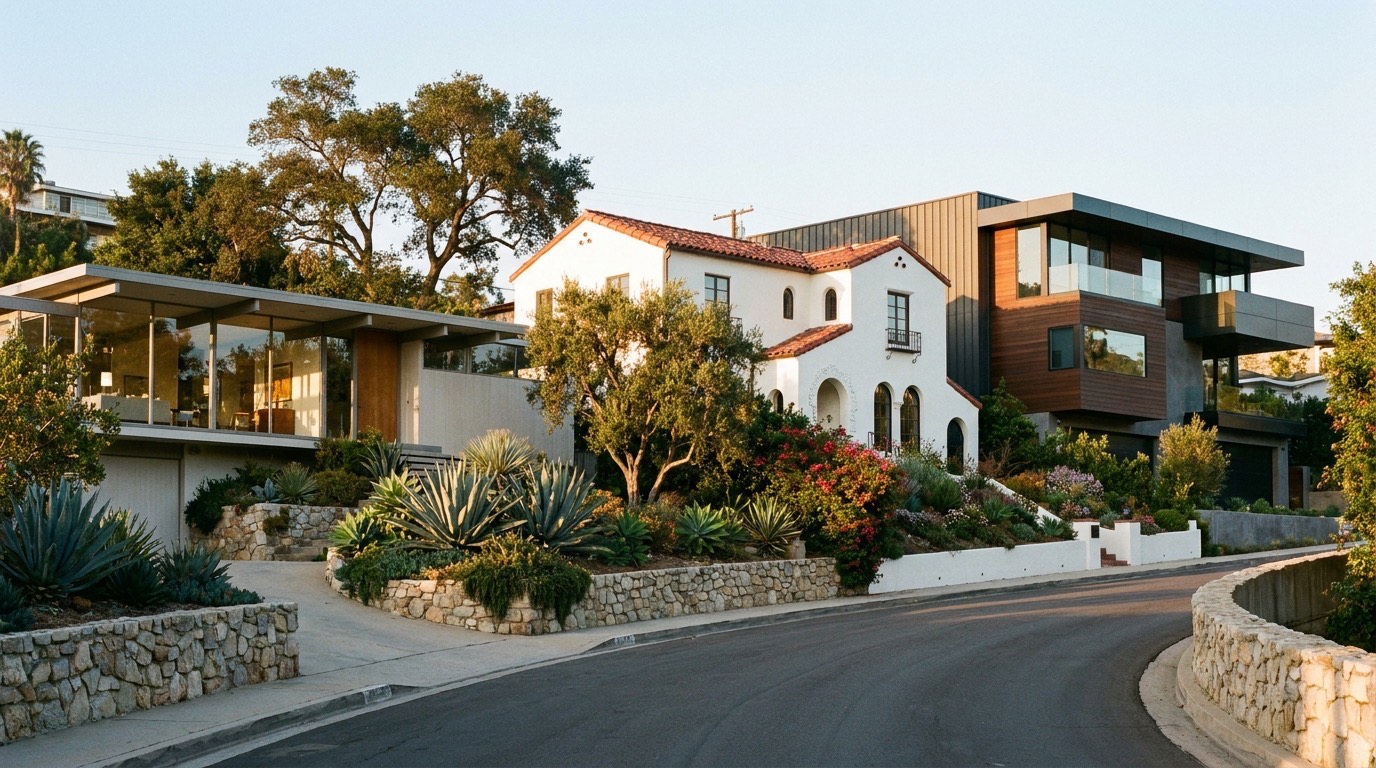
The Hollywood Hills has one of the more architecturally distinctive housing stocks in Los Angeles, largely because the terrain itself forces custom design rather than repeatable tract layouts.
Midcentury Modern Is the Signature Style
The area is closely associated with midcentury modern view homes, many built specifically to open toward the city or Valley view with walls of glass, cantilevered decks, and open floor plans designed around the site’s natural slope. This period produced some of the neighborhood’s most recognized architecture, and midcentury homes remain a strong draw for buyers specifically seeking that aesthetic and its view-forward design philosophy.
Spanish and Mediterranean Influences Sit Alongside It
Older Spanish and Mediterranean-influenced homes, built earlier in the twentieth century, are common as well, particularly on some of the more established streets in Beachwood Canyon. These tend to have more traditional layouts and materials, tile roofs, stucco exteriors, arched details, offering a different character than the glass-and-concrete midcentury homes nearby.
Contemporary Rebuilds Are Reshaping Some Streets
Over recent years, a meaningful number of older or smaller homes on strong-view lots have been torn down and rebuilt as contemporary architectural statements, often significantly larger and more design-forward than what stood there before. This has changed the character of some streets, mixing decades-old original homes with brand-new construction in close proximity. Our guide to new construction and development in the Hollywood Hills covers this trend in more depth.
The Terrain Explains the Variety
Unlike a flatland tract neighborhood where a handful of floor plans repeat block after block, hillside lots in this area rarely share the same shape, grade, or buildable footprint. That variation is exactly why the architectural mix here is so wide, a standard floor plan doesn’t transfer well to an irregular slope, so most homes were designed specifically for their site. This is part of what gives the Hollywood Hills its reputation for notable, one-off architecture rather than repeated builder patterns.
No Meaningful Condo Stock
Worth noting plainly: there’s essentially no condo inventory in the Hollywood Hills proper. This is a single-family home market almost entirely, which is a real point of contrast with neighborhoods like West Hollywood or the Hollywood flats just below it. If a low-maintenance condo lifestyle is the goal, this isn’t the right submarket to search in.
Materials and Systems Age Differently on a Hillside
Beyond style, the actual systems inside an older Hollywood Hills home, plumbing, electrical, and especially anything tied to grading or drainage, are worth a closer look than they’d get in a flatland property of the same age. Hillside homes built decades ago sometimes carry additions or retrofits that weren’t done to current code, and that history matters more here than it would on flat ground where the stakes of a drainage mistake are lower.
What to Check Regardless of Style
Whatever the architectural style, hillside-specific due diligence applies across the board: retaining wall condition, drainage, foundation type, and any past permit history for grading or additions. Age and style don’t exempt a home from these checks, and older homes in particular are worth a specialist hillside inspection rather than a generalist one. Our hillside estates guide covers what that inspection should include.
Comparing Styles Before You Commit to a Search
If a specific style matters to you, midcentury glass-and-view homes, Spanish traditional, or a contemporary rebuild, it’s worth being upfront about that preference early in your search rather than discovering it once you’ve already toured a dozen homes. Each style tends to cluster more heavily in certain sub-areas, so narrowing your preferred style can also help narrow which canyon or street to focus your search on first.
Want to see which architectural styles are actually available on the streets you’re considering. Efrat serves buyers and sellers across Los Angeles, including the Hollywood Hills, and can help you match the style you want to a specific canyon or block. Get in touch anytime.
