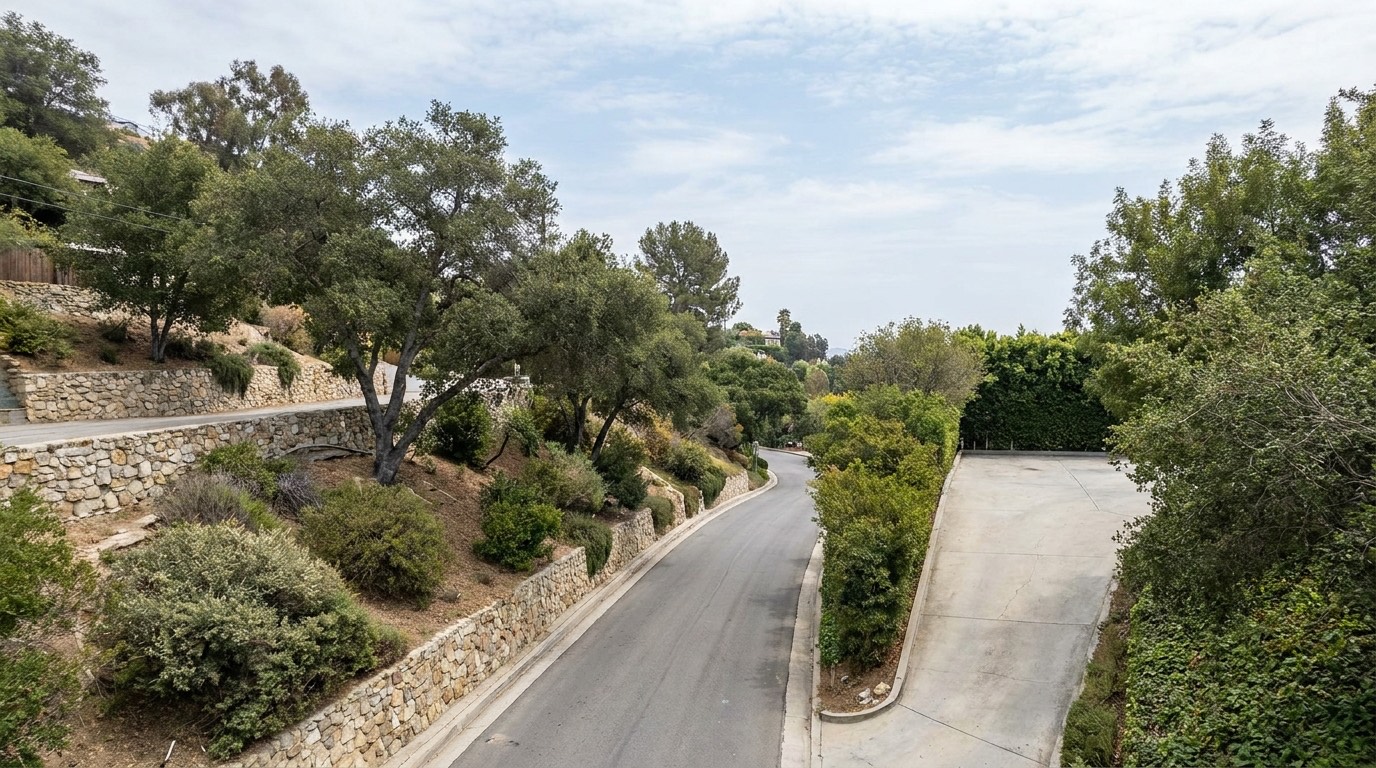
Moving to Hollywood Hills is a bigger lifestyle shift than relocating to most LA neighborhoods, mostly because of the terrain itself. Here’s a practical checklist to work through before you commit, whether you’re coming from another part of LA or somewhere completely different.
Drive the Actual Street Before You Commit
Hollywood Hills covers a lot of ground, Mulholland Dr corridor lots, Laurel Canyon, Beachwood Canyon, and each has its own driving character. Before you sign anything, drive the specific street at a time close to when you’d actually be commuting, ideally after dark too. A street that looks manageable in daylight photos can feel very different on a narrow curve at night.
Get Honest About the Car-Dependent Lifestyle
This isn’t a walkable submarket. Groceries, errands, and most daily needs mean getting in the car, even from a quiet residential street that feels tucked away from the city. If you’re coming from a walkable neighborhood elsewhere, give yourself a real adjustment period for that shift.
Confirm Fire Zone Status for the Specific Address
Fire risk varies by street in Hollywood Hills, not just by general area, and it affects insurance cost and availability directly. Confirm this early in your relocation planning with your insurer, not after you’ve already budgeted around a number that turns out to be wrong. Our post on fire and flood risk for LA homes is a useful starting point for the broader picture.
Understand What You’re Actually Buying Into Structurally
If your move includes purchasing rather than renting, get a real look at soil reports, retaining wall history, and past permitted work before you commit. Our guide to soil reports and retrofitting in Hollywood Hills covers what to ask for.
Line Up Utilities and Services for the Specific Street
Because terrain and access vary so much block to block here, it’s worth confirming things like trash pickup, mail delivery, and internet providers for the exact address rather than assuming they’ll match what a general search suggests for the wider neighborhood. Some canyon streets have quirks a flatland move wouldn’t prepare you for.
Talk to Future Neighbors Before You Sign
A short conversation during your search tells you things a listing never will, how the street handles during fire season, what parking is actually like when guests visit, whether the road gets maintained reliably in winter. It’s easy to skip and genuinely worth the effort in a submarket this varied.
Build in Time to Adjust to the Pace of Life
Hollywood Hills trades density and walkability for privacy, views, and quiet. That’s a real trade worth making for a lot of people, but it takes some adjustment if you’re coming from a busier, more walkable part of the city. Give yourself real time to settle in rather than expecting to feel fully oriented in the first few weeks.
Get a Local Read Before You Decide Which Pocket Fits
Mulholland corridor living, Laurel Canyon, and Beachwood Canyon each have their own character, even under the same neighborhood name. Spend real time in the specific pocket you’re considering, not just the broader area, before you commit.
Plan Your Move-In Logistics Around the Terrain
Moving trucks and furniture deliveries can be genuinely harder to coordinate on a narrow canyon street than on a standard suburban block. Confirm with your moving company whether they’ve handled deliveries on hillside streets before, and ask about the actual access at your specific address so move-in day doesn’t turn into a logistics problem you didn’t see coming.
Check What Emergency Access Actually Looks Like
Beyond fire zone status, it’s worth understanding evacuation routes and how emergency services would reach your specific street in different scenarios. This isn’t meant to cause worry, it’s a practical planning step that a lot of buyers moving from flatland neighborhoods don’t think to ask about until after they’ve moved in.
If you’re relocating to Hollywood Hills and want an honest read on which street or pocket actually fits your life, reach out to Efrat. She serves buyers across Los Angeles, including Hollywood Hills, and can help you plan the move with a clear picture of the trade-offs.
