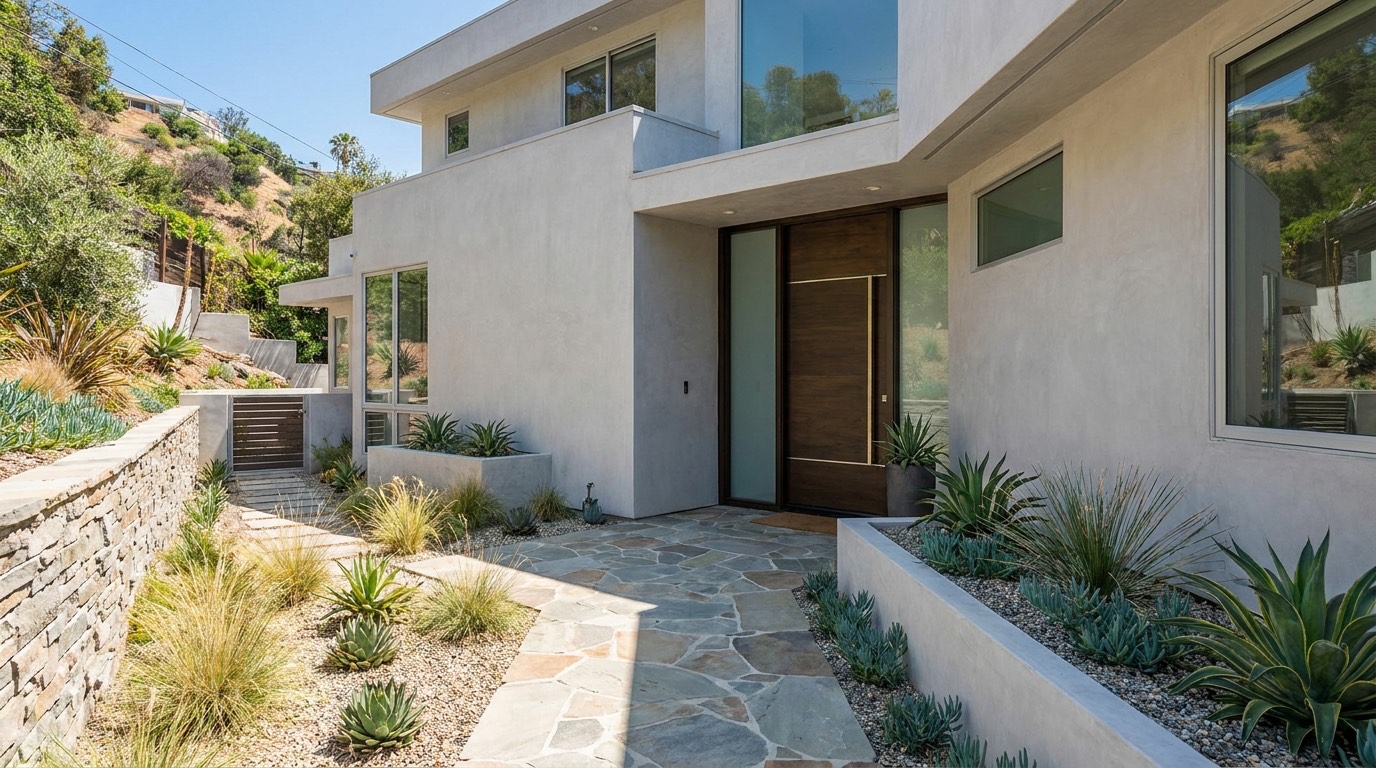
Hollywood Hills gets lumped in with “Hollywood” a lot, and that’s a mistake if you’re actually shopping here. This is a luxury hillside submarket built around Mulholland Dr and canyon communities like Laurel Canyon and Beachwood Canyon, and it comes with its own due-diligence list. None of it should scare you off. It just means asking sharper questions than you would buying on flat land.
Terrain Varies More Than the Listing Photos Show
A wide, view-oriented lot near Mulholland Dr and a narrow canyon street a few blocks away can be genuinely different buying experiences, even at similar price points. Grading, retaining structures, and how much usable flat yard actually exists on a lot vary block to block here more than in almost any other LA submarket. Walk the specific street, ideally at a time of day close to when you’d actually be driving it, before you get attached to a listing.
Views Drive Price More Than Square Footage
In Hollywood Hills, a smaller home with a clean, unobstructed view over the basin or the canyon can outprice a larger home set back from the ridge. That’s a different pricing logic than a flatland purchase, where square footage and lot size usually do more of the work. Ask your agent to pull comps that actually account for view quality, not just size, before you decide whether a number makes sense.
Access and Road Width Matter More Here Than They’d Admit on a Tour
Canyon roads can be narrow, winding, and short on turnaround room. Confirm how a fire truck, moving truck, or even a second car parked on the street would actually work at a specific address. It’s a completely normal question and any listing agent should have a straight answer, not a vague one.
Soil Reports and Retaining Walls Deserve Real Attention
Hillside construction in Los Angeles often comes with a documented history of geological work, grading permits, and retaining structures. We go deeper into what that specific paperwork should look like in our post on soil reports and retrofitting in Hollywood Hills. For the broader hillside inspection basics that still apply here, our general Hollywood hillside buying guide is worth reading too.
Fire Risk and Insurance Are Part of the Real Budget
A meaningful share of Hollywood Hills sits in higher fire-risk zones, which can mean higher premiums or a shorter list of carriers willing to write a policy. Get an actual quote early in the process, not after you’re already deep into escrow and counting on financing closing on schedule.
Privacy Comes With Its Own Trade-Offs
A lot of buyers come to Hollywood Hills specifically for privacy and views, and that’s real. It also means fewer walkable amenities nearby and more day-to-day reliance on a car than a flatland neighborhood offers. If daily walkability matters to you, it’s worth being honest about that trade-off before you commit to the hillside lifestyle.
Confirm What You’re Actually Comparing
Because terrain, access, and view quality shift so much from block to block, two Hollywood Hills listings that look similar on paper can be very different properties in person. Don’t rely on a generic neighborhood average to judge whether a price makes sense. Get comps pulled for the specific street and lot type you’re considering.
HOA and Private Road Agreements Show Up More Here Than Elsewhere
Some canyon streets are maintained through private road agreements rather than standard city upkeep, which can mean shared maintenance costs or informal arrangements between neighbors. Ask directly whether a street has a private road agreement or informal maintenance arrangement, and get any costs in writing before you count on a number for ongoing expenses. It’s easy to assume a street is city-maintained just because it looks like any other paved road, and that assumption can be wrong here.
Utilities and Connectivity Can Be Less Predictable on Canyon Streets
Older canyon homes sometimes run on utility infrastructure that’s aged differently than what you’d find on a flatland street built more recently. Ask about internet provider options and reliability, especially if remote work depends on it, and confirm whether gas, water, and electrical service have had any documented issues specific to that street. It’s a small question that’s easy to skip and can matter a lot after you’ve moved in.
If you’re weighing a purchase in Hollywood Hills, reach out to Efrat. She serves buyers across Los Angeles, including Hollywood Hills, and can help you read the specific street and lot before you make an offer.
