Here’s a direct answer: daily life in Westwood runs on a rhythm most LA neighborhoods don’t have, the UCLA academic calendar, and that shapes nearly everything from foot traffic to seasonal quiet in a way that’s worth understanding before you move there, rather than discovering it after you’ve already signed a lease or closed on a home.
The Academic Calendar Sets the Pace of Daily Life
Westwood’s daily energy rises and falls with the school year in a way that’s genuinely distinct from most neighborhoods. Fall and winter quarters bring busy sidewalks, packed restaurants, and heavier traffic near campus and the Village, while summer break brings a noticeably quieter version of the same streets. Anyone touring Westwood during one season should picture the other before deciding it’s a fit.
Walkability Depends Heavily on Which Block You’re On
Close to Westwood Village and campus, a lot of daily errands, coffee, dinner, groceries, can genuinely happen on foot. Move further out toward Westwood Hills or the residential streets bordering Holmby Hills, and daily life becomes more car-dependent, closer to the pattern in most of the Westside. Our walkability and transit breakdown goes deeper into exactly where that shift happens.
Traffic and Parking Are Real, Practical Considerations
Wilshire Boulevard and the streets feeding into campus see real congestion, particularly around the start and end of the academic day and during move-in and move-out weeks. Parking near the Village and campus can be genuinely competitive too. This is worth factoring into daily-life expectations the same way you’d factor in commute time elsewhere in LA, since it affects how easy it is to just come and go.
The Housing Stock Itself Shapes What Daily Life Feels Like
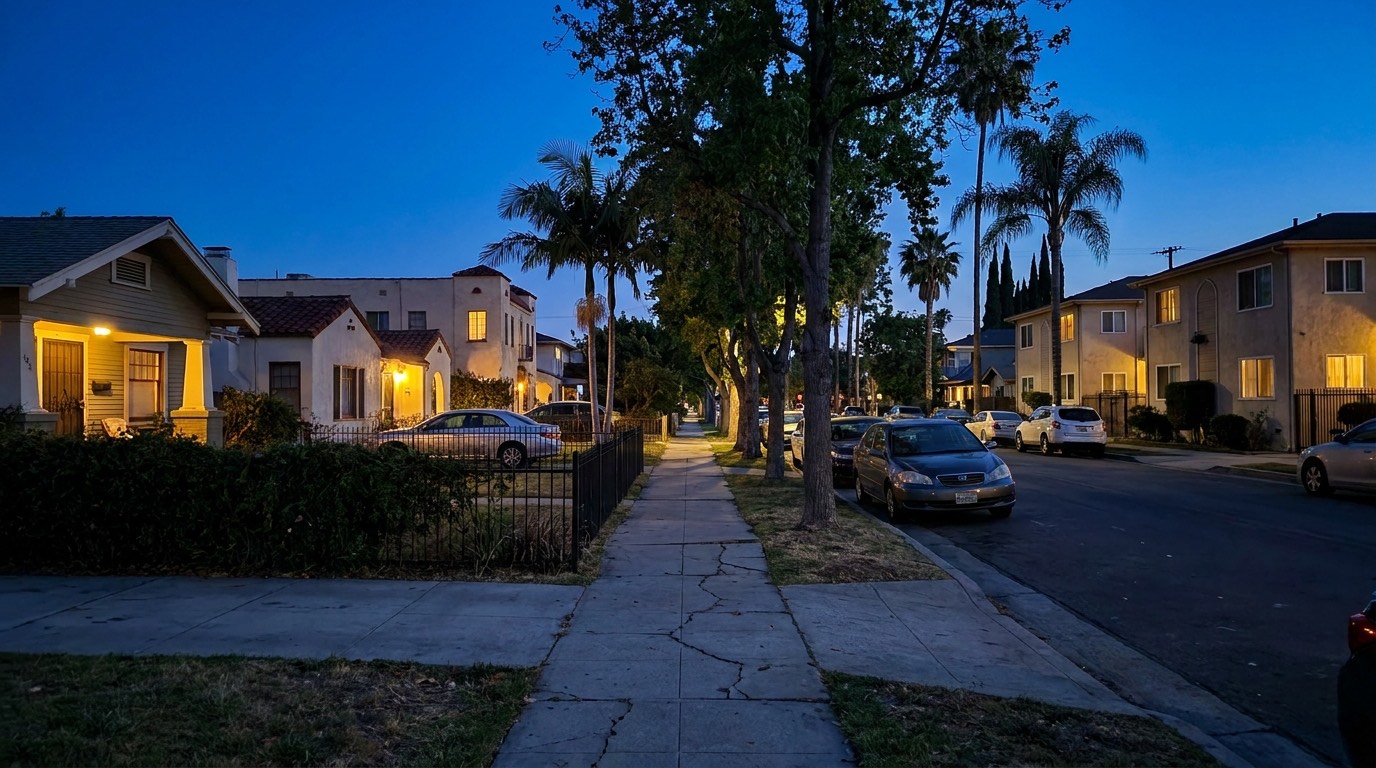
Westwood offers a real choice between condo living in a Wilshire Corridor high-rise and a standalone home on one of the neighborhood’s older residential streets, and daily life looks meaningfully different depending on which you choose. A high-rise unit means amenities and less hands-on maintenance, while an older single-family home, some dating to the late 1920s and 1930s, means more space and character alongside more upkeep.
Community Feels Different Depending on the Pocket
Closer to campus, community can feel transient, since a large share of residents are students moving through on a multi-year cycle rather than settling long-term. Further out in Westwood Hills or the streets near Holmby Hills, it tends to feel more settled and neighbor-driven, closer to what you’d expect from an established residential pocket. If a strong, consistent sense of community matters to you, it’s worth weighing which version of Westwood you’re actually choosing.
Access to Culture and Amenities Is a Genuine Daily Perk
Living in Westwood puts UCLA’s campus resources, the Hammer Museum, Westwood Village’s restaurants and historic movie theaters, and the medical center’s services all within easy reach, a genuine day-to-day perk that’s harder to find bundled together in most LA neighborhoods. Residents who take advantage of that access, lectures, events, campus facilities, tend to feel the trade-offs of noise and traffic are worth it. Residents who don’t use those resources much sometimes wonder why they’re paying for proximity to a campus they rarely engage with.
Who Tends to Actually Thrive Here
People who want walkability, intellectual energy, and easy access to UCLA’s resources and medical center tend to do well close to campus and the Village, even with the noise and seasonal rhythm that comes with it. People who want a quieter, more settled routine usually do better in Westwood Hills or toward Holmby Hills. If you’re weighing whether renting or buying makes more sense for your situation here, our rent versus buy breakdown is a useful next read.
If you’re trying to figure out whether Westwood’s daily rhythm actually fits how you live, reach out to Efrat. She serves buyers and sellers across Los Angeles, including Westwood, and can help you think it through honestly before you commit to a search there.
