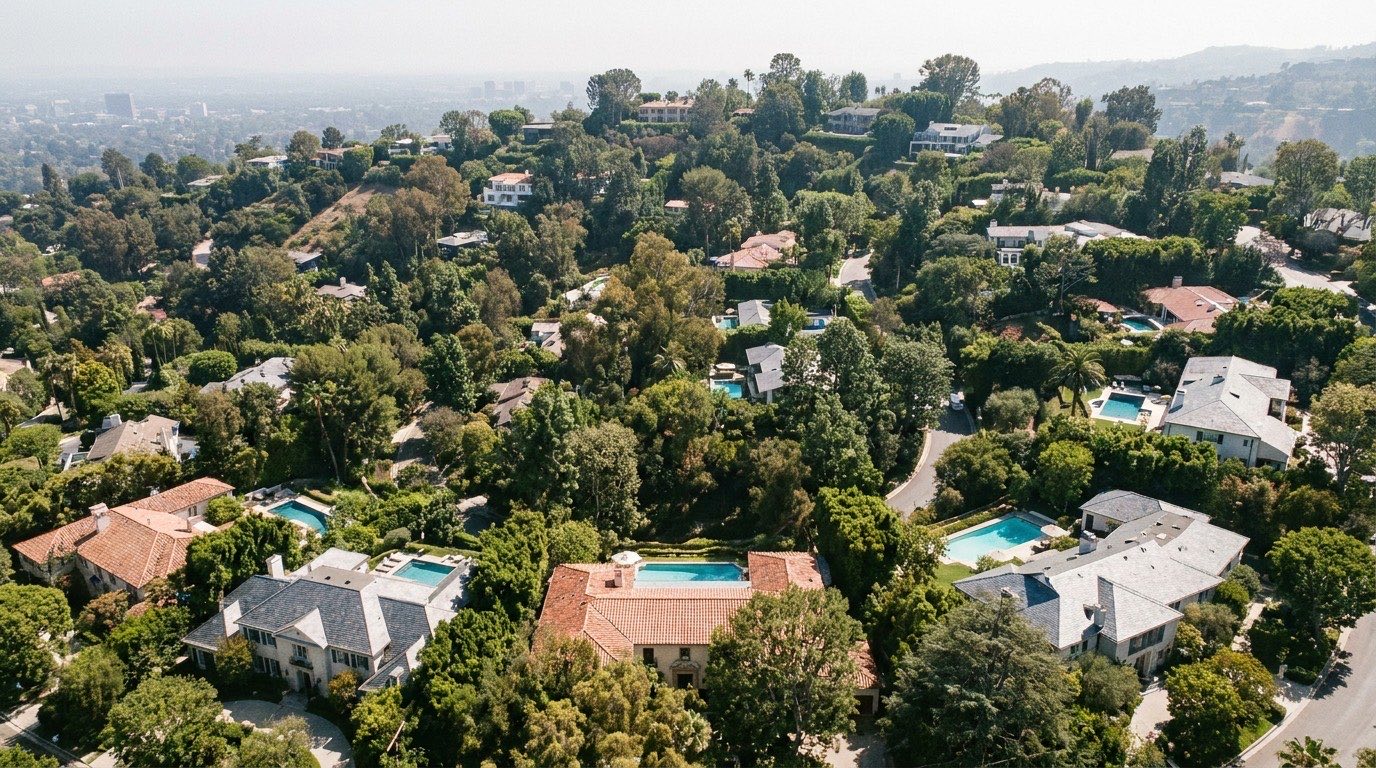
Bel Air isn’t a neighborhood people debate as an investment the way they might debate an up-and-coming pocket of LA. It’s already established at the top of the market, and the investment case here has to be made on very different terms.
The Case For: Land Is Genuinely Scarce
Bel Air’s supply of large, gated, hillside lots isn’t expanding. It’s a built-out neighborhood with no meaningful path to adding new inventory, which means the land itself carries a scarcity value that a more buildable neighborhood simply doesn’t have. That scarcity has supported long-term value here in a way that’s harder to replicate elsewhere in Los Angeles.
The Case For: Privacy and Security Are a Durable Draw
Guard-gated streets, long private driveways, and a genuine sense of seclusion are a big part of why buyers choose Bel Air specifically, and that demand doesn’t depend on any single industry or economic trend. It’s a durable preference among a certain segment of ultra-high-net-worth buyers, which supports the neighborhood’s position at the top of the LA market over time. If discretion matters to your own purchase, our guide to buying a luxury home discreetly is worth reading alongside this one.
The Case Against: Entry Cost Is About as High as LA Gets
Bel Air sits at the very top of the Los Angeles luxury market, and that entry cost means rental yield on a pure numbers basis is thin. If cash flow is the primary goal, our rental market overview is worth reading first, since it lays out just how different this rental market is from a typical income-property play.
The Case Against: The Buyer Pool Is Small
By definition, very few buyers can transact at Bel Air’s price point, and that means longer marketing periods are common even for genuinely desirable estates, and a smaller pool of comparable sales to lean on when pricing a property. This isn’t a reason to avoid the neighborhood, but it does mean liquidity here works differently than in a more broadly affordable market.
Not Every Bel Air Property Performs the Same Way
A guard-gated estate on a premier street with unobstructed views is a different asset than a dated home on a compromised lot, even though both carry the “Bel Air” name. Painting the whole neighborhood with one investment thesis misses real property-level differences that matter just as much here as anywhere else. If you’re weighing Bel Air against a neighboring hillside market, see our comparisons with Brentwood and Hollywood Hills.
Spec Building Is a Real, if Narrow, Value-Add Path
Rather than renovating an existing home, a meaningful share of Bel Air’s value-add activity comes from developers acquiring an underbuilt lot and constructing a new estate from the ground up. It’s a specialized strategy that requires real construction and permitting expertise, and it’s not the right entry point for a first-time investor, but it’s worth understanding as part of how value gets created here.
Who Bel Air Tends to Suit
Bel Air generally suits a buyer with a long time horizon, real interest in privacy and gated security, and less concern about immediate cash flow. It’s a weaker fit for someone purely chasing rental yield or a quick flip, since both the entry cost and the small buyer pool work against a fast, cash-flow-focused strategy.
The Honest Bottom Line
Bel Air makes more sense as a long-term hold built on land scarcity and privacy than a high-yield rental play. The demand base is durable and the supply is genuinely limited, but the numbers need to work on the specific property in front of you, not on the neighborhood’s reputation alone.
If you’re weighing Bel Air against other Los Angeles luxury markets for investment purposes, reach out to Efrat. She serves buyers and sellers across Los Angeles, including Bel Air, and can help you think through what a specific estate is actually worth holding for.
